By
She spent more than two nights held inside an airport, branded a security risk on the strength of an unexplained “alert”. On Saturday, Francesca Albanese landed in Mexico City — to flowers, flags, guitars and drums.
By Shoaib Khan
Chief Journalist | The BNN Media – The Best News Network
News Beyond the Borders
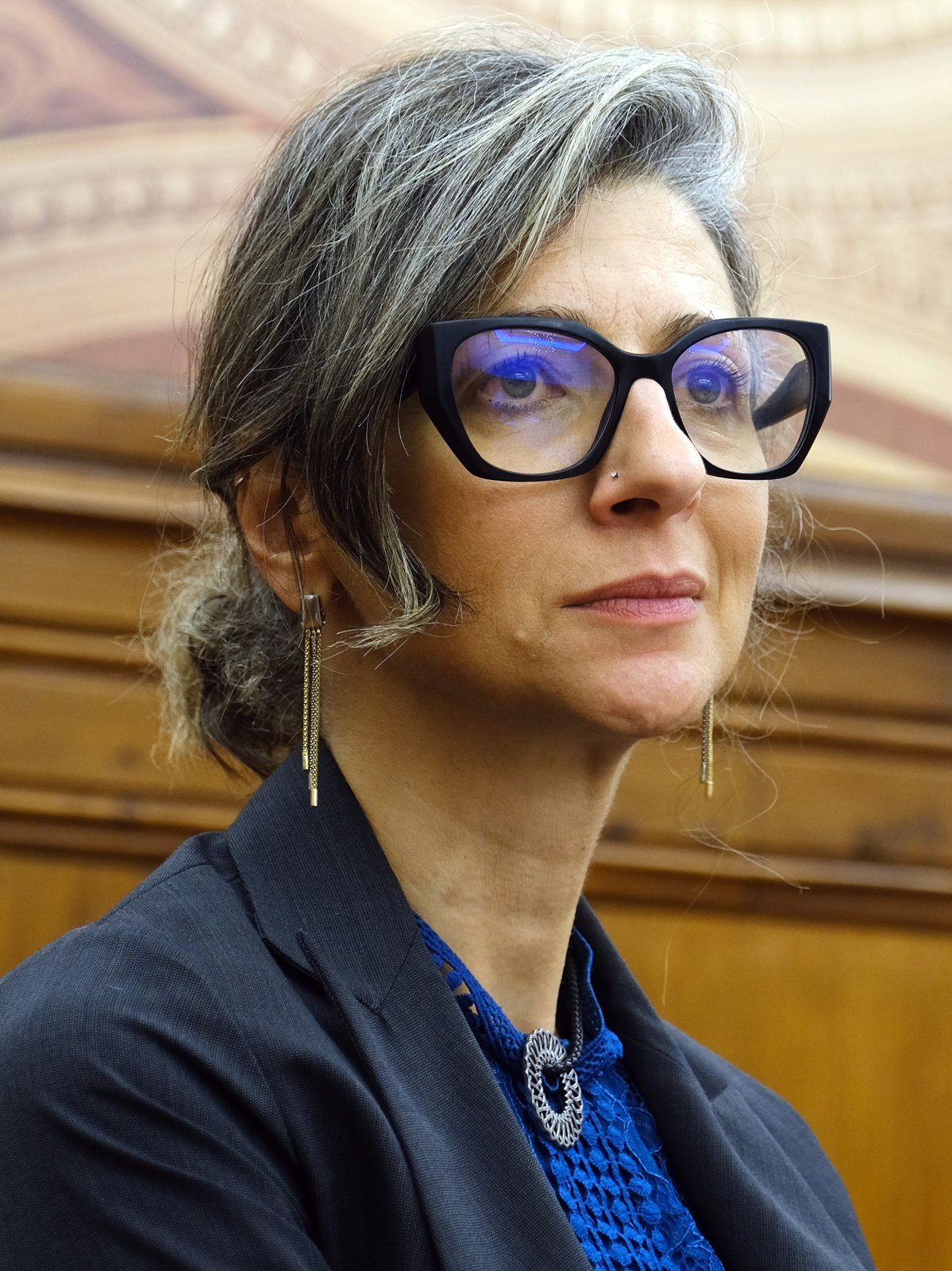
Mexico City, Mexico — Francesca Albanese, the United Nations’ special rapporteur on the Israeli-occupied Palestinian territories, arrived in Mexico City on Saturday, 28 November 2026, after Costa Rica barred her from entering the country — a move that drew concern from the United Nations but praise from the United States. She landed at Mexico City’s international airport at around 10:30 a.m. local time (1630 GMT), where supporters with Palestinian flags offered her a bouquet of flowers and met her with a regional musical band.
A Hero’s Welcome at the Arrivals Gate
At the arrivals gate in Mexico City, a few dozen activists greeted Albanese with flowers and hand-painted signs, chanting pro-Palestinian slogans, strumming guitars and banging drums. A large Palestinian flag was unfurled at her feet as she emerged from the sliding doors, looking tired but resolute, the Associated Press reported.
“What they did to her in Costa Rica is a sign of the decadence we live in, of the sadness of this era, which bows to imperial governments,” said Claudio Albertani, a history professor in Mexico City who was among those greeting her at the airport.
She had travelled to Costa Rica to be honoured. She left it as a headline — and arrived in Mexico to find that the people, at least, were on her side.
Two Nights Held at San José Airport
Albanese, an Italian national, had flown in from Paris on Thursday, 26 November, to receive an honorary doctorate from the University of Costa Rica. Immigration officers at Juan Santamaría International Airport stopped her and denied her entry, saying she was the subject of an international “alert” over alleged ties to terrorism and that her presence posed a national security risk.
She was held at the airport for more than a day and a half — two nights, more than 50 hours — while a legal challenge was filed on her behalf. She posted a photograph on X showing a suitcase beside a row of empty seats, with the caption: “This is where I will spend my first night in Costa Rica.”
From the airport, she joined the university’s honorary doctorate ceremony by video call on Friday and delivered the keynote lecture remotely.
An Accusation Without Evidence
The terrorism allegation against Albanese is, on the evidence made public so far, only that — an allegation. Costa Rican immigration authorities did not publicly say who issued the supposed alert, what acts it referred to, or offer any evidence to support it. The migration director, Omer Badilla, would not identify the body behind the alert.
Rodrigo Chaves, Costa Rica’s former president and now a powerful cabinet minister under his handpicked successor, President Laura Fernández, denounced the court’s intervention as “yet another usurpation by an increasingly arbitrary judiciary” — and repeated the claim, without evidence, that Albanese has links to “TERRORIST ACTS!”
In Mexico City, Albanese challenged him directly: “If you do not have evidence, I hope you’ll answer to the judicial authorities because this is defamation.”
“I am deeply outraged that the Costa Rican government has spread false information linking me to terrorism,” she said in her video address to the university. “Defending human rights is not terrorism, and the government will answer for these insinuations, as it should in a country governed by the rule of law.”
No charge has been brought against her, and no evidence for the claim has been produced. Until either appears, the terrorism allegation remains exactly what it is: an unevidenced accusation.
The Courts Stepped In
As officials moved to send her back to Paris, Costa Rica’s Constitutional Court stepped in, ordering a stay of her deportation while it reviewed the legal challenge filed on her behalf. Late on Friday, the court cleared her to leave the airport for a hotel while it considers the case, sparing her deportation to Paris — though it did not overturn the entry ban.
Albanese urged Costa Ricans to defend their judicial system. “You have something extremely precious, an effective and independent judiciary,” she said in a video from the plane. “And then you have free academia. Both are valuable, and both are under attack.”
The government’s decision drew condemnation at home and abroad. Three former Costa Rican presidents, including Nobel Peace Prize laureate Óscar Arias, criticised it, and the country’s ombudsman’s office said holding her at the airport showed officials’ “ignorance” of her immunity from detention and arrest as a UN expert.
Concern in Geneva, Praise in Washington
The UN’s human rights chief, Volker Türk, was “deeply concerned” by Costa Rica’s decision to deny Albanese entry, his office said, adding that he found it “difficult to reconcile with Costa Rica’s longstanding commitment to human rights.” Amnesty International called the government’s actions “shameful”.
The reaction in Washington was the opposite. Jeff Bartos, the US ambassador to the UN for management and reform, said he was “grateful to Costa Rica for keeping this liar and lunatic out of their beautiful country.” Israel’s UN ambassador, Danny Danon, praised the move, suggesting on X that Albanese was facing consequences for using her UN mandate to spread “vile propaganda” about Israel.
Albanese has become one of the most outspoken international critics of Israel’s conduct in Gaza, making her a frequent target of pro-Israel officials and governments. The Trump administration sanctioned her in 2025 over her work and her criticism of US and Israeli policies in Gaza — penalties imposed over accusations that she was working with the International Criminal Court to pursue cases against Israeli and American citizens. The sanctions bar her from entering the US and freeze any assets she has there. She has called for an investigation into whether the entry ban was linked to those sanctions.
Costa Rica has joined several Latin American countries in a rightward political shift and deepening ties with Washington, which gives military aid to Israel. Its government has also accepted third-country deportees from the US and built a large new prison as part of a crackdown on crime.
Five Days in Mexico
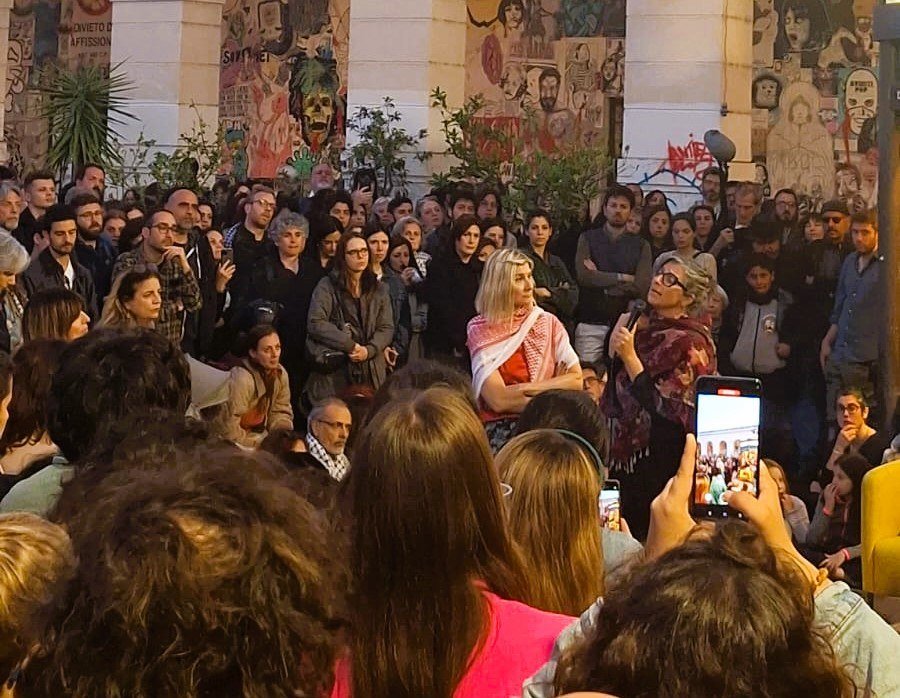
Albanese is scheduled to spend about five days in Mexico, where she is expected at a Palestinian solidarity event, a talk at the capital’s human rights commission and a university lecture on responsibility in times of genocide.
Before leaving Costa Rica she posted a photograph of herself on the plane holding her passport. “Goodbye, for now,” she wrote early on Saturday. “I’ll be back, I promise, when Costa Rica is again free.”
In Mexico City, she insisted she did not want her ordeal to overshadow the suffering in Gaza. “I’m here to talk about Palestine,” she said. “If I become the news, I’ve failed.”
“I know that in this region the pressure from the neighbors is felt strongly, but there is humanity,” she said, in an apparent reference to the US government. “They didn’t show me any of that. But the people did: the lawyers, civil society.”
Why This Case Matters
- The office: Albanese is the UN’s independent special rapporteur on human rights in the Israeli-occupied Palestinian territories, appointed to investigate abuses against Palestinians.
- The ban: Costa Rica denied her entry on “national security grounds”, citing an international alert over alleged terrorism ties — without naming the issuer or producing evidence.
- The court: Costa Rica’s Constitutional Court blocked her deportation and let her leave the airport for a hotel while it reviews the case.
- The divide: The UN human rights chief, Amnesty International and three former Costa Rican presidents condemned the ban; the US and Israel’s UN ambassador praised it.
- The context: Palestinian authorities say more than 74,000 people have been killed in Israel’s military operation in Gaza, launched after Hamas-led fighters killed about 1,200 people in southern Israel on 7 October 2023. Scholars and a UN inquiry have assessed that Israel’s conduct in Gaza amounts to genocide — a charge Israel and the US reject.
A UN expert was held for two nights in an airport transit lounge on the strength of an alert nobody will explain. The courts, for now, have kept the question open — and Mexico, for now, has opened its doors.
By Shoaib Khan
Chief Journalist | The BNN Media – The Best News Network
News Beyond the Borders