By
President Donald Trump has refused to walk back calling Vladimir Putin his friend, insisting his personal relationships with the Russian and Chinese leaders are the key to peace — even as Volodymyr Zelensky warned that warm words from Washington ease the pressure on Moscow.
By The BNN Media
The Best News Network
News Beyond the Borders
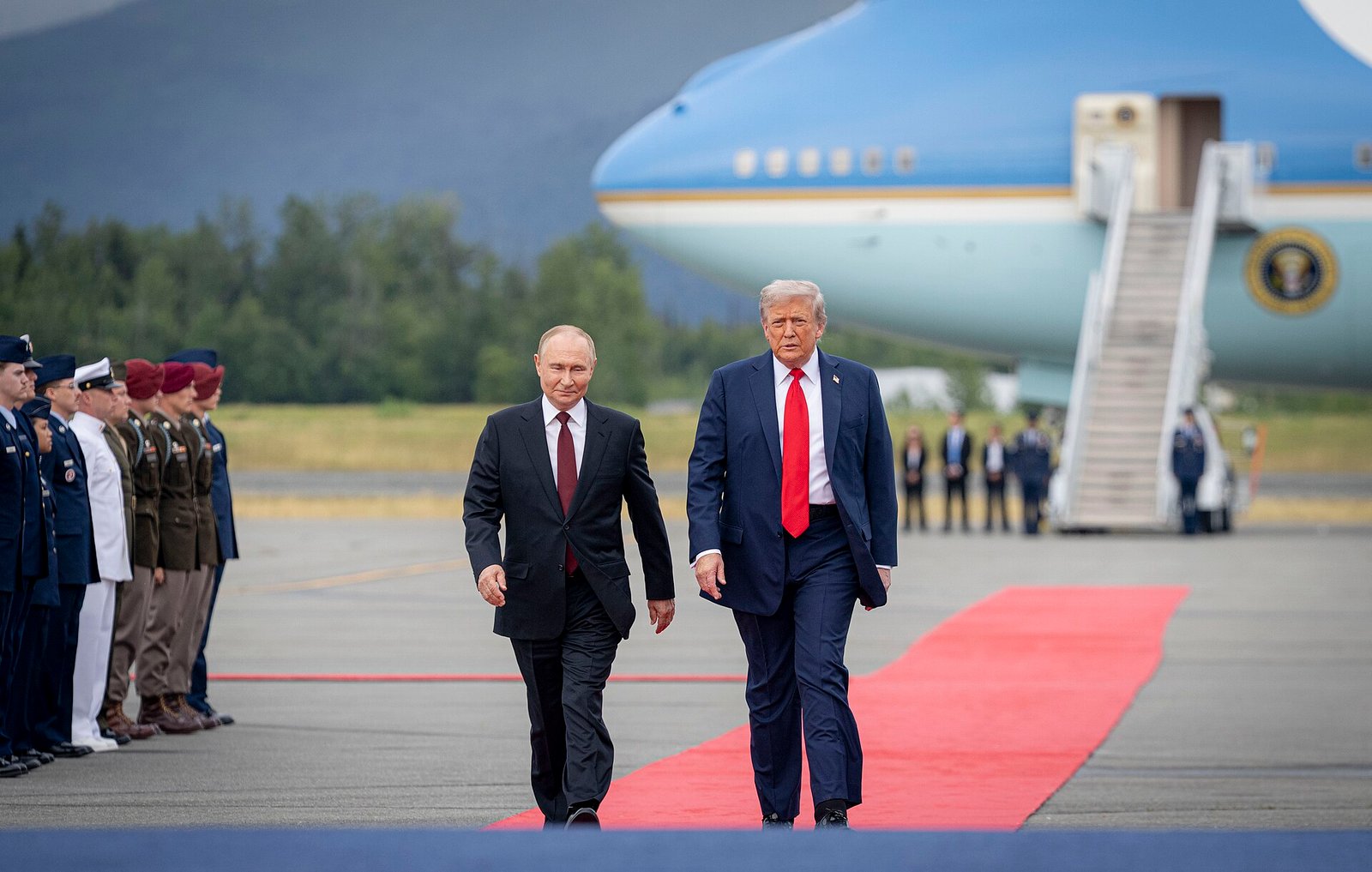
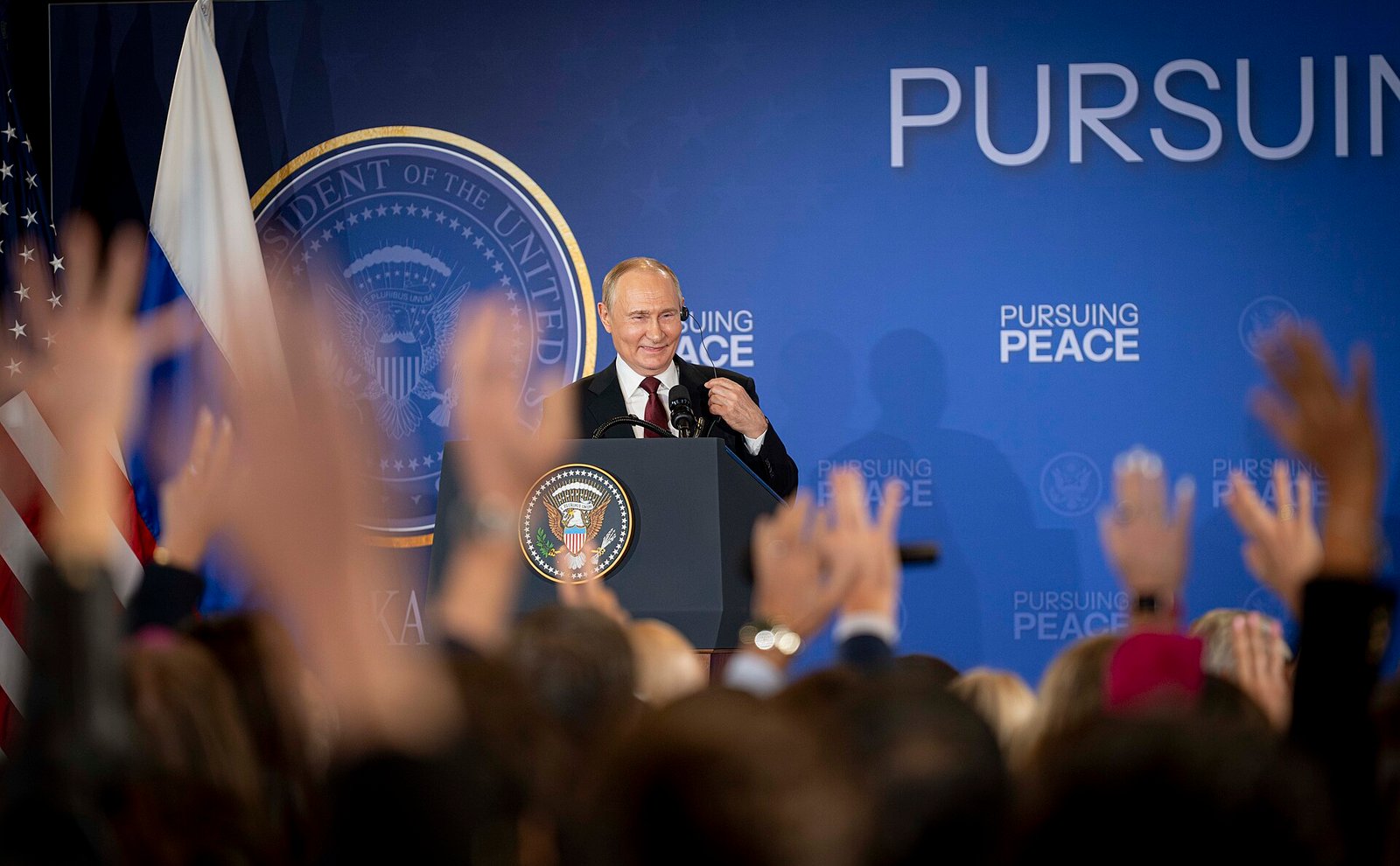
Washington, United States — President Donald Trump on Friday doubled down on his description of Russian President Vladimir Putin as a friend, telling reporters at a White House news conference that he “can’t speak” to whether Putin is a friend to the United States, while insisting that the Russian leader wants peace in Ukraine.
“I Can’t Speak to America”
The exchange came as Trump returned from China, where he took part in bilateral and trilateral meetings with Putin and Chinese President Xi Jinping in Shenzhen on Thursday. Trump raised eyebrows on the trip with his warm greeting of Putin and his repeated references to the Russian leader as his “friend”, and he made no effort in the White House briefing room to walk the comments back.
Asked directly whether he views Putin as a friend to the United States, Trump sidestepped the question.
“I can’t speak to America,” he said, without elaborating, according to the Associated Press.
He shifted immediately to his own relationship with the Russian leader. “I consider him to be somebody that I have a very good relationship (with),” Trump said. “It’s actually very good.”
The takeaway: Trump defended the friendship in personal terms, but declined to say the same about the relationship between Putin and the United States.
A Friendship Defended
Trump praised both Putin and Xi during the wide-ranging news conference, arguing that his personal rapport with the leaders of the world’s most powerful countries is an asset, not a liability.
“I have fantastic relationships with Putin. That’s a very good thing. I have fantastic relationships with President Xi. That’s a good thing,” he said.
He also repeated his longstanding grievances over the extended federal investigation that concluded Russian agents sought to influence American voters in the 2016 presidential election on his behalf, describing it as the “fake Russia, Russia, Russia hoax” and saying Putin had been “very nice about it”.
Trump called the first trilateral meeting of the leaders of the United States, Russia and China one of “the most momentous international summits in many years”. He said the three countries hold 92 per cent of the world’s nuclear weapons, and that the leaders had discussed reducing the risk those weapons pose — with China agreeing for the first time to join trilateral talks on reducing nuclear risk.
The takeaway: for Trump, personal chemistry with Putin and Xi is the foundation of his foreign policy — a position his critics say confuses friendship with leverage.
“Two on One”
On Ukraine, Trump said the three leaders had spent a long time discussing the war, and suggested that China had sided with his views. “We spent a lot of time on Ukraine and Russia, and in that case, it was two on one because President Xi — China, and this is a great man,” Trump said, according to CNN, without describing the dynamic further.
Trump said Putin had “clearly expressed his desire” to end the war through diplomacy, and insisted there was “a real good chance” a peace deal could be brokered. He put the main obstacle down to hatred between the two men at the centre of the war.
“He’d love to end the war,” Trump said of Putin. “But you have two guys that don’t know how to end it. We’re trying to help them. You have two people that hate each other, Zelenskyy and Putin. They don’t know how to end it. They want to end it. They’re both stuck in it.”
He said around 25,000 people, mostly soldiers, were being killed every month in the war.
Zelensky: “For Us, He Is a Killer”
In Kyiv, President Volodymyr Zelensky rejected Trump’s characterisation of Putin in blunt terms, telling CNN that friendly language from Washington weakens the pressure on Moscow.
“Of course, it’s up to President Trump how to call Putin,” Zelensky said. “For us, he is an enemy, and of course, for us, he is a killer. And I think, mostly, for the people in the world, he is a killer because he is killing.”
He warned that describing Putin as a friend sends the wrong signal to the Kremlin. “If you say and speak about Putin … like he is a friend … of course, he doesn’t feel that he is a killer, he doesn’t feel enough pressure … he feels like he can continue,” Zelensky said, adding that Putin “is killing each day and night”.
Zelensky was not included in Thursday’s trilateral meeting in Shenzhen. Despite his criticism, he said he still believed the Trump administration remained the right mediator for talks between Kyiv and Moscow.
The takeaway: Kyiv’s message is that words matter — and that calling Putin a friend tells Moscow it can keep fighting without paying a steeper price.
Missiles Hours After the Handshake
The dispute over Trump’s language unfolded against the backdrop of one of the largest Russian attacks of the war. Hours after Putin left China, Russia launched a massive overnight missile and drone assault on Ukraine.
Ukrainian authorities said Russia fired more than 400 drones and over 110 missiles — including 27 ballistic missiles, some carrying cluster warheads — in an attack that lasted more than ten hours. Nine people were killed and at least 28 injured, according to Ukrainian authorities, and Zelensky called it “the biggest this year”. The strikes hit energy substations, railway infrastructure and bridges across the Dnipro River.
Russia’s defence ministry said it had launched a “massive strike using high-precision weapons from land, sea, and air”, as well as drones, targeting Ukrainian military and energy facilities, port infrastructure in the Odesa region and transport infrastructure in Kyiv.
The timing also rattled NATO’s eastern flank: two Russian missiles and a suspected drone also came down in Poland on Friday, in what Poland’s prime minister said was likely a provocation timed to coincide with European military exercises in the country.
Asked about the latest attacks — hours after Putin had met with him in China — Trump suggested that Zelensky and Putin share equal responsibility for the continuing conflict, and insisted Putin would “love to end the war”.
The takeaway: the gap between Trump’s account of a Putin ready for peace and the missiles that followed within hours is now the central question hanging over his diplomacy.
“Putin Is Tired” — What Trump Told Europe
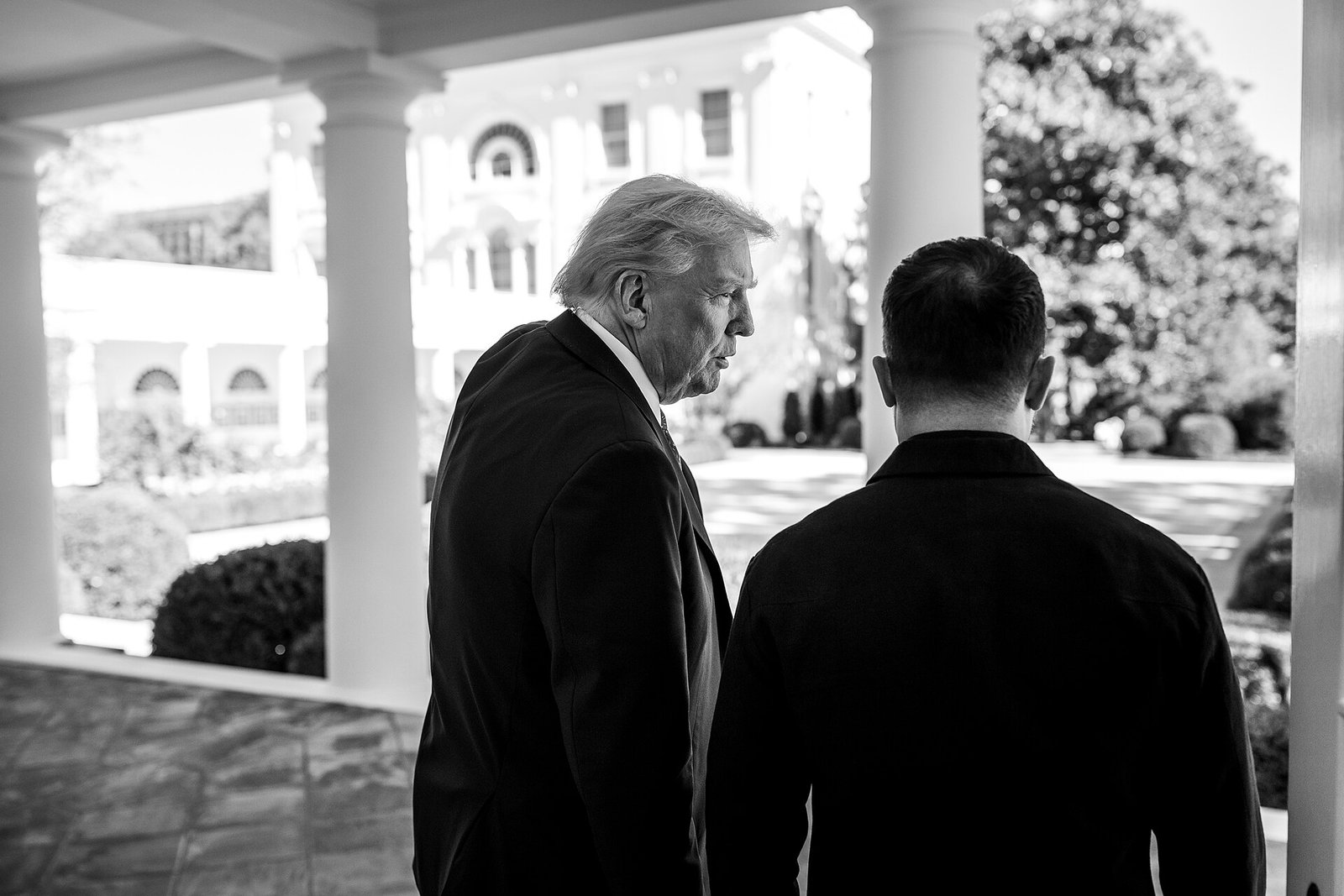
After the Shenzhen meetings, Trump spoke by telephone with European leaders from the so-called Coalition of the Willing, a group of Ukraine’s key allies convening in Berlin with US envoys Steve Witkoff and Jared Kushner. According to a senior European official with knowledge of the call, Trump’s main message was that “Putin is tired, wants to end this, ready for a deal.”
The official said Trump’s suggestion was “to reach out and grasp at the opportunity”, and that the Europeans were “constructive in response but want proof”. Poland’s Prime Minister Donald Tusk, who was part of the call, said Trump sounded “fairly optimistic”, but that his words were received “very cautiously in the room”.
The Washington Post reported that Trump told the European leaders Putin was getting tired of the war and was ready to make a deal now that he would not have made a few months ago, and urged them to make a deal with the Kremlin so they could redirect the money they spend on Ukraine.
Putin, however, struck a very different note in public. Speaking to reporters in Shenzhen, he repeated Russia’s maximalist demands, rejected renewed negotiations over a limited ceasefire around energy facilities or Black Sea shipping, and vowed to retaliate for Ukrainian strikes that severely damaged the Kerch bridge linking occupied Crimea with the Russian mainland.
“We are not going to agree,” Putin said. “Our response will be much more painful.”
Security Guarantees and the Road Ahead
The news conference also exposed the distance between Washington’s optimism and the positions of the parties. US envoy Jared Kushner said on Thursday that he believes Russia is “comfortable” with NATO-like security guarantees for postwar Ukraine.
But Russian Deputy Foreign Minister Sergei Ryabkov said on Friday that even a “quasi-membership” of NATO for Ukraine would be unacceptable, according to Russia’s Interfax news agency. When a reporter noted the pushback, Trump brushed it off, saying Moscow was unlikely to publicly confirm details from ongoing negotiations.
“It is also a public relations war. And we’ll say things and they’ll say things,” Trump said. He added that he did not want to talk about security guarantees for Ukraine “because we got to get a deal first”, and that the United States will be involved when there is a deal.
Secretary of State Marco Rubio, who stood on stage during the news conference, defended the president’s approach against criticism that Trump embraces autocratic leaders as trusted allies.
“I want everybody to understand the relationships between heads of state are invaluable,” Rubio said. “It sets the tone for the entire relationship. It sets the tone for our trade negotiators. It sets the tone for our diplomats.”
For now, there is no announced ceasefire, no agreed framework, and no sign that Putin has stepped back from his territorial demands — only a president who insists his friendships can deliver what four years of war have not.
By The BNN Media
The Best News Network
News Beyond the Borders
Sources: Associated Press (21 Nov 2026); CNN (20 Nov 2026); The Washington Post (19–20 Nov 2026); AnewZ (21 Nov 2026).