By
Two more oil tankers caught fire in the Strait of Hormuz on Sunday after striking naval mines, Iran’s Revolutionary Guard navy said, capping a weekend in which at least three tankers were hit by projectiles near Oman — the sharpest escalation yet in the campaign against shipping through the world’s most important oil waterway.
By Umar Farooq
Journalist (UAE) | The BNN Media – The Best News Network
News Beyond the Borders
Dubai, United Arab Emirates — Two oil tankers caught fire on Sunday after striking naval mines in the Strait of Hormuz, according to Iran’s Islamic Revolutionary Guard Corps (IRGC) navy, which said the vessels had been using an unauthorised route with their tracking systems switched off. The claim came a day after Britain’s maritime agency confirmed two tankers were struck by unknown projectiles off Oman on Saturday, with no casualties reported.
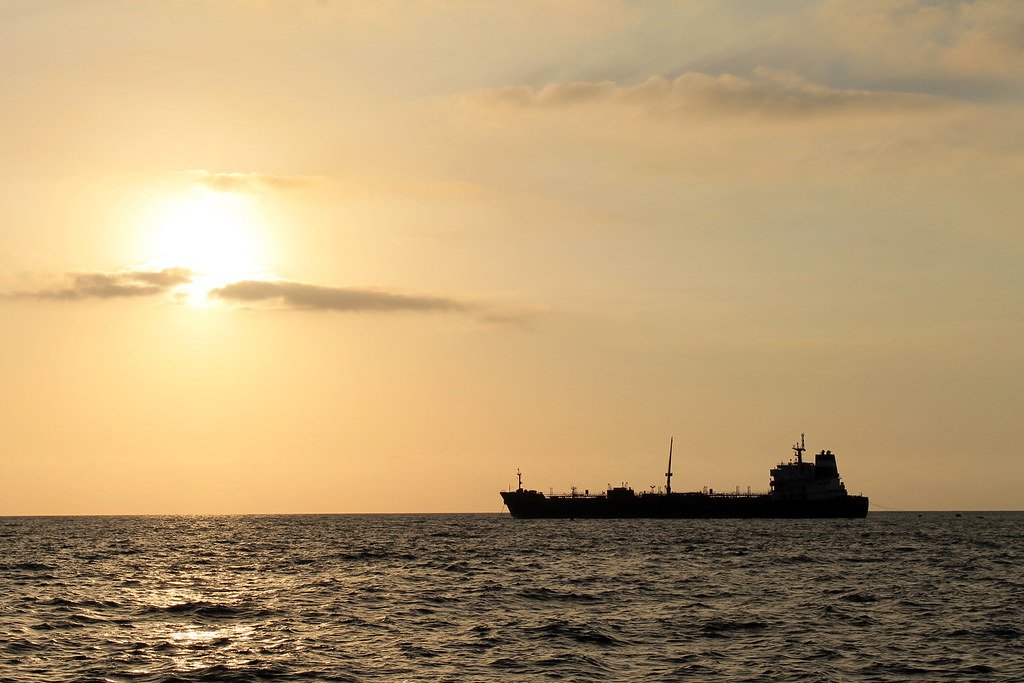
Two Tankers on Fire
In a statement carried by Iran’s official IRNA news agency on Sunday, the IRGC Naval Forces said that “two violating oil tankers, one in the eastern area of the Strait of Hormuz and the other inside it, were intending to pass through an unauthorized route when they struck naval mines, and extremely intense fires are currently burning on board.”
The statement said both vessels had “committed multiple violations and had turned off their navigation and positioning systems” in an attempt to pass along the unauthorised route. It did not identify the tankers or disclose their nationalities, and no information was given about their crews or whether there were any casualties. The extent of the damage and the scale of the fires remained unclear.
Iran’s Tasnim news agency reported that the vessels hit mines near Ghannam Island, east of the Strait of Hormuz, and that both ships had exploded and been forced to halt. The IRGC navy said the Strait of Hormuz remained entirely under Iran’s control and supervision, and warned that failure to follow its instructions could cause shipowners and trading companies heavy financial losses.
Two tankers on fire, no names, no flags, no word on the crews — that is all Iran has said about Sunday’s incidents.
Friday and Saturday: What the British Agency Confirmed
What is independently confirmed is the sequence recorded by the United Kingdom Maritime Trade Operations (UKMTO) centre, the British agency that monitors threats to commercial shipping. Its warnings describe a tanker attacked on three successive days near Khasab, the port town on Oman’s Musandam Peninsula at the mouth of the strait.
On Friday, 20 November, at about 15:00 UTC, Warning 214-26 reported a tanker struck on its port bow about 8 nautical miles north of Khasab, with a fire on board. On Saturday, 21 November, Warning 215-26 reported an outbound tanker struck on its stern by an unknown projectile about 11 nautical miles north of Khasab at about 05:00 UTC. Fifty minutes later, Warning 216-26 reported a second tanker struck in its engine room about 17 nautical miles east of Khasab.
UKMTO confirmed that no casualties were reported in either Saturday incident, and that the environmental impact remained unconfirmed. It did not say whether the two Saturday reports described the same vessel or two different ships, and it named no attacker and no vessel, flag, owner or cargo for any of the incidents. A fourth tanker had been hit in its engine room near Khasab on Thursday, 19 November, and its crew was reported safe.
Iran’s navy gave a different account of the same waters: it said on Saturday that a tanker had caught fire after striking a naval mine in a restricted area east of the strait. Neither account has been matched against the other, and no side has published evidence that settles the difference between a projectile strike and a mine.
Iran’s Account — and What Is Not Confirmed
The gap between the two accounts matters, because the claims are growing bolder while the independent evidence is not. The IRGC said on Sunday that one of the two tankers that hit mines was a very large crude carrier — a supertanker — carrying more than two million barrels of oil, and that it had sunk. Nobody else has confirmed this. UKMTO logged a tanker incident that day as it approached the strait from inside the Gulf, but made no mention of mines, and no sinking has been confirmed by any independent source.
According to analysis of the conflicting reports, the US military’s Central Command, UKMTO and the Joint Maritime Information Center all agree on one point: no sea-mine strike has been confirmed by any of them. The mine account, and the claimed sinking, rest on Iran’s word alone.
Iran also said on Sunday that it had intercepted and destroyed a US MQ-1 reconnaissance drone east of the Strait of Hormuz. The Pentagon has not formally commented on Sunday’s tanker incidents, but US Central Command has rejected claims that the Iranian attacks were successful.
When only one side is talking, its claims must be reported as claims — not as facts.
A War at Sea, Now in Its Ninth Month
The attacks are the latest in a campaign against shipping that has run alongside a war which began in late February, when the United States and Israel attacked Iran. Since Tehran declared the Strait closed again on 26 October, claims of attacks on tankers have come almost daily — four tankers on 4 November, five ships in 24 hours last week, according to counts of the claims.
BNN reported on 13 November that four tankers had been hit by explosions in the Strait of Hormuz, in an account that was itself Iran’s claim: Four Tankers Hit by Explosions in Strait of Hormuz as Oil Prices Jump
Working from UKMTO data, ABC News put the number of attacks in and around the strait in November at about 19 as of 18 November — before this weekend’s incidents. The Joint Maritime Information Center rates the threat in the strait as severe, and UKMTO has advised vessels in the area to proceed with caution, report suspicious activity and remain alert while the incidents are investigated. Earlier strikes on tankers were also reported on 12 and 16 November.
Shipping Keeps Moving — But Less of It
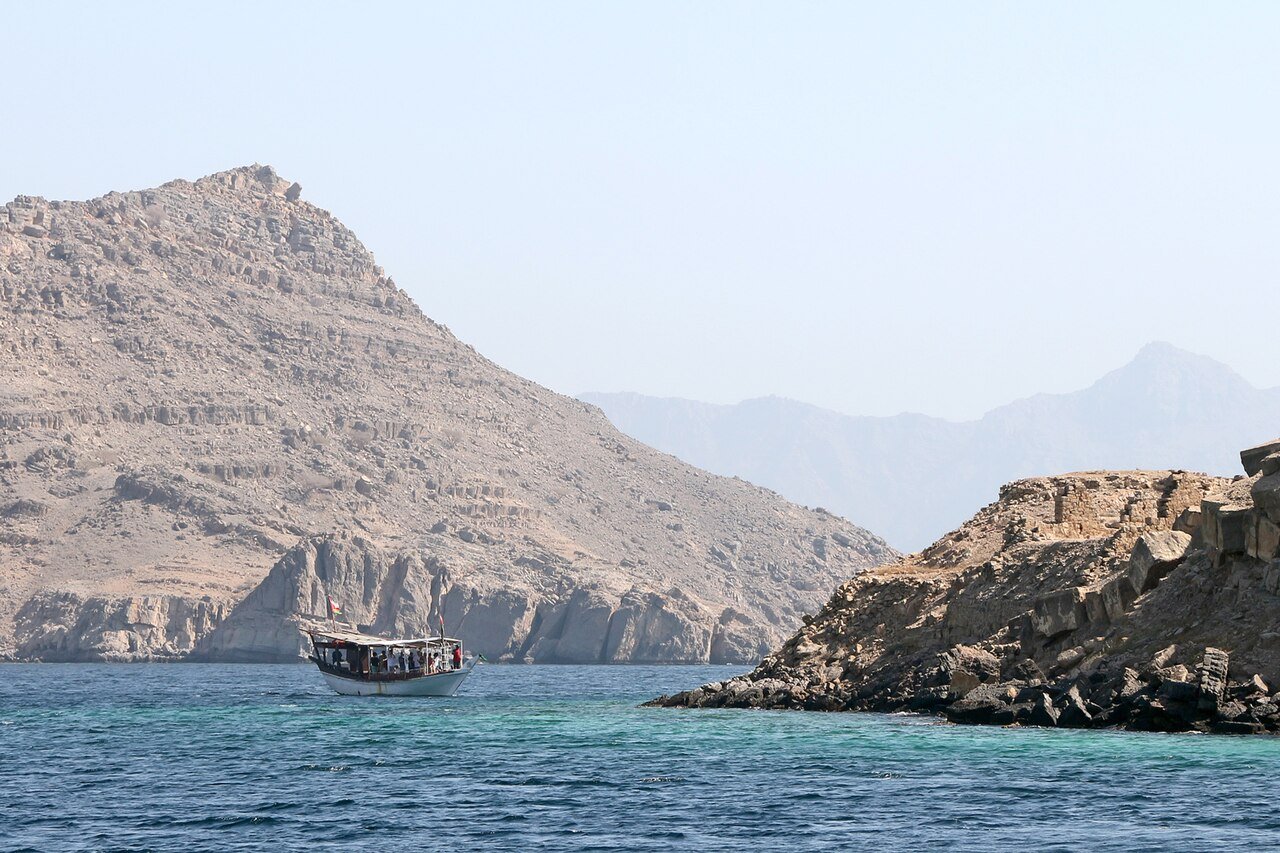
For all the danger, commercial shipping has not stopped using the strait — but the traffic is thinning. UKMTO recorded 115 outbound transits in the seven days to 18 November, down from 139 the week before. Vessel trackers recorded five outbound commercial crossings on Saturday, 21 November, and three on Friday, including four outbound crossings after the second reported strike on Saturday.
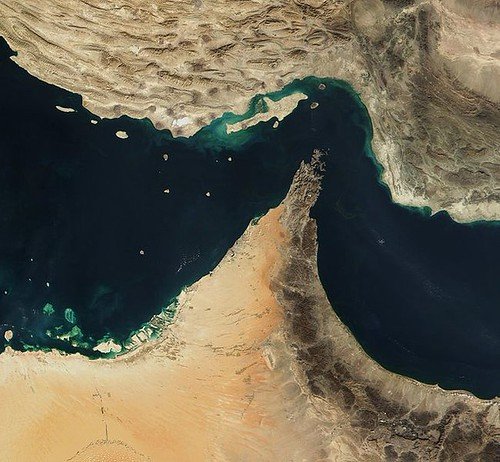
The stakes are enormous. The Strait of Hormuz is the only sea passage from the Gulf to the open ocean, and it carries around a quarter of the world’s seaborne oil trade and about a fifth of global liquefied natural gas. It is the sole maritime route out for the Gulf states, including the UAE, Qatar, Bahrain, Kuwait and Iraq — and the waterway at the centre of a war that has already struck Bahrain and drawn in the United States, Israel and Iran.
So far, the attacks have damaged ships without killing crews. But each strike raises the insurance cost of every voyage, pushes more owners to think twice about the route, and narrows the margin between a campaign of harassment and a disaster — a sunken supertanker, a major spill, or a miscalculation that drags more navies into the strait.
The Key Facts
- Sunday, 22 November: Iran’s IRGC navy said two oil tankers caught fire after hitting naval mines near Ghannam Island, east of the Strait of Hormuz, while using an unauthorised route with tracking systems off. No names, nationalities or casualty details were given.
- Saturday, 21 November: UKMTO confirmed two tankers struck by unknown projectiles off Khasab, Oman — one on the stern, 11 nautical miles north of the town, and one in the engine room, 17 nautical miles east. No casualties; it is unclear whether the two reports describe the same vessel.
- Friday, 20 November: UKMTO reported a tanker struck on the port bow 8 nautical miles north of Khasab, with a fire on board. A fourth tanker was hit in the engine room near Khasab on Thursday, 19 November; its crew was safe.
- Iran claims one of Sunday’s tankers, a supertanker carrying more than two million barrels, sank. No independent source has confirmed a sinking or a mine strike.
- About 19 attacks in and around the strait were counted in November as of 18 November; the Joint Maritime Information Center rates the threat severe.
- The strait carries around a quarter of the world’s seaborne oil trade; outbound transits fell from 139 to 115 in the week to 18 November.
Three days, four tankers, two accounts that do not agree — and a waterway the world cannot afford to lose.
Reporting based on Agence France-Presse via IRNA, 22 November 2026; UKMTO warnings 214-26, 215-26 and 216-26 as reported by Al Jazeera, gCaptain/Reuters and TML News, 21–22 November 2026; Tasnim via Stockbiz; and the Naval Institute of Australia, 22 November 2026.
By Umar Farooq
Journalist (UAE) | The BNN Media – The Best News Network
News Beyond the Borders