 By
After eight years and eight months of negotiation, South Korea and China have substantially concluded talks to extend their free trade agreement into services and investment — a deal Seoul says will open China’s market to Korean films, games, tourists and businesses, and which markets greeted with a sharp rally in travel and entertainment shares.
By The BNN Media
The Best News Network
News Beyond the Borders
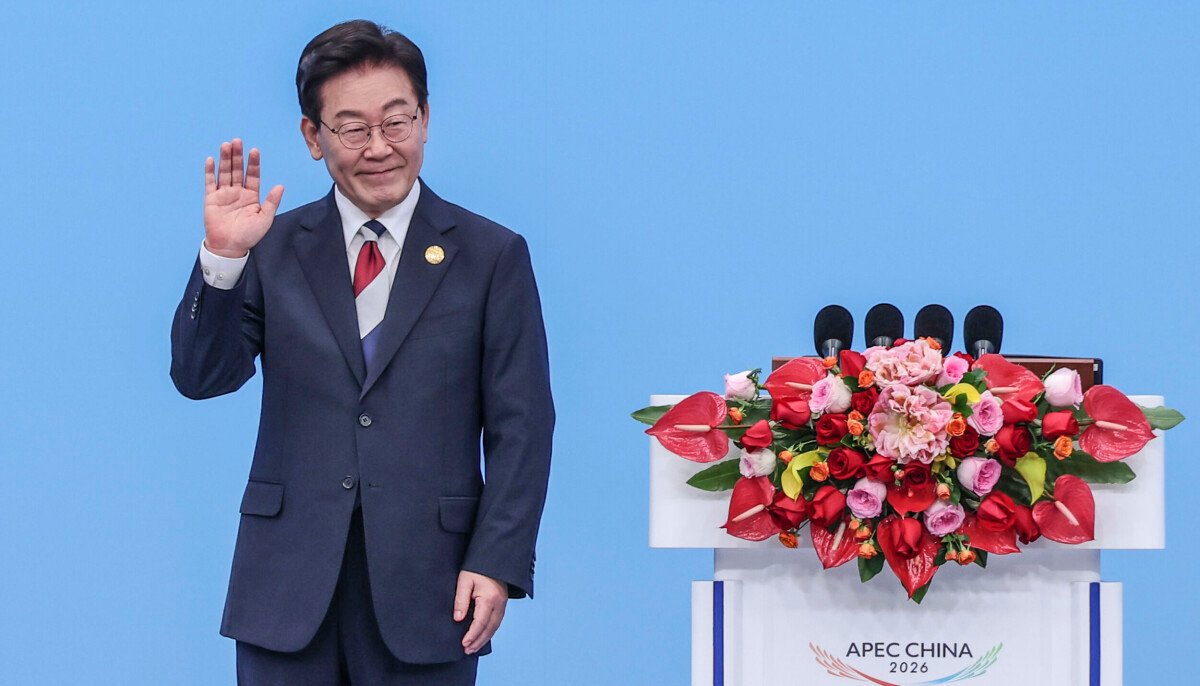
SHENZHEN, China — South Korea and China announced on Wednesday, 18 November, the substantial conclusion of follow-up negotiations to extend their bilateral free trade agreement (FTA) into services and investment, after talks that began in March 2018 and ran for eight years and eight months. Presidents Lee Jae Myung and Xi Jinping announced the outcome at their third summit, held on the sidelines of the Asia-Pacific Economic Cooperation (APEC) gathering in Shenzhen, in a 35-minute meeting at Qilin Villa — a breakthrough Seoul says could begin to unwind a decade of unofficial Chinese curbs on Korean culture and tourism.
A Deal Eight Years in the Making
The original Korea-China FTA took effect in December 2015 and covered trade in goods. Services, investment and financial services were left for a second phase of negotiations, which opened in March 2018 and then dragged on for more than eight years, through changes of government in Seoul and a steady deterioration in the political relationship between the two countries.
Wednesday’s announcement does not mean the expanded agreement is signed or in force. Both governments say technical wording, translation and a legal review of the text still remain before the agreement can be signed and ratified, and neither side has given a date for those steps. What was announced in Shenzhen was a “substantial conclusion” — agreement on the substance, with the formalities still to come.
Even so, the political signal was unmistakable. Lee told Xi he hoped the two nations could “further advance a horizontal and mutually beneficial cooperative relationship in the economic sphere, building on the conclusion of negotiations for the Korea-China FTA on services and investment.” Xi said both countries were beneficiaries of multilateralism and free trade, and that China was committed to strengthening communication and coordination with Korea to safeguard the stability of global industrial and supply chains.
National Security Adviser Wi Sung-lac, briefing reporters after the summit, said Lee had noted that the conclusion of the negotiations “should serve as a catalyst for more active mutual market entry by businesses from both countries.”
After nearly nine years of talks, the two sides have agreed on the substance of a deal neither could close for most of a decade — but until the text is signed, the agreement exists as a political commitment, not a law.
What Seoul Says China Agreed
The most detailed account of the deal so far has come from Seoul, and it is Seoul’s account that drove the market reaction. According to South Korea’s trade ministry and the presidential office, China has agreed to a series of openings across the sectors that matter most to Korean business:
- Content: China has pledged to grant “most-favoured-nation” treatment to Korean content, including films and games, and to apply the principle of non-discrimination during the pre-screening process for such content. Seoul’s Ministry of Trade, Industry and Energy said this was the first time China had included such provisions in a trade agreement, and that it was “expected to create a more stable environment for Korean content to enter the Chinese market.”
- Tourism: Korean travel agencies will be able to directly recruit Chinese group tourists and sell a variety of outbound travel packages. China pledged to allow Korean travel agencies established across 23 regions — including Beijing, Shanghai, Chongqing and Hainan — to organise outbound travel for both Chinese citizens and foreign nationals living in China.
- Legal services: The scope for Korean law firms to establish offices in China and to engage in joint representation with Chinese firms has been expanded.
- Retail and distribution: Korean companies may now independently operate more than 30 stores in China without a joint venture with a Chinese partner.
- Construction: Restrictions on the types of projects in which Korean firms can participate have been lifted.
- Finance: The agreement stipulates that should China further open its financial markets to third countries, Korean firms will be entitled to the same benefits.
The two leaders also reached an understanding on joint production of films, and Lee proposed expanding cultural and content exchanges in phases, taking regional variations within China and varying levels of receptivity across sectors into account. Lee also proposed bringing a pair of giant pandas to Korea to encourage friendly sentiment between the two nations, and Xi was said to have agreed with the cooperative projects Lee suggested ahead of the 35th anniversary of diplomatic ties between the two countries next year.
On Seoul’s telling, this is the broadest opening China has ever offered Korean services businesses — but the telling, so far, is Seoul’s alone.
What Beijing Did — and Did Not — Confirm
The gap between the two capitals’ accounts is the most important caveat in this story, and it must not be glossed over. Beijing’s commerce ministry confirmed the outcome and the chapters covered, but it did not list the same sector-by-sector detail that Seoul published. It made no mention in its statement of films, games or most-favoured-nation treatment, and China says it will publish the text only after signing — so the commitments Seoul describes cannot yet be checked against the agreement itself.
That matters because the most politically charged question in this deal — whether it ends the unofficial Chinese restrictions on Korean popular culture, widely known as the “Hallyu ban” — has no clean answer yet. The restrictions followed Seoul’s decision in 2016 to deploy the US-led Terminal High Altitude Area Defense (THAAD) antimissile system, and Beijing has never acknowledged imposing a ban at all. The Korea JoongAng Daily reported that the Hallyu ban was not specifically mentioned in the talks, but that the agreement was seen as laying the groundwork for a true restoration of ties.
A senior South Korean presidential official was frank about the limits: the deal does not require China to allow K-pop concerts in mainland China. Concerts are handled differently from other content because they draw large crowds, the official said; the agreement neither obliges China to approve performances nor bars them, but it opens a wider channel to discuss permits. Analysts quoted in Korean media made the same point — the deal does not explicitly address K-pop concerts or the distribution of Korean dramas in mainland China, and individual titles will still need Chinese regulatory approval.
The deal is a framework for arguing about access, not a guarantee of it — and the difference between the two will only become clear when the text is published and the first Korean film, game or tour group tests it.
Markets React: Travel Stocks Soar
Whatever the caveats, investors in Seoul needed no second invitation. On Thursday, 19 November, South Korean tourism stocks rallied sharply on hopes the expanded pact would boost Chinese visitor arrivals.
Travel company Hanatour Service jumped as much as 28 per cent in Seoul trading, budget airline Jeju Air climbed up to 25 per cent, and Hotel Shilla, which operates hotels and duty-free shops, rose as much as 13 per cent, according to Dow Jones reporting carried by TradingView.
“The expansion of channels to attract Chinese tourists to South Korea is expected to further boost passenger demand on China routes,” Hanwha Investment & Securities analyst Park Su-young said after the deal was reached. Hana Securities analyst Dohyun Ahn viewed Jeju Air as a key beneficiary of the expanded FTA, citing the company’s greater exposure to the Chinese market than any other South Korean low-cost carrier. Routes to mainland China account for 8 per cent of Jeju Air’s revenue, a share that could increase further, Ahn said.
The aviation, entertainment and leisure industries stand to gain from the pact, Park wrote in a research note, with aviation likely to be the biggest beneficiary.
People-to-people exchanges between the two countries are expected to surpass 10 million this year, and Lee called for measures to restore the level to 13 million, the figure reached in 2016, before the THAAD dispute. Lee’s office said the two countries should continue immigration measures to facilitate travel, and Xi signalled that the current visa-free entry policy for tourists, originally set to expire at the end of this year, will likely be extended.

Beyond Trade: The Peninsula and the Pandas
The summit was not only about trade. The two leaders discussed the Korean Peninsula at length, with Lee stressing that peace and stability on the peninsula serve the common interests of both nations and asking China to “play a constructive role.” Xi acknowledged the Korean government’s efforts, said China would continue to play a constructive role in resolving issues on the peninsula, and expressed support for efforts to ease tensions, including dialogue between Pyongyang and Washington.
Lee also called for joint efforts towards a fundamental resolution of issues concerning the Yellow Sea, amid tensions over structures in the Provisional Measures Zone, and asked for Beijing’s cooperation on protecting the rights and interests of Korean nationals in China and preserving historical sites related to the Korean independence movement.
The talks came on the eve of a closely watched trilateral summit in Shenzhen between Xi, US President Donald Trump and Russian President Vladimir Putin, expected to discuss regional security matters including the North Korean nuclear issue — a meeting that has drawn comparisons, in Korean reporting, to the 1945 Yalta Conference.
Trade was the headline, but the summit’s other half was security — and Seoul will judge the deal partly by whether Beijing’s “constructive role” on the peninsula amounts to more than words.
What Happens Next
The immediate test is procedural: the technical wording, translation and legal review, then a signing date, then ratification in both countries. No timetable has been given for any of it. The next test is practical: whether Korean travel agencies can actually begin organising outbound tours from the 23 regions, whether Korean games and films move through Chinese pre-screening without discrimination, and whether a K-pop act is eventually permitted to perform on the mainland.
For Korean businesses, the deal removes a layer of uncertainty that has hung over the Chinese market for a decade. For Beijing, it is a low-cost signal of goodwill at an APEC summit it is hosting, made without any formal acknowledgement that its curbs on Korean culture ever existed. And for the wider region, it is a reminder that even in a period of sharp geopolitical friction, the world’s two largest trading relationships in East Asia still have deals to make.
Sources: Korea JoongAng Daily; TradingView / Dow Jones; QNC News; MLQ.ai; Arirang News.
By The BNN Media
The Best News Network
News Beyond the Borders