By
The United States Senate has voted down a measure that would have forced President Donald Trump to end the war with Iran or seek Congress’s approval to continue it — the first such vote since voters delivered Republicans a heavy defeat in the midterm elections.
By Shoaib Khan
Chief Journalist | The BNN Media – The Best News Network
News Beyond the Borders
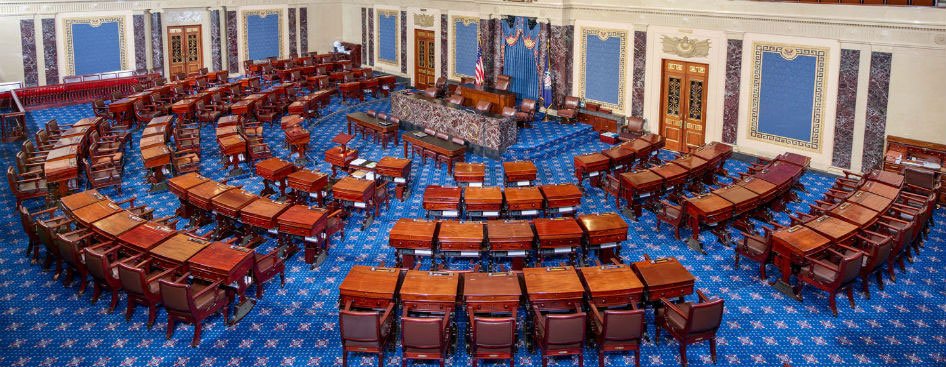
Washington, United States — The United States Senate voted on Thursday, 19 November 2026, to reject a war powers resolution directing President Donald Trump to end the war with Iran or obtain Congress’s approval to continue it, defeating the measure by 48 votes to 51 in a vote recorded at 2:42pm Eastern time.

Three Votes Short
The resolution needed a simple majority to pass. It fell three votes short. The vote was largely along party lines: only three Republicans — Susan Collins of Maine, Lisa Murkowski of Alaska and Rand Paul of Kentucky — voted with the Democrats in favour of the measure, while one Democrat, John Fetterman of Pennsylvania, voted with the Republicans against it. Senator Chris Murphy did not vote.
The result was a symbolic victory for the president. The measure was a concurrent resolution: it would not have needed the president’s signature, but neither would it have carried the force of law. Even if it had passed, it would not by itself have compelled Trump to end the war — but it would have put Congress on record demanding that he do so, or seek its approval.
Forty-eight senators voted to end the war. Fifty-one voted to let it go on. That is the whole story of the day.
What the Resolution Would Have Done
The measure, H.Con.Res.93, had passed the House of Representatives on 15 September by 220 votes to 204. Sponsored in the House by Representative Seth Moulton, a Democrat from Massachusetts, it invoked section 5(c) of the War Powers Resolution — the federal law enacted in 1973 — and directed the president to remove United States armed forces from hostilities against Iran unless Congress explicitly authorised those operations through a declaration of war or a specific authorisation for the use of military force.
The resolution demanded that Trump and the embattled Pentagon chief, Pete Hegseth, bring the conflict to a swift end unless they secured Congress’s approval to continue fighting. Its defeat in the Senate stopped that particular congressional directive in its tracks. The vote itself supplied no new statutory authorisation for military action — it simply left the existing situation untouched.
Congress was asked a simple question — should the war continue without its approval? — and by three votes, it declined to say no.
The First Vote Since the Midterms
Thursday’s vote was the first on the war since Republicans suffered heavy losses in the midterm elections on 3 November, defeats widely interpreted as a repudiation of the conflict and its economic consequences. It was also a test of whether that electoral message had changed anything inside the Senate chamber. The answer, for now, is that it has not.
Several Republicans who had previously backed war powers measures against the Iran war did not do so this time. Retiring Senator Thom Tillis of North Carolina, a vocal critic of the war who had supported past resolutions, said he did not want to back what he saw as a politically motivated effort by Democrats that would not meaningfully change the administration’s actions. Senator Josh Hawley of Missouri, another critic of the war, said he opposed the process rather than the substance of the measure. Asked about the prospect of Trump ramping up strikes in the region, Hawley replied: “Let’s hope not.”
A similar House-passed resolution failed on the Senate floor in September by 49 votes to 50 — one vote closer than Thursday’s result.
The midterms changed the politics of the war. They did not, on this vote, change the Senate.
A War Congress Has Not Voted For
The United States has conducted several attacks against Iranian military targets in recent days, including a strike on 17 November against a missile launch site on Iran’s Qeshm Island. The war itself has never been authorised by a declaration of war or a specific authorisation for the use of military force from Congress.
As The Best News Network reported earlier this month, Trump has previously said that Gulf states asked him to hold off further strikes on Iran — a sign of the regional pressure surrounding the conflict, and of the diplomatic stakes that the Senate’s vote leaves unresolved.
Supporters of the resolution argued that the constitution gives Congress, not the president, the power to declare war — and that a conflict of this scale cannot be left to run on presidential authority alone. Its opponents argued that the measure was symbolic, would not have changed the administration’s actions, and would have handed a political victory to the Democrats.
The constitution says Congress declares war. On Thursday, Congress declined to use that power — and the war goes on without it.

What Happens Now
With the resolution defeated, there is no congressional directive standing between the president and the continuation of the war. The administration is free to keep conducting strikes, and opponents of the war in Congress have lost their clearest available vehicle for forcing a vote on it — though nothing prevents them from trying again with a new measure.
The political cost of that freedom is less clear. The war remains unpopular, the midterm results showed it, and the vote exposed the fault lines inside both parties: three Republicans broke with their president, one Democrat broke with his party, and several of the war’s Republican critics chose to sit the vote out or vote against a measure they had once supported.
For the families of the service members involved, and for the people of Iran living under bombardment, Thursday’s vote changed nothing on the ground. It changed only who can be said to have chosen it.
Fifty-one senators had the chance to end a war Congress never voted for. They chose not to. That choice now belongs to them.
By Shoaib Khan
Chief Journalist | The BNN Media – The Best News Network
News Beyond the Borders
Sources: Reuters — “US Senate rejects resolution curbing Trump’s Iran war powers” (https://www.reuters.com/world/us-senate-rejects-resolution-curbing-trumps-iran-war-powers-2026-11-19/); USA Today — “Senate Republicans quash measure aimed at ending unpopular Iran war” (https://www.usatoday.com/story/news/politics/2026/11/19/senate-iran-war-powers-resolution/92857835007/); The Financial — “Senate rejects Iran war powers measure in 48–51 vote” (https://finchannel.com/senate-rejects-iran-war-powers-measure-in-48-51-vote/142374/americas/white-house-en/2026/11/); North Dakota Monitor — “US Senate GOP tanks new resolution blocking Trump’s war in Iran” (https://northdakotamonitor.com/2026/11/19/repub/us-senate-gop-tanks-new-resolution-blocking-trumps-war-in-iran/).