By
FIFA is set to confirm on Monday that the United Kingdom will host the 2035 Women’s World Cup, bringing football’s biggest women’s tournament to Britain for the first time — and the first World Cup of any kind to these shores since England lifted the men’s trophy at Wembley sixty years ago.
By Hashim Khan
Sports Journalist | The BNN Media – The Best News Network
News Beyond the Borders
London, United Kingdom — FIFA is set to confirm on Monday that the United Kingdom will host the 2035 Women’s World Cup, the first football World Cup to be staged in Britain since 1966. England, Northern Ireland, Scotland and Wales are the only bidders to jointly stage the tournament, and a specially arranged virtual meeting of FIFA’s Congress will vote to ratify them as co-hosts.
Confirmation Day in Zurich
A delegation will be present at FIFA’s headquarters in Zurich on Monday, while the four home nations’ football associations join a specially arranged virtual meeting of FIFA’s Congress to vote on ratifying the co-hosts. The United Kingdom is the sole bidder for the tournament, so the vote is expected to be a formality — but it is the moment the hosting becomes official.
The bid is called “All Together”, and it promises the largest Women’s World Cup ever staged: 104 matches contested by 48 teams over 39 days, spread across four nations. It would be the biggest women’s football tournament ever held in Britain, and the first time the women’s finals have been played on British soil.
The United States, which will host the 2031 Women’s World Cup with Mexico, Costa Rica and Jamaica, was confirmed as the 2035 host’s predecessor at the same time as the UK’s sole-bidder status was announced. That 2031 tournament will be the first Women’s World Cup to feature 48 teams; by 2035, the expanded format will be the established shape of the competition.
After sixty years of waiting, Britain is about to be handed a World Cup again — this time the women’s game leads the way.
The Biggest Women’s World Cup Yet
The numbers behind the bid show how far the women’s game has travelled. When England hosted the women’s European Championship in 2022, 16 teams played 31 matches. In 2035, 48 teams will play 104 matches — more than three times as many games, in a tournament lasting well over a month.
The 2023 Women’s World Cup final, in which Spain beat England 1-0 in Sydney, drew a global television audience in the hundreds of millions, and the women’s game has grown at every level since. The 2027 tournament will be held in Brazil, the first Women’s World Cup in South America. By the time the finals reach Britain in 2035, the women’s game will be playing on the biggest stage it has ever had.
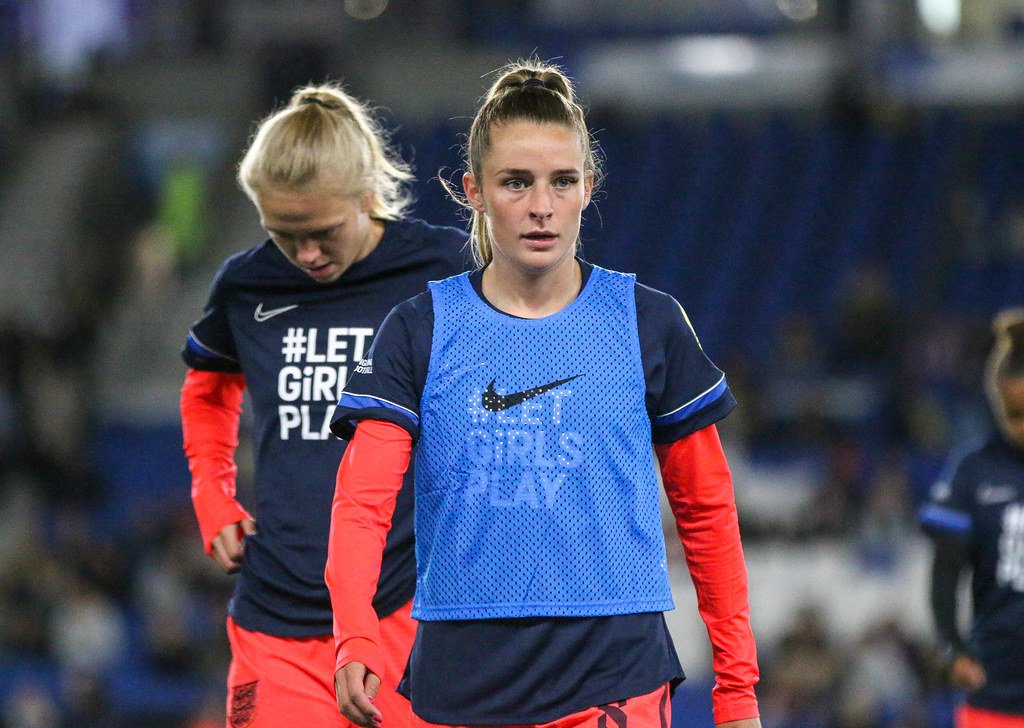
Hosting the tournament is also a statement about where the sport is heading. England’s Lionesses won Euro 2022 on home soil, and the women’s game in all four home nations has seen record crowds, record television audiences and a surge of girls taking up the sport. A home World Cup would put that growth on the grandest possible platform.
Where the Matches Will Be Played
The “All Together” bid proposes 19 venues: 14 in England, two in Scotland, two in Wales and one in Northern Ireland.
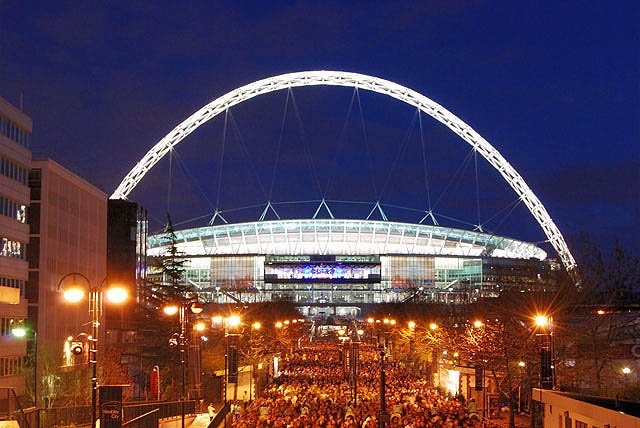
The English stadiums in the bid are Villa Park, The Amex, Ashton Gate, Elland Road, Hill Dickinson Stadium, Emirates Stadium, Selhurst Park, Tottenham Hotspur Stadium, Wembley, Etihad Stadium, St James’ Park, the City Ground, the Stadium of Light and Old Trafford. If Manchester United’s proposed new Old Trafford stadium does not go ahead, the existing ground will be used instead.
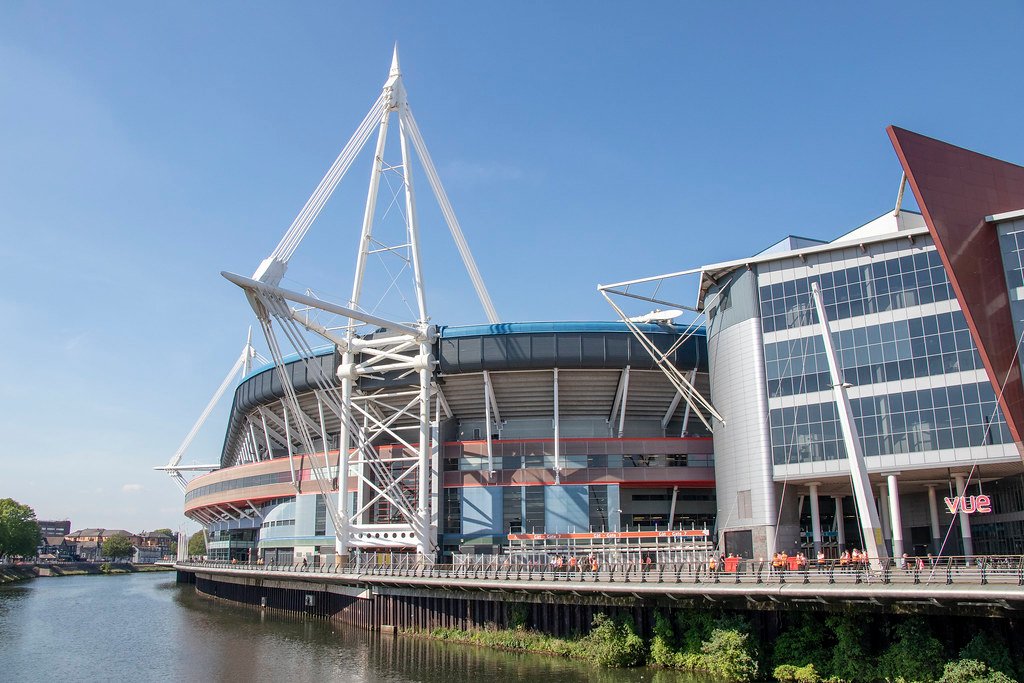
Scotland’s proposed venues are Easter Road in Edinburgh and Hampden Park in Glasgow. Wales would stage matches at Cardiff City Stadium and the Principality Stadium, while Northern Ireland’s matches would be played at a redeveloped Windsor Park in Belfast.
Three more venues could still be added — Birmingham’s new Powerhouse Stadium, Wrexham’s redeveloped Racecourse Ground and a possible new Chelsea ground — which would take the tournament to 16 cities and 22 venues. Northern Ireland missed out on co-hosting the men’s European Championship in 2028, after the UK government said in 2024 it would not fund the redevelopment of Casement Park in time for that tournament; a World Cup in 2035 would bring major tournament football to Belfast at last.
The Fine Print: FIFA’s 4.3 Rating and the Tax Question
FIFA’s evaluation of the bid, published earlier this month, rated it 4.3 out of five — a strong score, but not a perfect one. Its contractual framework was rated “medium risk”, and the evaluation document said that “certain government guarantees contain material qualifications, particularly regarding tax and safety and security”.
That is understood to reflect unresolved talks over FIFA’s request for tax-free status for football-related activities during the tournament. It is the one significant loose end in an otherwise well-received bid — and it is the issue FIFA and the UK government will need to settle in the years before the tournament.
FIFA’s own assessment was nonetheless encouraging. It said: “The bidder has submitted an extensive set of government support documents and contractual hosting agreements, demonstrating the commitment of the relevant authorities and stakeholders.” It added that “while certain contractual matters remain subject to further discussion, the bidder’s proactive engagement with Fifa and the substantial lead-in time provide a sound basis for resolving these outstanding issues.”
The bid is strong, the stadiums are ready, and the one real argument left is about tax — with nine years to settle it.
What It Means for the Women’s Game
For the people running football in the four home nations, the World Cup is about far more than a month of matches. Football Association chief executive Mark Bullingham said: “Hosting Euro 2022 allowed us to change the game in our country, by creating a generation of aspirational role models and growing demand from women and girls to play. Hosting a World Cup would provide us the opportunity to build on that throughout all four countries.”
Scottish Football Association chief executive Ian Maxwell said hosting the tournament would be the most significant thing to happen to the women’s game in Scotland, adding that the investment in training, facilities and player pathways in the years beforehand “will shape the future of the game for the generations to come.”
Football Association of Wales chief executive Noel Mooney said Wales had “never ever hosted anything on this scale”, adding: “World Cup football played here, in front of Welsh kids, would change what this game looks like in Wales: in the clubs, in the schools, and in the number of women who grow up seeing a path into it.” Irish Football Association chief executive Patrick Nelson said the event “would be felt in every club and every age, in every part of the nation.”
How the UK Got Here
The road to Monday’s confirmation began in April 2025, when FIFA President Gianni Infantino announced at the UEFA Congress in Belgrade that the United Kingdom was the sole bidder for the 2035 tournament. “I can confirm that we have received one bid for 2031 and one valid bid for 2035,” Infantino said at the time.
The four home nations’ football associations submitted their joint bid on 28 November 2025, backed by the UK government, the Scottish government, the Welsh government and the Northern Ireland Executive. England, Scotland, Wales and the Republic of Ireland are also joint hosts of the men’s European Championship in 2028 — meaning Britain and Ireland will stage a major men’s tournament in 2028 and a Women’s World Cup seven years later.
For British football, the wait has been a long one. England won the men’s World Cup at Wembley in 1966, beating West Germany 4-2 in the final, and no World Cup of either kind has been staged in the United Kingdom since. Monday’s vote should end that wait — and when the tournament arrives in 2035, it will be the women’s game, not the men’s, that brings the World Cup home.
The Key Facts
- FIFA is set to confirm on Monday, 23 November 2026, that the United Kingdom will host the 2035 Women’s World Cup.
- It will be the first World Cup hosted in the UK since 1966, when England won the men’s tournament at Wembley.
- The tournament will feature 48 teams playing 104 matches over 39 days — the largest Women’s World Cup yet.
- The “All Together” bid proposes 19 venues: 14 in England, two in Scotland, two in Wales and one in Northern Ireland.
- FIFA’s evaluation rated the bid 4.3 out of five, but rated its contractual framework “medium risk” over qualified government guarantees on tax and safety.
- England, Scotland, Wales and the Republic of Ireland are also joint hosts of the men’s Euro 2028.
- The 2031 Women’s World Cup will be hosted by the United States, Mexico, Costa Rica and Jamaica, and is also set to be approved at Monday’s Congress.
Sixty years after 1966, the World Cup is coming home — and this time it is the women’s game that brings it.
Reporting based on BBC Sport, 22–23 November 2026; UK Parliament written statement, 1 December 2025; and FIFA announcements reported by Flashscore and 90min, April 2025.
By Hashim Khan
Sports Journalist | The BNN Media – The Best News Network
News Beyond the Borders