
 By
The COP31 climate summit ended in collapse on Sunday, with no agreement at all, after a record stretch of overtime failed to bridge the divide over fossil fuels — leaving nearly 200 nations to carry their unfinished business to Addis Ababa next year.
By Faseeh Ur Rehman
Senior Journalist | The BNN Media – The Best News Network
News Beyond the Borders
Antalya, Turkiye — The COP31 climate summit ended without an overarching climate agreement on Sunday, 22 November, after two days of overtime, as deep divisions over fossil fuels, climate finance and global warming prevented nearly 200 countries from reaching consensus. The European Union, the United Kingdom, Norway, Panama, the Marshall Islands, Vanuatu and other countries rejected the proposed Antalya Pact, arguing that it failed to respond adequately to the accelerating climate crisis.
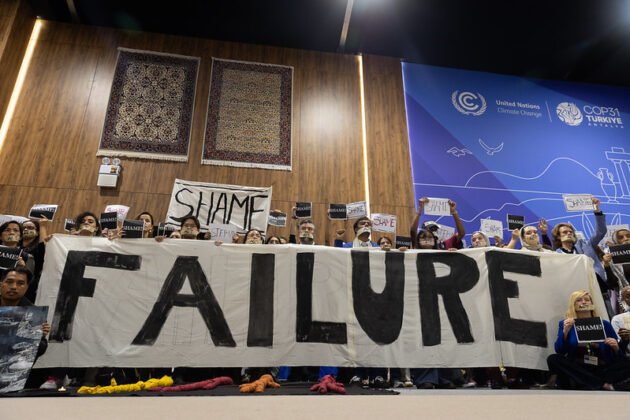
The Longest COP Ends With Nothing
The summit was scheduled to end on Friday, 20 November. Instead, negotiations spilled two days into overtime, making COP31 the longest UN climate conference on record — overtaking COP25 in Madrid in 2019, which finished 44 hours after its scheduled close. By the time the gavel fell in Antalya on Sunday, the talks had run a record 44 hours past their scheduled close.
It was the first COP to end without any cover decision at all since the 2000 summit in The Hague — and the first major breakdown of UN climate talks since Copenhagen in 2009, when countries failed to adopt the Copenhagen Accord by consensus.
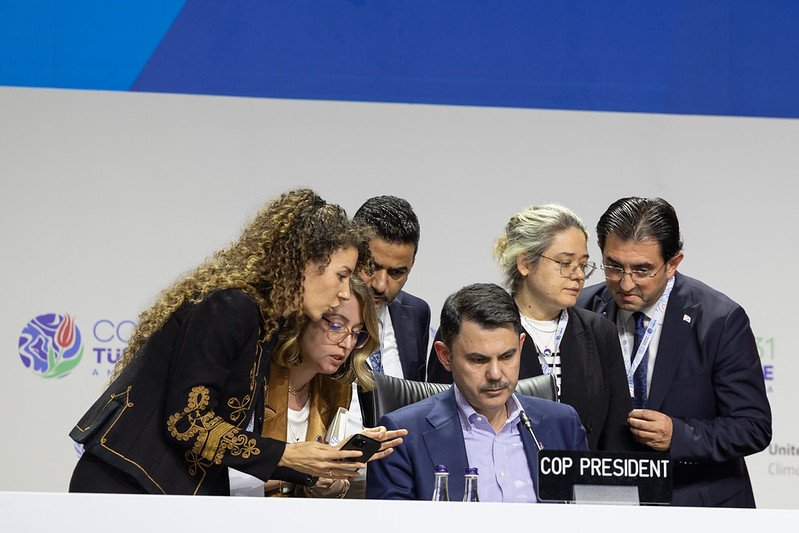
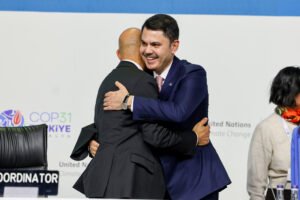
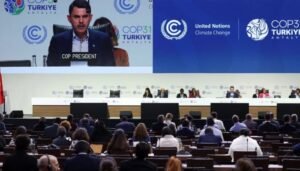
COP31 President Murat Kurum, Turkiye’s environment minister, conceded defeat at the closing plenary. “I understand that there is no agreement on this text. For that reason, these decisions have not been adopted,” he told delegates. He said he would put forward no further text, adding: “There is nothing to do. We did all that we could.” He blamed “some” unnamed countries for failing “to demonstrate the level of commitment and flexibility required.”
After a fortnight of talks and two days of overtime, the summit closed with no deal — not a weak one, not a partial one, but none at all.
The Word That Broke the Deal
The talks stalled on a single omission: the final text made no mention of fossil fuels at all — not coal, not oil, not natural gas. The first draft of the cover decision, released on 16 November, had reaffirmed the COP28 Dubai commitment to transition away from fossil fuels and urged countries to accelerate that shift. By 19 November, after objections from Saudi Arabia and other major oil and gas producers, every reference had disappeared. The final text, issued early on Sunday morning, merely recalled the “United Arab Emirates Consensus” in its entirety, without naming the fuels driving global warming.
More than 130 countries had pushed to reaffirm the COP28 agreement to transition away from oil, gas and coal. A group of Saudi-led states, as well as Russia, said they could not accept any wording on fossil fuels at all — even wording based on past agreements.
Speaking for the EU, Ireland’s climate minister Darragh O’Brien told the plenary: “It’s unconscionable that we would have a climate act that makes no reference to fossil fuels.” He added: “We will not accept a COP that greenwashes fossil fuels.” The UK’s lead negotiator, Kate Hughes, called the text “a lowest common denominator”, while Norway said it took the world backwards from earlier agreements. Panama’s environment minister, Juan Carlos Navarro, who had said on Friday that the COP had been “hijacked by petroleum”, reminded the hall that the world was heading for 4°C of warming before Paris, but is still on course to reach 2.8°C today.
The final text also kept a push to expand carbon capture technology to gigatonne scale by 2035 — a technology championed by the fossil fuel industry that critics warn is costly, unproven at scale, and could prolong fossil fuel dependence.
“Deeply Disappointed”
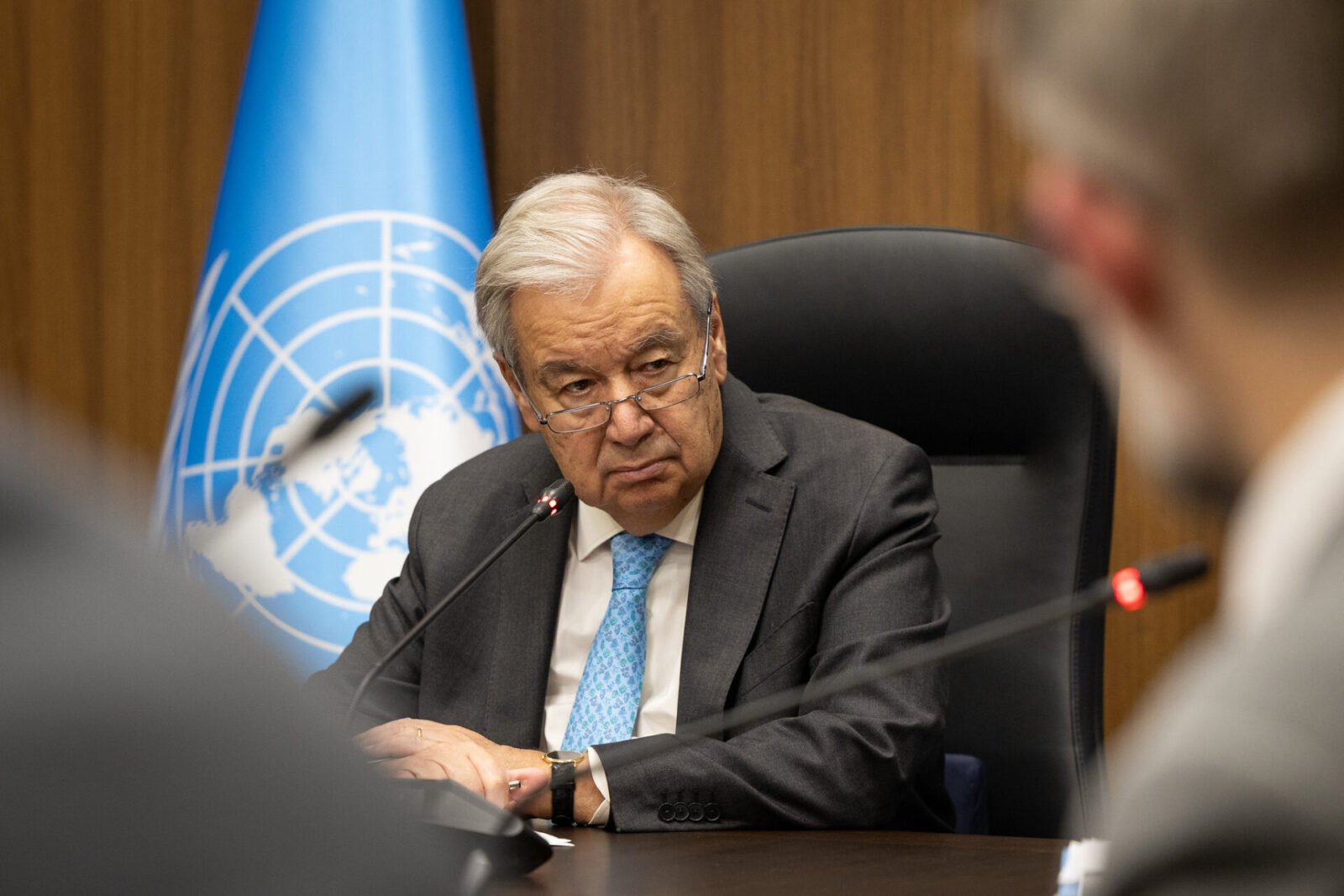
UN Secretary-General António Guterres said he was deeply disappointed by the outcome. “I am deeply disappointed that COP31 has ended without consensus on an overarching outcome. I share the very profound frustration of all those who expected governments to rise to the moment the climate crisis demands,” he said in a statement.
“There may be no consensus in the negotiating room. There is no ambiguity in the science,” he added, warning that global temperatures continue to break records, climate impacts are intensifying and greenhouse gas emissions remain dangerously high, while the world is now on course to exceed the internationally agreed 1.5°C warming limit. Guterres warned that an overshoot above 1.5°C is now inevitable, and that fossil fuels ultimately “must go the way of the dinosaurs”.
UN climate chief Simon Stiell said the outcome “certainly fell short”, while Australia’s Chris Bowen, the COP31 president of negotiations, said: “Unfortunately, we were unable to reach agreement on a cover decision. And that’s disappointing, very disappointing.” Bowen called fossil fuels and climate finance the main obstacles to a deal.
The World Resources Institute blamed “a failure of political leadership, not a failure of the Paris Agreement”, adding that it was “indefensible that countries could not agree on even mentioning fossil fuels”. Power Shift Africa called Antalya “the worst COP ever”.
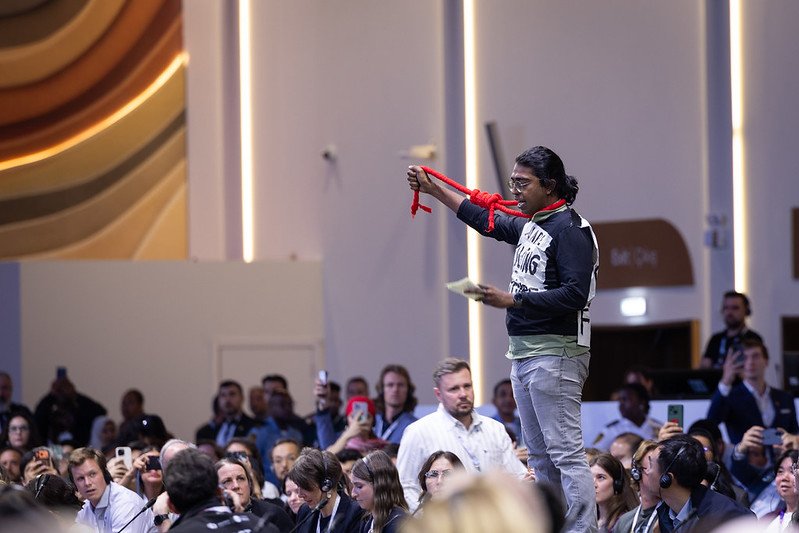
Money: The Other Fault Line
Fossil fuels were not the only dispute. Developing countries, particularly in Africa, had pushed for a US$120 billion target for annual adaptation finance by 2035, to help vulnerable communities cope with worsening climate impacts. That figure was dropped during the negotiations, leaving only a call to triple adaptation funding — with no dollar figure and no agreed baseline.
For the small island states and least developed countries, the failure on finance was as bitter as the failure on fossil fuels. The Marshall Islands told the plenary: “We have been let down on all sides.” Vanuatu objected forcefully to the text’s silence on fossil fuels — the leading cause of the warming and sea level rise threatening the very existence of many Pacific island nations.
The draft also acknowledged that global warming is projected to exceed the Paris Agreement’s 1.5°C threshold, while offering limited new measures to address the threat. The World Meteorological Organization reported that global temperature from January to September 2026 was about 1.47°C above pre-industrial levels, and that 2015–2026 is set to be the warmest 12 years on record.
The summit could agree that the world is heading past 1.5°C — it could not agree on naming the cause.
What Was Saved
The collapse of the cover decision does not erase everything COP31 did. Delegates adopted a set of technical decisions during the two weeks, including on a just transition, and those decisions stand. The failure to agree a political declaration does not erase the obligations agreed by previous UN conferences: the Paris Agreement, the COP28 Dubai commitment to transition away from fossil fuels, and the related legal and technical frameworks all remain in place.
There was also progress outside the failed agreement. More than 90 countries signed up to a separate commitment to undertake faster electrification of their energy systems — the electrification drive at the heart of the draft, which proposed raising electricity’s share of global final energy consumption to 35 per cent by 2035, from about 23 per cent today. That pledge lives on as a separate initiative, even though the cover decision that contained the 35 per cent goal was never adopted.
The summit also gave the ocean a recognition in UN climate talks that campaigners said they had never seen before, with promises of an ocean-specific roadmap, new finance and a ramping up of blue priorities in climate plans.
How the Text Unravelled
The collapse was the end of a week in which the text kept getting weaker. The first draft, on 16 November, used the word “fossil” six times and called for an “immediate transition away from fossil fuels in energy systems”. The draft of 19 November mentioned fossil fuels nowhere, declaring instead an “irreversible” global transition towards low emissions and proposing the 35 per cent electrification goal.
A third draft, published in the early hours of Sunday, tried to bridge the gap by recalling the United Arab Emirates Consensus “in its entirety across mitigation, adaptation and means of implementation”. Critics called the oblique reference too little, too late. The European Union, the United Kingdom, Norway, Panama, the Marshall Islands, Belize, Vanuatu, Tuvalu and other small island states refused to endorse it. The summit’s president had put the package to delegations early on Sunday saying he believed all of them could accept it; by the afternoon, it was clear they could not.
The talks were further complicated by war and rising living costs competing for policymakers’ attention — and by the absence of the United States, the world’s largest historical greenhouse gas emitter, for the second year in a row. The White House had dismissed the summit as “climate nonsense”.
What Happens Now
Unresolved items from COP31 will now carry over automatically, under rule 16 of the UNFCCC rules of procedure, to COP32 in Addis Ababa, Ethiopia, from 8 to 19 November 2027. The next summit inherits the same questions Antalya could not answer: whether the world’s climate pact can name fossil fuels, how much money vulnerable countries will get to adapt, and whether consensus among nearly 200 nations — where a single objection can block a deal — can still deliver.
Panama has demanded a cap on global oil production at current levels and an end to rules that let one country block agreement. Countries that want to move faster will now work through other channels, including the Santa Marta process, while the formal process regroups for Addis Ababa.
- COP31 ended on Sunday, 22 November, with no overarching agreement — the first COP without a cover decision since 2000.
- The talks ran a record 44 hours past their scheduled close, overtaking COP25 in Madrid in 2019.
- The final text mentioned no fossil fuel at all, prompting the EU, UK, Norway, Panama, island states and others to reject it.
- The US$120 billion adaptation finance target was dropped, replaced by a call to triple funding with no dollar figure or baseline.
- A just-transition decision was adopted among the technical decisions, and more than 90 countries backed a separate electrification pledge.
- COP32 meets in Addis Ababa from 8 to 19 November 2027, inheriting the unresolved items.
Antalya was meant to be the “implementation COP”. It ended as the longest COP in history — and the one that agreed nothing at all.
Reporting based on UN News, 22 November 2026; Reuters, 22 November 2026; Inter Press Service/Global Issues, 22 November 2026; Health Policy Watch, 23 November 2026; Associated Press, 22 November 2026; and UNFCCC, dates and venues of future sessions. Earlier BNN coverage: COP31 Close to Final Deal as Summit President Puts New Package to Nearly 200 Nations
By Faseeh Ur Rehman
Senior Journalist | The BNN Media – The Best News Network
News Beyond the Borders

One thought on “COP31 Collapses in Antalya: No Climate Pact After Record Overtime as Fossil-Fuel Row Ends Talks”