By
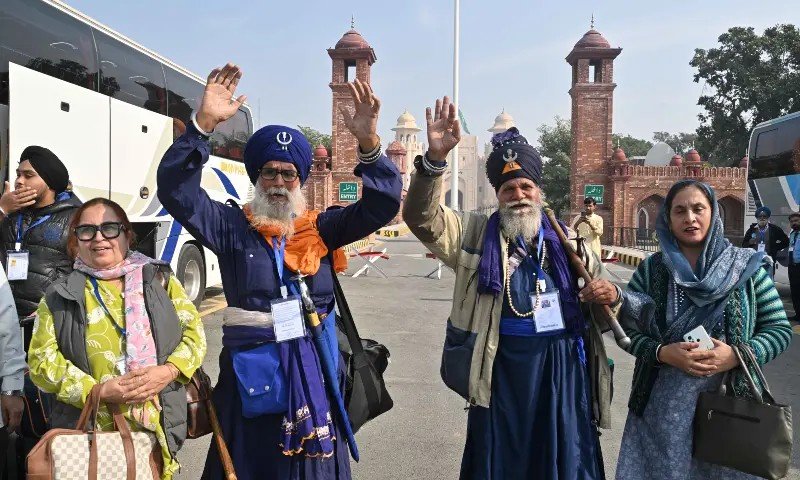
More than 2,300 Indian Sikh pilgrims crossed into Pakistan through the Wagah border on Sunday, joining tens of thousands of devotees at Gurdwara Janam Asthan for the main ceremony marking the 557th birth anniversary of Guru Nanak Dev Ji on Tuesday.
By The BNN Media
The Best News Network
News Beyond the Borders
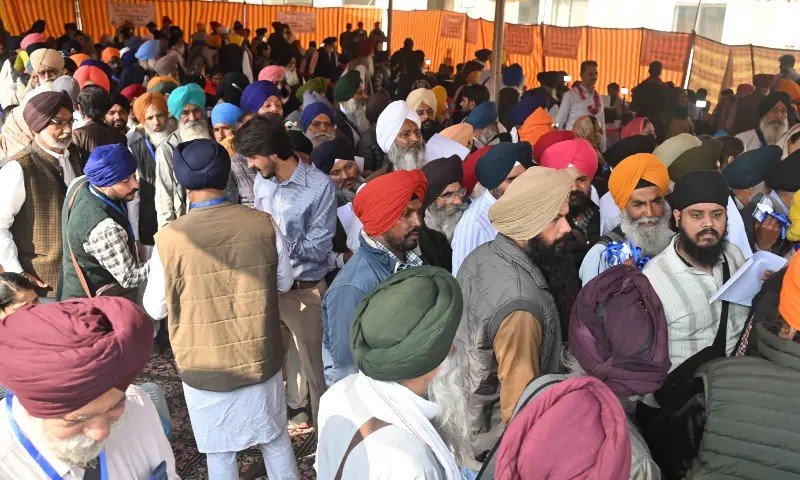
Nankana Sahib, Pakistan — Thousands of Sikh pilgrims from India and around the world gathered in Nankana Sahib on Tuesday for the main ceremony marking the 557th birth anniversary of Guru Nanak Dev Ji, the founder of Sikhism, at Gurdwara Janam Asthan, the shrine built at the place of his birth.
A Birthplace at the Centre of the Celebrations
Guru Nanak Dev Ji was born in 1469 at Rai Bhoi Ki Talwandi, the town now known as Nankana Sahib in Pakistan’s Punjab province. For Sikhs around the world, the town is among the most sacred places in their faith, and the anniversary of his birth — observed each year on Kartik Purnima, the full moon of the lunar month of Kartik — draws pilgrims from across the globe.
The main ceremony on Tuesday, 24 November, was held at Gurdwara Janam Asthan, where the formal programme included the conclusion of the Akhand Path Sahib, the continuous recitation of the Guru Granth Sahib, followed by the Bhog ceremony, Shabad Kirtan, Ardas and other religious observances. A traditional Nagar Kirtan, a devotional procession, formed part of the celebrations.
The birthplace of Sikhism’s founder remains the emotional heart of the anniversary, and this year’s gathering is among the largest in recent years.
More Than 2,300 Pilgrims Cross at Wagah
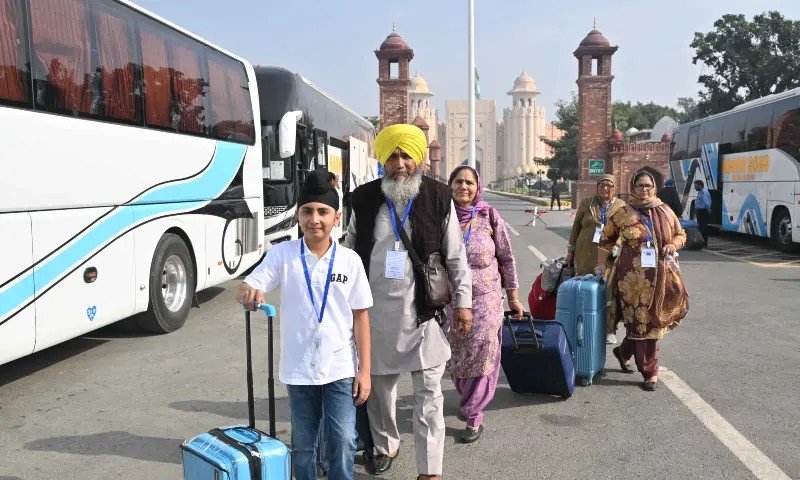
The Indian pilgrims began arriving on Sunday, 22 November, crossing into Pakistan through the Wagah border in three separate convoys under tight security before travelling on to Nankana Sahib in special transport arranged by the Pakistani authorities.
According to Evacuee Trust Property Board (ETPB) spokesperson Amir Hashmi, 2,339 Sikh pilgrims arrived from India on Sunday. The Pakistan High Commission in New Delhi had issued around 3,100 visas to Indian Sikhs for the occasion, and the ETPB said the total number of visas issued was 3,091.
The first group to cross on Sunday morning numbered about 700 pilgrims, officials said, led by Akal Takht Jathedar Giani Kuldeep Singh Gargaj. The group also included Shiromani Gurdwara Parbandhak Committee (SGPC) executive committee member Ravinder Singh Khalsa and other committee members.
At the Wagah border, the pilgrims were received by ETPB Chairman Qamar Zaman, Secretary Nasir Mushtaq, Pakistan Sikh Gurdwara Parbandhak Committee President and Punjab Minorities Minister Sardar Ramesh Singh Arora, and the committee’s secretary general Satwant Kaur. The leaders of the visiting group were presented with bouquets.
More than 2,300 pilgrims arrived in a single day, and more were expected to follow — a reminder of how deeply the journey to Nankana Sahib matters to Sikhs in India.
Arrangements for a Gathering of Tens of Thousands
The ETPB said more than 20,000 Sikhs — from Pakistan and across the globe — were expected to take part in the formal festivities, which ran from Sunday through to the main ceremony on Tuesday. Special counters were set up at the Wagah border for immigration and baggage screening, Rangers were deployed for security, and the board established currency exchange facilities, issuing identity cards and bus tickets to the pilgrims to ensure a smooth onward journey.
In Nankana Sahib itself, the district administration said more than 2,500 police personnel had been assigned to the security of the pilgrims. Medical camps, temporary accommodation, langar — free community meals — and transport facilities were arranged, officials said.
Deputy Commissioner Rana Hameed told a press conference before the festival that arrangements for the celebrations had been completed and given their final shape. The district administration also announced a local public holiday in Nankana Sahib district for Tuesday, 24 November, while making clear that scheduled examinations would go ahead as planned.
The scale of the arrangements — thousands of police, medical camps, meals and buses — reflects the size of a gathering that brings together devotees from several continents.
Leaders Join the Main Ceremony
Government officials and Sikh leaders gathered at Gurdwara Janam Asthan on Tuesday morning for the main ceremony, according to the Evacuee Trust Property Board. Guests at the ceremony included Minister of State for Religious Affairs and Interfaith Harmony Kheal Das Kohistani, National Assembly member Hamza Shehbaz Sharif, ETPB Chairman Qamar-uz-Zaman, Board Secretary Nasir Mushtaq, and Pakistan Sikh Gurdwara Parbandhak Committee President Sardar Ramesh Singh Arora.
Federal Minister for Religious Affairs Sardar Muhammad Yousuf was also expected to attend the event as a special guest, according to earlier reports.
President Asif Ali Zardari and Prime Minister Shehbaz Sharif both extended greetings to the Sikh community in Pakistan and around the world. In a message posted on X by the Presidency, President Zardari noted that Pakistan is home to some of Sikhism’s most sacred sites, including Gurdwara Janam Asthan in Nankana Sahib and Gurdwara Darbar Sahib in Kartarpur, Narowal.
Prime Minister Sharif described Guru Nanak as an extraordinary revered figure who championed peace, mutual tolerance, social equality and selfless service to humanity, and said the Pakistani government takes pride in preserving and protecting the sacred shrines and warmly welcomes Sikh pilgrims from around the world.
The presence of senior officials at the shrine underlined the official welcome extended to the pilgrims, and the government’s emphasis on the protection of minority religious freedoms.
A Week of Pilgrimage Across Punjab
The visit does not end with the main ceremony. According to the official itinerary reported by the ETPB, the pilgrims will visit Gurdwara Sacha Sauda in Farooqabad on Wednesday, 25 November, before proceeding to Hassan Abdal, where they will stay overnight at Gurdwara Panja Sahib.
They will travel to Gurdwara Darbar Sahib in Kartarpur, Narowal, on 27 November, and spend the night there. The visiting devotees will then spend 29 and 30 November visiting historic gurdwaras in Lahore before returning to India through the Wagah border by road on 1 December.
On Monday, 23 November, the pilgrims visited historic gurdwaras in Nankana Sahib district, taking part in Akhand Path Sahib, Shabad Kirtan and Ardas at Gurdwara Janam Asthan ahead of the main ceremony.
The pilgrimage is one of several Sikh religious visits to Pakistan each year. In June, around 600 Sikhs arrived from India to observe the death anniversary of Guru Arjan Dev Ji, and about 2,800 visas were issued for the Baisakhi festival in April.
The Kartarpur Corridor Remains Closed
The celebrations also served as a reminder of the Kartarpur Corridor, the visa-free crossing Pakistan built in 2019 so that Indian Sikhs could reach Gurdwara Darbar Sahib in a day. India suspended movement through the corridor in May 2025, and it has not reopened.
At the Wagah border, Minister Ramesh Singh Arora urged the Indian government to immediately reopen the corridor, which provides Sikh pilgrims with access to Gurdwara Darbar Sahib in Kartarpur, one of the holiest sites in Sikhism.
Giani Kuldeep Singh Gargaj, the Akal Takht Jathedar who led the pilgrims from India, said the Sikh community shared a deep bond of reverence with Pakistan, where its members were always treated with respect and honour. “Our gurdwaras in Pakistan are safe and preserved in their original state,” he said.
Parmjeet Singh, a leader of a Delhi Gurdwara Management Committee delegation, said Pakistan held special significance for Sikhs as the land associated with their guru. “Pakistan is the land of our guru, and we love it very much,” he said.
The closed corridor means that, for now, the Wagah border remains the only route for Indian pilgrims — and the call to reopen Kartarpur was one of the clearest messages of this year’s gathering.
The Message of Guru Nanak
Guru Nanak Dev Ji, the first of the ten Sikh Gurus, devoted his life to spreading a message of one universal Creator, equality, truthful living, compassion and selfless service. His teachings — honest work, sharing with others, and devotion to God — are remembered in the prayers, hymns and community meals that mark each anniversary.
At Nankana Sahib, those teachings were on display in the langar halls and in the voluntary service of devotees, as pilgrims from different countries prayed together at the place where the founder of their faith was born more than five and a half centuries ago.
For the pilgrims who travelled from India, the journey was an act of devotion; for the town that hosted them, it was a reminder that Nankana Sahib belongs to the spiritual map of Sikhs everywhere.
By The BNN Media
The Best News Network
News Beyond the Borders