 By
Tales of Palestinian exile and an Egyptian prison memoir won the top fiction and nonfiction prizes at the 77th National Book Awards in New York, in a ceremony marked by empty chairs, denied visas and a lifetime honour for Salman Rushdie.
By The BNN Media
The Best News Network
News Beyond the Borders
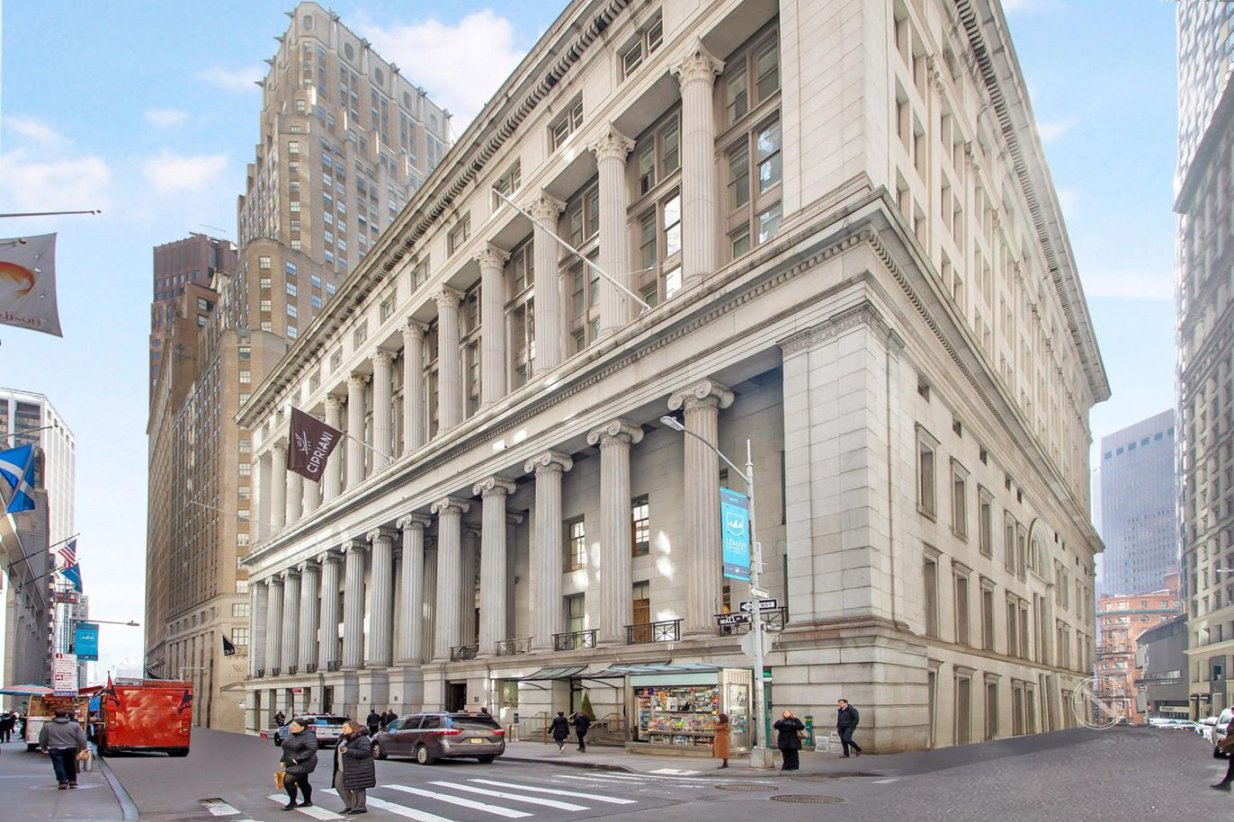
New York City, United States — The 2026 National Book Awards were announced on Wednesday night at a gala at Cipriani Wall Street in New York City, where stories of exile, imprisonment and loss took the top honours. Hannah Lillith Assadi’s novel “Paradiso 17” won the fiction prize, and Abdelrahman ElGendy’s prison memoir “Huna: A Memoir of Revolution, Prison, and Becoming” won for nonfiction — though ElGendy himself could not be there, after the United States denied him a visa.
The winners in full
The 77th National Book Awards were presented at a dinner ceremony hosted by actor and author Kyle MacLachlan. Publishers had submitted 1,912 books for consideration, judged by panels of authors, editors, booksellers and others from the literary community. The winners in the five competitive categories, each receiving $10,000, were:
- Fiction: Hannah Lillith Assadi, “Paradiso 17” (Knopf)
- Nonfiction: Abdelrahman ElGendy, “Huna: A Memoir of Revolution, Prison, and Becoming” (Hogarth)
- Poetry: Brenda Hillman, “Still House in the Desert: An eco-contemplation” (Wesleyan University Press)
- Translated Literature: Vicente Luis Mora, “Centroeuropa”, translated from the Spanish by Rahul Bery (Bellevue Literary Press)
- Young People’s Literature: David Levithan and Gabriel Duckels, “The Fight of Our Lives: AIDS in America” (Knopf Books for Young Readers)
Two lifetime honours were also presented on the night: the Medal for Distinguished Contribution to American Letters went to Salman Rushdie, and the Literarian Award for Outstanding Service to the American Literary Community went to paediatrician and author Dr. Perri Klass.
Two of the evening’s biggest stories — a Palestinian exile’s journey and an Egyptian prison memoir — both began in the Middle East, and both were written out of loss.
Fiction: a Palestinian exile’s journey home
Assadi’s “Paradiso 17” was described by the Associated Press as a loving, melancholy and poetic account of a Palestinian exile’s worldwide journey. The novel follows Sufien, a Palestinian protagonist displaced during the 1948 Nakba, and was inspired in part by the death of the author’s father — and haunted further, as Assadi said, by the deaths of Palestinians in the war in Gaza.
Accepting the award, Assadi remembered the writing of the book as a time of pain, deep grief and beauty, a cycle mirroring life itself. “Isn’t that story all of ours?” she asked the audience.
It is a win that places a story of displacement at the centre of American literature’s most prominent night — and one that the judges chose from a fiction shortlist that also included Edwidge Danticat’s “Dèy”, Julián Delgado Lopera’s “Pretend You’re Dead and I Carry You”, Valeria Luiselli’s “Beginning Middle End” and Morgan Thomas’s “Mad Eden”.
Nonfiction: the winner who could not attend
The night’s most moving moment belonged to a man who was not in the room. Abdelrahman ElGendy, a onetime student activist, was arrested as a teenager in 2013 during protests in Cairo and spent six years in prison in Egypt. He later came to the United States, but fled the country in April 2025 in fear that he would be deported back to Egypt, and is now in Europe. The US consular office denied him a visitor visa to attend the ceremony.
His editor, Helen Thomaides of the Penguin Random House imprint Hogarth, read a brief statement on his behalf, in which ElGendy recalled his vow that someday he would turn the suffering he endured into a story. His acceptance speech, read to the audience, said in part: “A yearslong dream of mine has come true, and I’m not there to live it with you. May all borders be abolished; may all prisons fail.”
ElGendy had fantasised about writing a memoir from his prison cell in Egypt, and then dreamed that the book would one day win an award. On Wednesday night, that dream came true — from a distance.
The empty chair said as much as any speech: a book about prison and exile won American literature’s top nonfiction prize while its author was kept out of the country by a visa refusal.
Poetry, translation and young people’s literature
In poetry, Brenda Hillman won for “Still House in the Desert: An eco-contemplation”, an achievement that echoes her husband and fellow poet Robert Hass’s win in the same category in 2007. “We have a matching set,” she said of her prize. “It’ll be nice to have mine next to his.” Hillman, who previously won the 2009 Los Angeles Times Book Prize for Poetry for “Practical Water”, carried her book to the podium with her as she accepted the award, saying she thinks books have feelings.
The translated literature prize went to Spanish novelist Vicente Luis Mora’s “Centroeuropa”, translated from Spanish by Rahul Bery — a reminder of how much of the evening’s shortlist reached American readers only through translators.
The young people’s literature prize went to David Levithan and Gabriel Duckels for “The Fight of Our Lives: AIDS in America”, a history of the AIDS years written for readers born after them. Levithan said the book was inspired by how little children knew about AIDS. Levithan, an editorial director at the publisher Scholastic, is among a handful of book editors who also have successful writing careers. In his remarks, he noted the surge in book bans over the past few years, but added: “There are far, far, far more people who want our voices to be heard, who want the truth of our lives to be shared, and who want the queer generations that come after us to have it easier.”
The lifetime honours: Rushdie and Klass
The evening’s two career honours went to figures who have shaped American letters in very different ways.
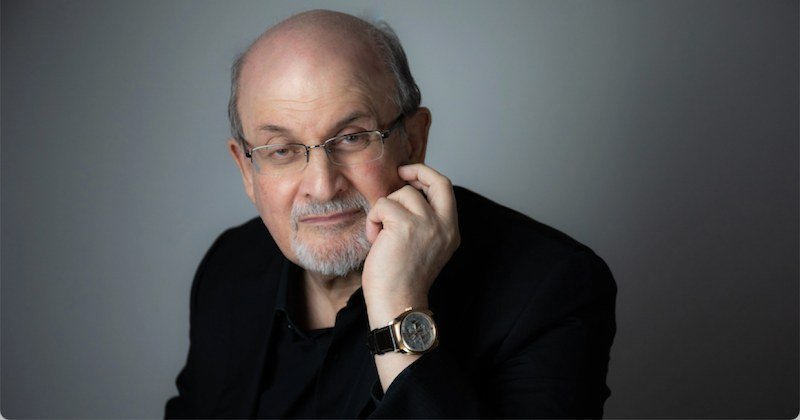
Salman Rushdie received the Medal for Distinguished Contribution to American Letters, which recognises a writer who has enriched the country’s literary heritage through their body of work. The medal was presented by novelist Kiran Desai. Rushdie noted that many previous winners of the award, from Don DeLillo to Saul Bellow, were friends and influences, and welcomed his own entry into what he called the “august” pantheon of American literature.
Dr. Perri Klass received the Literarian Award for outstanding service to the literary community, presented by author Jason Reynolds. Klass, a paediatrician and author, is an architect of the nonprofit Reach Out and Read, which promotes early literacy by giving books to children at medical check-ups. She brought to the stage emblems of her two passions — a stethoscope and a copy of the children’s classic “Goodnight Moon”, a book she assured the audience that toddlers on up are able to quote from.
An evening shadowed by visas and book bans
Not all of the finalists could attend. Alongside ElGendy, Samar Yazbek of Syria, a finalist for books in translation, was denied a visa to the United States, according to the National Book Foundation, which presents the awards. Her translator, Leri Price, read from Yazbek’s work on her behalf.
At a pre-awards reading on Tuesday, several finalists deplored the visa denials. ElGendy’s fellow nonfiction nominees dedicated their readings to him as he watched remotely, with novelist Omar El Akkad appearing on ElGendy’s behalf. The US State Department declined to comment on any specific cases, but said the Trump administration “continues to put America and its interests first by fully enforcing US immigration laws” — and quoted Secretary of State Marco Rubio’s line that “a visa is a privilege, not a right”.
There was lighter relief, too. The ceremony’s host, “Twin Peaks” and “Sex and the City” actor Kyle MacLachlan — whose memoir “Fictional Selves” was published in September — joked that he was such a book nerd growing up that he took a class in the Dewey Decimal system, and that his own memoir had somehow been snubbed for the awards. Musical guest Michelle Zauner of Japanese Breakfast sang “Be Sweet” and the suitably bookish “Magic Mountain”, inspired in part by Thomas Mann’s classic novel.
The ceremony’s tensions — visas denied, books banned, authors in exile — were not a distraction from the awards. They were the evening’s subject, written into the winning books themselves.

What the awards mean this year
The National Book Awards, now in their 77th year, remain among the most closely watched prizes in American publishing. This year’s winners are strikingly international in outlook: a Palestinian exile’s novel, an Egyptian prison memoir, a Spanish novel in translation, a history of AIDS for young readers, and a book of desert poems.
That breadth was the point the night kept returning to — that the books Americans honoured most in 2026 were books about crossing borders, surviving prisons and remembering the dead. As Assadi put it from the stage, that story belongs to everyone.
By The BNN Media
The Best News Network
News Beyond the Borders
Sources: Associated Press (via LA Post, 18 Nov 2026); Literary Hub winners list (18 Nov 2026); Bytes Europe / AP (visa denial and ceremony detail); Jagran Josh (ceremony time 8:00 p.m. EST, prize money $10,000, Rushdie presented by Kiran Desai, Klass and Reach Out and Read).