By
By The BNN Media
The Best News Network
News Beyond the Borders
Three weeks after the midterm elections, the scale of the Democratic victory is now clear: a 14-point win in the national House vote, 47 Republican-held seats flipped, and the party’s largest House majority since the early 1990s.
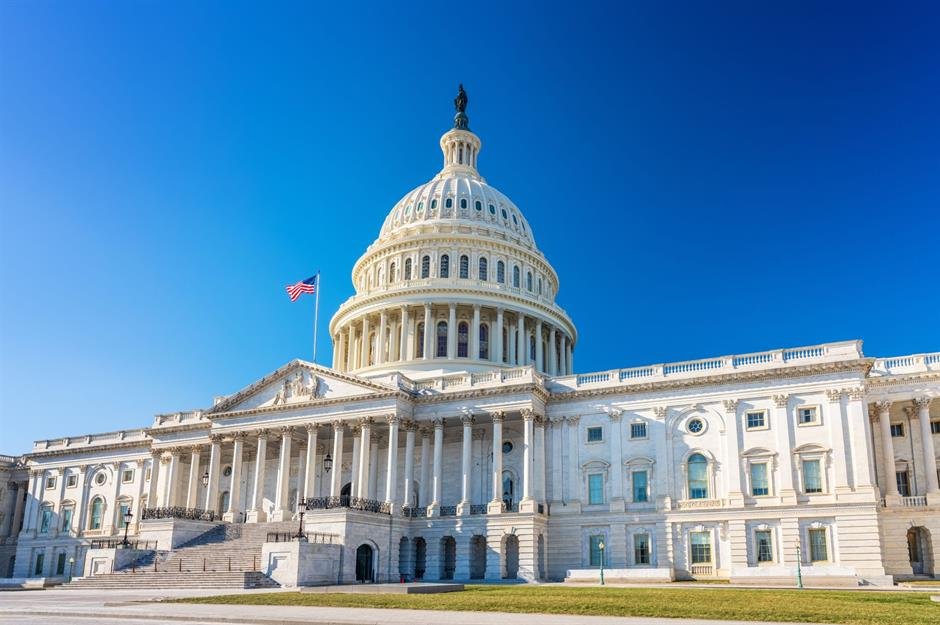
Washington, D.C., United States — Democrats have won control of the United States House of Representatives by the largest margin in decades, flipping 47 seats held by Republicans in the midterm elections of 3 November 2026, according to final counts reported by NPR.
A 14-point win in the national vote
With vote counts concluding and the closest House races being decided, the picture of the Democrats’ victory has become clear. Some 56 per cent of people cast their votes for Democrats in House races, compared with 42 per cent who voted Republican — a 14-point spread on the House ballot.
That makes it the biggest win for either party in 50 years, since the elections that followed the Watergate scandal, according to NPR’s analysis. For comparison, the Democrats’ wins in 2018 and 2006, and the 2010 Republican wave that former President Barack Obama called a “shellacking”, were all won by margins of less than 10 points. Even Obama’s 2008 election, the closest comparison, came in at almost 11 points.
No party has won the House popular vote by this much in half a century.
Nearly 50 seats change hands
The scale of the win is most visible in the seats that changed parties. So far, Democrats have flipped 47 House seats currently held by Republicans. That number could rise to 49, as Democrats lead in two other races that have not yet been called.
It is the second-most seats flipped in a single election this century. The first was in 2010, when Republicans flipped 66 seats, netting 64, in a backlash against the passage of the Affordable Care Act.
The Associated Press, whose race calls are the basis for most tallies, had by 23 November called at least 258 House seats for Democrats and at least 173 for Republicans, with four races still uncalled. The AP’s most recent call, on 22 November, went to Democrat Chuck Hubbard in North Carolina’s 5th District after a recount, and the Republican incumbent, Virginia Foxx, called him to concede.
Republicans flipped three Democratic-held seats in return, including Maine’s 2nd District, where the AP called the race for Paul LePage on 12 November.
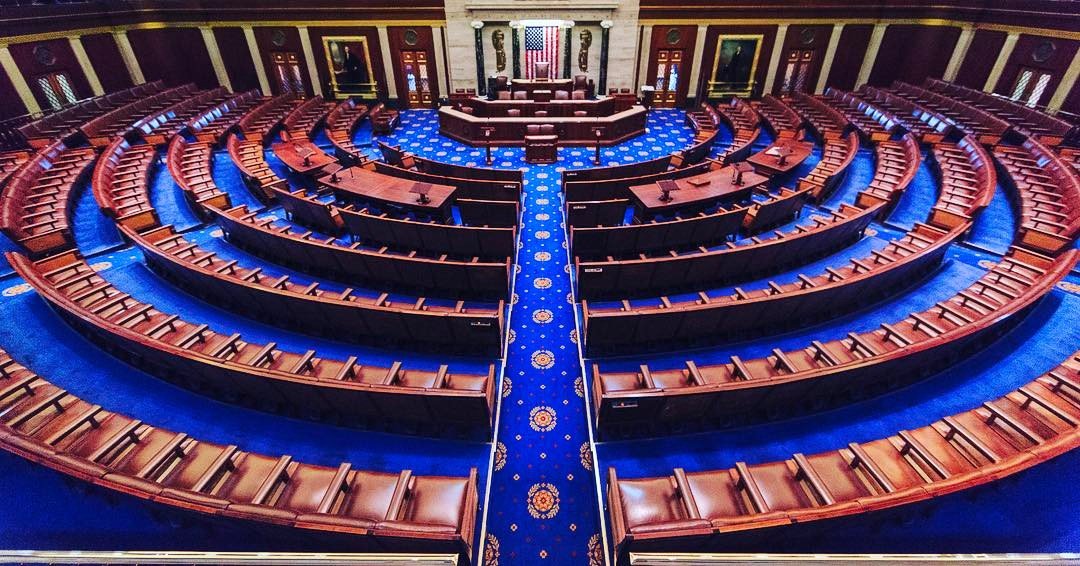
In a chamber of 435 seats, a swing of this size does not just change the majority — it changes what the majority can do.
The biggest majority in a generation
The result gives Democrats their largest majority in Congress since the early 1990s. If Democrats win all the races in which they are leading, they will hold 260 seats — the most since the 102nd Congress, which sat from 1991 to 1993.
Democrats controlled the House for 40 years until the 1994 Republican Revolution that brought the party of Newt Gingrich to power. This century, by contrast, has seen some of the slimmest House majorities in American history, and the most changes of party control of the chamber in 130 years. When the new Congress takes its seats in January, control of the House will have changed hands five times in the last 20 years.
Now, three decades after Gingrich’s “Contract with America” — and a decade into Donald Trump’s grip on the Republican Party — House Republicans are back roughly where they were before the Republican Revolution of 1994.
How the map changed
The Democratic wave reached deep into territory that election forecasters had expected Republicans to hold. According to USA Today, voters’ frustration over high costs drove the party’s gains, with Democrats winning seats further into Republican territory than predicted.
The wave was visible early on election night, 3 November, when Democrats flipped an open seat in Kentucky and won seats in Florida that had been redrawn to favour Republicans. In North Carolina’s 9th Congressional District, voters ousted Republican Representative Richard Hudson, the chairman of the National Republican Congressional Committee.
Other results underlined the breadth of the shift. In California, the only Democratic-controlled state to redraw its congressional map, Democrats achieved their goal of sending five more representatives to the House, taking 48 of the state’s 52 seats, according to Le Monde. In Iowa, a rural, agricultural state, Democrats made striking gains: all four of the state’s seats had previously been held by Republicans, but they are now split three to one in the Democrats’ favour.
- Kentucky: Democrats flipped an open seat on election night.
- Florida: Democrats won seats in districts redrawn to favour Republicans.
- North Carolina: voters ousted the chairman of the Republican campaign committee.
- California: Democrats gained five seats, taking 48 of 52.
- Iowa: Democrats took three of four seats previously held by Republicans.
The gains were not confined to one region or one kind of district — they came in the South, the Midwest and the West alike.
A new leadership team
With the majority secured, House Democrats moved quickly to choose their leaders. On 18 November, they nominated Hakeem Jeffries as their choice for Speaker by 251 votes to 11. They also elected Katherine Clark of Massachusetts as their choice for majority leader and Pete Aguilar of California as whip.
Jeffries is in line to become Speaker when the new Congress convenes in January 2027, succeeding the Republican leadership that has held the House since 2023. He would be the first Black Speaker in American history, although that milestone is for the full House to confirm when it votes in January.
The Democrats’ victory was not limited to the House. According to AP calls, the party also won control of the Senate, taking 56 seats including independents who caucus with Democrats, after the AP called Alaska for Democrat Mary Peltola on 17 November. Democrats also won 24 of the 36 governors’ races contested on 3 November.
What it means for the final two years
The result changes the shape of American government for the final two years of President Donald Trump’s term. For the first time, he will face a divided government, with Democrats controlling both chambers of Congress.
That gives the Democratic majorities new powers: control of the House agenda, the chairmanships of its committees, and a greater ability to scrutinise the administration, including the president’s business interests. At the same time, the Democrats did not win the two-thirds supermajorities that would be needed on their own to remove a president through impeachment or to override a presidential veto — 67 seats in the Senate and 290 in the House.

What happens next
The new Congress — the 120th — convenes in January 2027, when the new members will be sworn in and the House will elect its Speaker. Before then, the outgoing Congress still has unfinished business, including the December 11 deadline to reach a spending deal or risk another government shutdown.
The final four uncalled House races will also be settled in the coming days, determining whether the Democratic majority ends at 258 seats or grows to as many as 260. Either way, the verdict of the 2026 midterms is already settled: the largest House win for either party in 50 years, and a majority not seen since the early 1990s.
For a party that went into the election needing a net gain of just three seats, the result was far more than a narrow win — it was a rout.
By The BNN Media
The Best News Network
News Beyond the Borders