By
By The BNN Media
The Best News Network
News Beyond the Borders
Qualcomm’s newest flagship phone chips, unveiled in September, are built to run powerful AI assistants directly on the handset — and the first phones carrying them are now reaching buyers around the world.
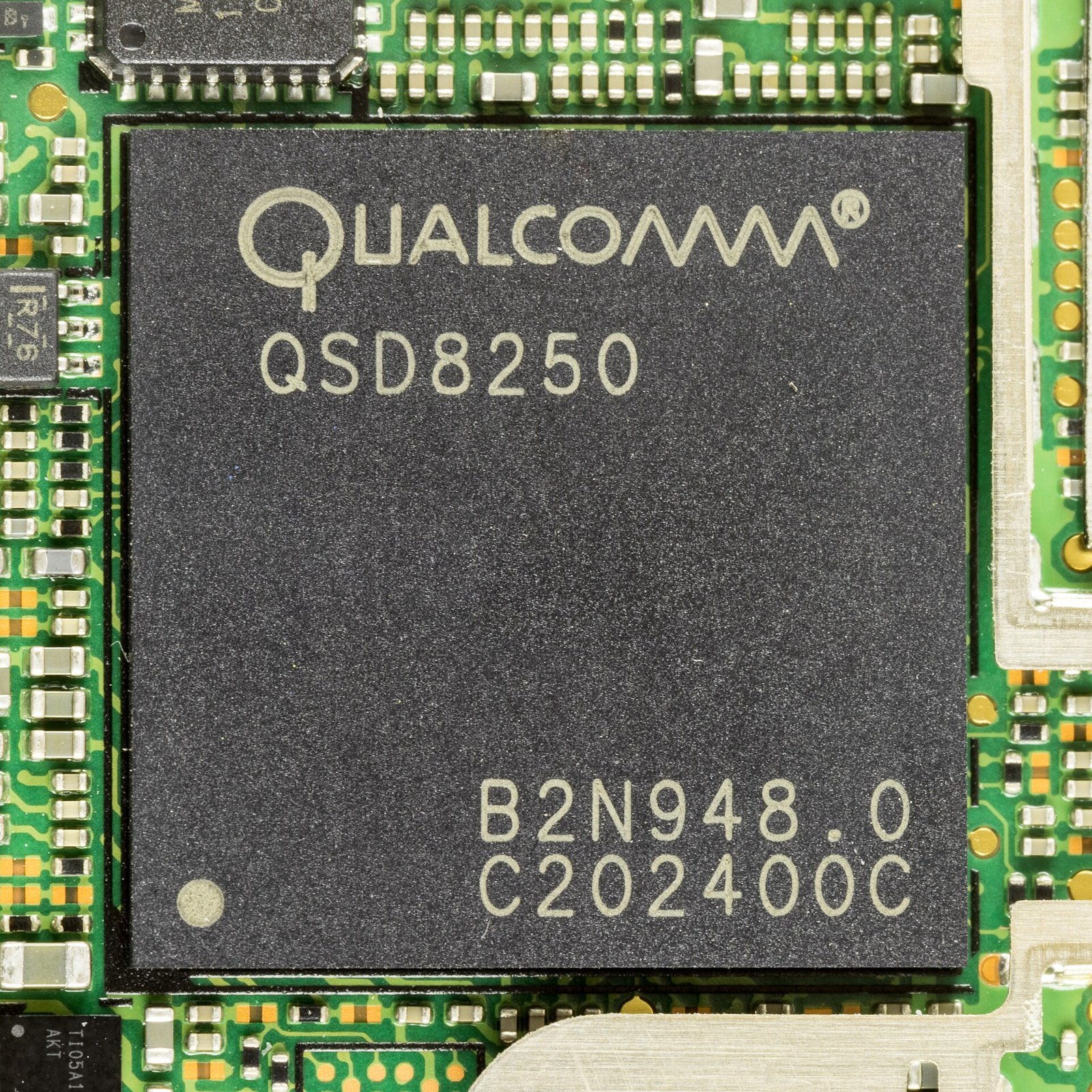
San Diego, United States — Qualcomm’s Snapdragon 8 Elite Gen 6 and Snapdragon 8 Elite Extreme Gen 6, the company’s two new flagship smartphone chips, are designed to move far more artificial intelligence processing onto the phone itself, so that AI assistants can work faster, more privately and without a constant connection to the cloud. The chips were unveiled on 22 September 2026 at Qualcomm’s annual Snapdragon Summit in Maui, Hawaii, and the first flagship phones powered by them have been launching in China since the following day, with the first global flagship, Motorola’s Signature 27, going on sale in the United States on 26 November.

Two Chips Instead of One
For the first time, Qualcomm has split its top tier into two chips. The Snapdragon 8 Elite Gen 6 is the standard flagship, while the Snapdragon 8 Elite Extreme Gen 6 sits above it, with extra AI hardware aimed at the most demanding phones. Both are built on a 2-nanometre manufacturing process, making them Qualcomm’s first 2nm mobile chips.
Chris Patrick, senior vice president and general manager of mobile handsets at Qualcomm Technologies, said at the launch: “Today marks a milestone as we introduce not one, but two new flagship mobile platforms, delivering agentic AI experiences that are immediate, personal, and adaptive.”
The idea behind the two-tier approach, Qualcomm said, is to let phone makers choose how much AI power to offer. The standard chip covers the broad premium range, while the Extreme version is aimed at flagship phones that promise the most advanced AI, gaming and camera features.
The split is a sign of how central AI has become to the smartphone: the chip is no longer sold mainly on speed, but on what kind of assistant it can run.
A Processor Built Around AI Agents
The heart of both chips is a custom Qualcomm Oryon CPU with two Prime cores running at up to 5.0 GHz and six Performance cores running at up to 4.0 GHz. Qualcomm says this is the world’s first mobile CPU to reach the 5 GHz mark. Compared with the previous generation, the Snapdragon 8 Elite Gen 5, Qualcomm claims the standard Gen 6 offers 10 percent better CPU performance and 37 percent better CPU power efficiency, while the Extreme version offers 13 percent better CPU performance.
The bigger change is in the Hexagon neural processing unit, the part of the chip that handles AI work. It has been re-engineered with a new Element Accelerator designed for transformer models, the technology behind today’s AI assistants. Qualcomm says the standard chip’s NPU is 14 percent faster than its predecessor, and the Extreme version’s is 35 percent faster, with 50 percent more shared memory.
That extra capacity matters because of what it allows the phone to do on its own. According to Qualcomm, the Extreme chip can run a 30-billion-parameter mixture-of-experts AI model entirely on the device. In such a model, only some of the parameters are activated for any given task, so a large model can run efficiently on a phone. TechCrunch noted the contrast with Apple, which in June released a 20-billion-parameter mixture-of-experts model as the most advanced of its third generation of on-device foundation models.
What On-Device AI Means for Everyday Use
Qualcomm’s pitch is that the phone itself should become a personal assistant, not just a window onto a distant data centre. The chips include a new Sensing Hub with dual micro-NPUs that can run small models of up to 200 million parameters, according to TechCrunch. That allows the phone to run a personal scribe locally, tell different speakers apart, and build a memory of the user’s habits to offer better suggestions for automating tasks.
The company says the new platform can run a complete voice-in and voice-out AI agent on the device, and can use AI to boost vocals and reduce noise, including a voice-bubble feature that isolates the user’s voice during calls. Because the processing happens on the phone, personal information does not need to be sent to the cloud for these tasks — a point Qualcomm has stressed as AI assistants become more deeply involved in daily life.
The promise is a phone that understands its owner well enough to help without being asked — and does so without sending private conversations to a server.
Gaming, Cameras and Connectivity
The AI hardware also reaches into gaming and photography. Both chips use a redesigned Adreno graphics processor, and Qualcomm claims the standard Gen 6 delivers 35 percent better graphics performance and 40 percent better power efficiency than the previous generation, while the Extreme version delivers 44 percent better graphics performance. The Extreme adds AI-dedicated Adreno matrix cores and 18 MB of on-die high-performance memory, powering a feature Qualcomm calls Adreno Neural Fusion, which uses AI super-resolution and frame generation to improve visuals.
Qualcomm claims the feature can cut gaming power use by up to 40 percent in supported titles, based on its own internal demonstration. Independent testing of that claim in real games has not yet been published, and buyers should treat the figure as the company’s own claim rather than a measured result.
On the camera side, the chips use Qualcomm’s Spectra image processor with pixel-level scene analysis, and the Extreme version supports video recording at 8K and 60 frames per second, and ultra-high-definition 4K slow motion at 240 frames per second — a first for commercial devices, according to Qualcomm. It also supports the Advanced Professional Video codec for pro-level recording.
For connectivity, the chips use the Qualcomm X105 5G modem, described by the company as the industry’s first 3GPP Release 19-ready system, paving the way towards 6G, with peak theoretical download speeds of 14.8 Gbps.
Which Phones Have the New Chips
Qualcomm named Honor, iQOO, Motorola, OnePlus, Oppo, Redmi, RedMagic, Vivo and Xiaomi among the brands that would launch phones with the new platforms. The rollout so far has been led by China:
- Xiaomi 18 Pro and 18 Pro Max — launched in China on 23 September, a day after Qualcomm’s announcement, with the Pro using the standard chip and the Pro Max using the Extreme version.
- Honor Magic9 Pro Max — launched in China on 28 September.
- iQOO 16 — launched in China on 29 September.
- OnePlus 16 — launched in China on 12 October.
- RedMagic 12 Pro — launched in China on 15 October and sold globally as the RedMagic 12 Pro.
- Motorola Signature 27 — announced in the US at $1,599.99, with pre-orders from 19 November and sales starting on 26 November, making it the first of these flagships to reach buyers outside China.
Xiaomi’s 18 Pro series is also expected to reach global markets in November, according to reports, although the company has not confirmed an exact date for every region. Phone makers set their own launch dates and prices, so availability will vary by country.
The Wider Race for AI Chips
Qualcomm’s launch comes as every major technology company is racing to put more AI into smaller devices. The smartphone is where most people will first meet an AI agent, and the company that controls the chip inside the phone has a strong position in that race.
That competition now spans data centres as well as phones. Google, for example, has unveiled its own AI chips for heavy and confidential workloads, and Apple, MediaTek and others are all pushing on-device AI of their own. Qualcomm’s answer is to make the phone itself powerful enough to run large models locally, rather than relying on the cloud for every request.
There are risks too. The industry is facing rising memory prices, and some reports have suggested global smartphone shipments could shrink in 2026 as higher component costs push up the price of finished devices. Qualcomm’s focus on premium phones reflects a broader trend: manufacturers are prioritising high-end models to offset weaker volumes.
Whether buyers notice the difference will depend on what phone makers do with the new hardware — the chip makes a smarter assistant possible, but the software on the phone will decide whether it feels smarter in daily use.
By The BNN Media
The Best News Network
News Beyond the Borders