 By
A fuel tanker overturned and burst into flames above a tunnel in Giza’s Warraq district on Wednesday evening, engulfing 27 vehicles in rush-hour traffic. Prosecutors say a speeding car struck the tanker — and the death toll is still preliminary.
By The BNN Media
The Best News Network
News Beyond the Borders
Cairo, Egypt — A fuel tanker overturned and caught fire on the Greater Cairo Ring Road on Wednesday evening, killing at least 31 people and injuring 21 others, according to Egypt’s Health Ministry. The blaze broke out above Tunnel 10 in the Warraq district of Imbaba, in Giza governorate, and spread so fast through the evening traffic that 27 cars and motorcycles were destroyed before firefighters could bring it under control.
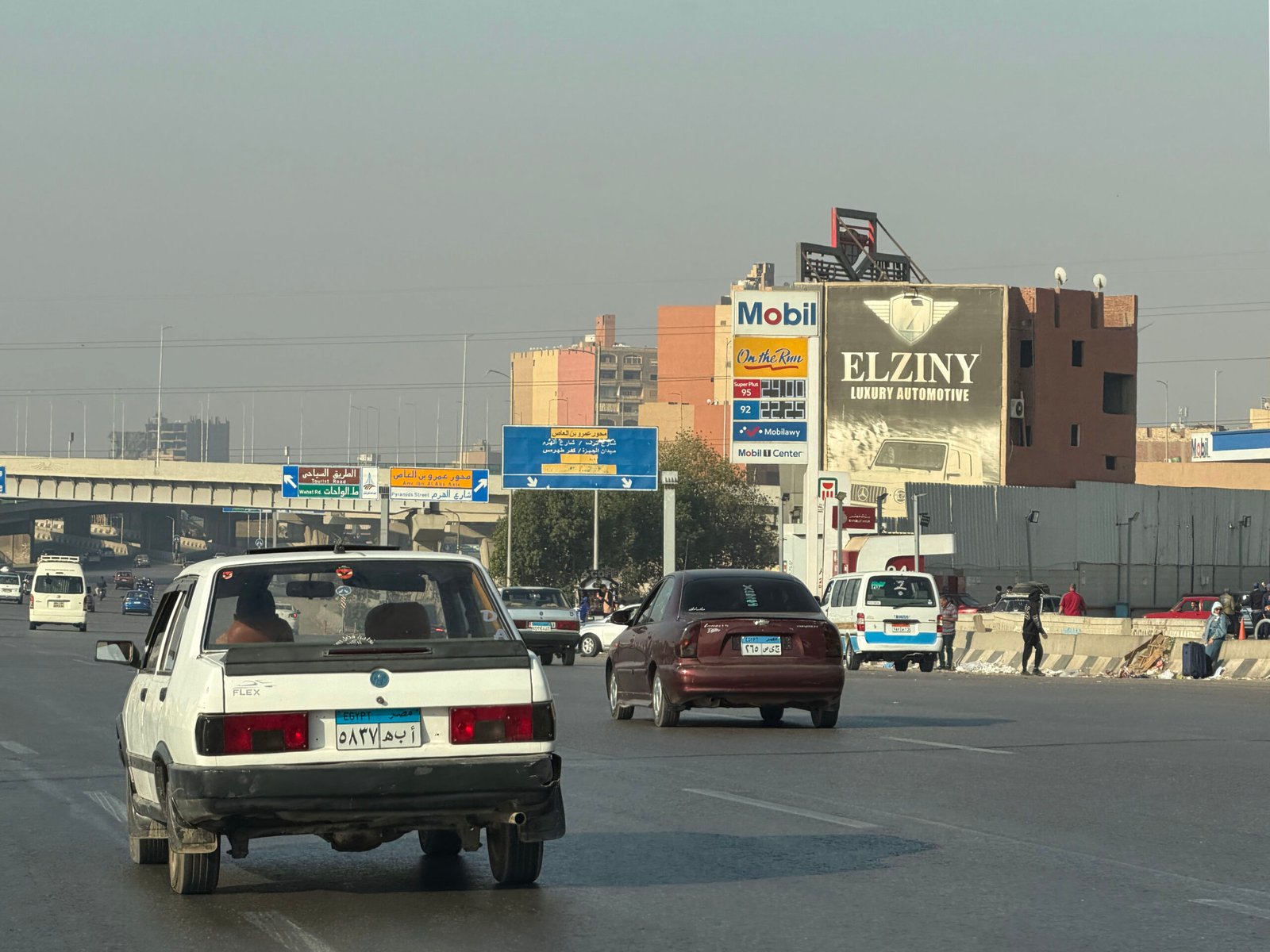
Rush Hour on the Ring Road
The crash happened at about 6pm local time, when the Ring Road is usually packed with rush-hour traffic. The Ring Road is the main highway that encircles the Egyptian capital, connecting roads across the governorates of Cairo, Giza and Qalyubia — and the stretch through Warraq, a densely populated neighbourhood in Giza, is one of its busiest.
According to the Health Ministry, the tanker was carrying petroleum products when it overturned. The fuel spilled across the carriageway and ignited, and the fire swept through the vehicles caught behind and beside it. Video from the scene, geolocated by CNN, showed an intense blaze with several vehicles engulfed in flames and thick black smoke rising into the night sky, with secondary blasts audible as the fire took hold.
In minutes, an ordinary rush-hour queue became one of the deadliest road disasters Egypt has seen in years.
The Rescue Effort
Thirty-nine ambulances were sent to the scene, the Health Ministry said, and the injured were taken to three hospitals. Health Minister Khaled Abdelghaffar placed nearby hospitals on high alert and visited the scene and the treatment centres to oversee the response.
The Egyptian Red Crescent also deployed emergency response teams to the scene and to the hospitals to support the Civil Defense, ambulance crews and other authorities working through the night.
In televised remarks, the health minister said at least four of the injured were in critical condition, with burns covering 70 to 80 percent of their bodies. The ministry has stressed that both casualty figures are preliminary — early reports put the death toll at 30 with 15 injured, and an initial injury figure of 25 was later revised down to 21 — and has warned that the death toll could still rise.
Thirty-nine ambulances, three hospitals and a night of emergency care — and still the count is not final.
What Caused the Crash?
Prosecutors gave a new account of the crash on Thursday. They said they had apprehended a man allegedly responsible, who confessed during questioning that he had been driving his car at 110 km/h (about 69 mph), weaving between lanes and overtaking other vehicles.
“His car collided with the rear of the tanker,” the prosecutors said in a statement. “He lost control of the steering wheel, and his car veered to the far right of the road. One of the tanker’s tires burst, causing it to collide with the concrete barrier and overturn. The tanker leaked gasoline, which then caught fire.”
That account differs from the first reports of the disaster. Egypt’s state-owned Al-Ahram newspaper reported that the tanker, which belonged to a private contractor, overturned after a high-voltage electricity cable fell in front of it. The Petroleum Ministry said only that the privately operated tanker had veered off the road and crashed before exploding.
Prosecutors said investigators were examining the wreckage and the circumstances of the crash to determine its cause, and they ordered DNA samples to be taken from two victims whose identities had not yet been established, so they could be matched with relatives.
Two different accounts of the same crash are now on the record — and the investigation will have to settle which one the evidence supports.
The Toll, Still Preliminary
The figures released so far are stark, and officials on both sides of the count have warned they may change:
- At least 31 people killed, according to the Health Ministry — described as a preliminary figure.
- 21 people injured, according to the Health Ministry — revised down from an initial figure of 25. Prosecutors, in their own count, put the number of injured at 25.
- 27 vehicles destroyed by fire, including cars and motorcycles, according to preliminary estimates from the public prosecution.
- 39 ambulances deployed, with the injured taken to three hospitals.
- Two victims unidentified, with DNA samples ordered so they can be matched with relatives.
The gap between the Health Ministry’s injury figure and the prosecutors’ figure has not been explained, and it is one reason officials are urging caution about the numbers. What is not in doubt is the scale: more than two dozen vehicles burned out on one of the capital’s main roads, in a fire that witnesses said spread from vehicle to vehicle before crews could reach it.
The numbers will be revised; the scale of what burned on that road will not.
Compensation and the Investigation
Egypt’s Financial Regulatory Authority moved quickly on the aftermath. In a statement on Wednesday, it directed the country’s compulsory motor insurance fund to speed up compensation payments to the families of those killed and to people injured in the fire, saying representatives would contact victims’ families to complete the required paperwork.
The public prosecution has opened an investigation into the circumstances of the crash. Alongside the examination of the wreckage, prosecutors are questioning witnesses and reviewing the sequence of events that turned a collision into a fireball — including the account given by the driver they have detained.
For the families of the dead, the immediate questions are more practical: identification of the victims, where the injured are being treated, and when compensation will arrive. The DNA testing ordered for the two unidentified victims is part of that process, and the insurance fund’s instruction to move quickly suggests the authorities expect claims to begin within days.
Compensation has been promised quickly; answers about exactly what happened will take longer.
A Crowded Artery Under Strain
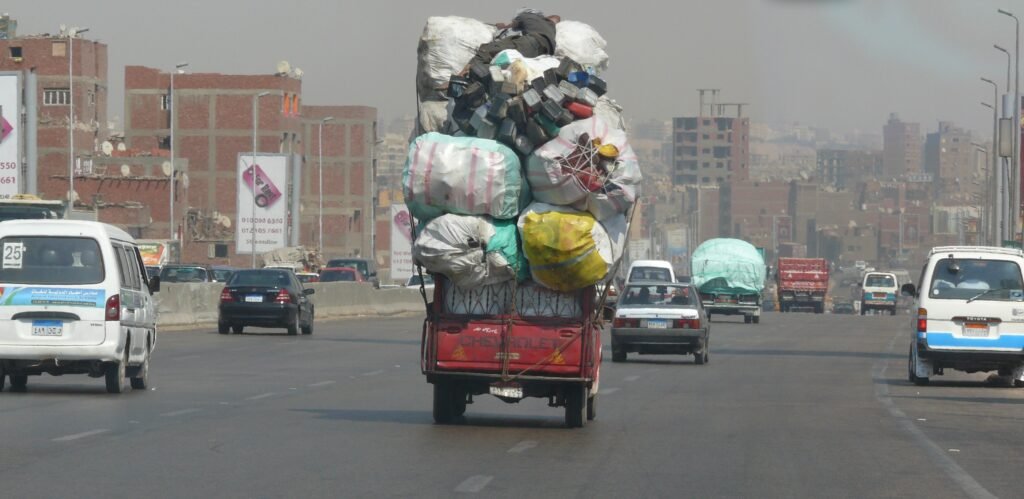
The disaster happened on a road that carries some of the heaviest traffic in Greater Cairo. The Ring Road loops around the capital and links its main highways, and the Warraq stretch runs through one of Giza’s most densely populated districts, where homes, workshops and small businesses crowd close to the carriageway.
That density is part of why the fire was so destructive. When the tanker overturned and its fuel spilled, there was no empty hard shoulder for the flames to burn themselves out on — only a queue of cars and motorcycles, hemmed in by the concrete barrier on one side and the traffic behind them on the other. Witnesses described drivers abandoning their vehicles as the fire spread, and the charred remains photographed the next morning showed row after row of burned-out cars where the queue had stood.
The crash has put the spotlight back on the road itself: a highway built to move traffic around the capital, carrying far more vehicles than it was designed for, through neighbourhoods that have grown up tight against its edges.
A road built to carry the capital’s traffic became, for one evening, a trap for the people on it.
What Comes Next
The Health Ministry said on Thursday that it was continuing to monitor the incident and provide medical care to the injured. The prosecution’s investigation is under way, and the detained driver’s account — that he was speeding and weaving between lanes when he struck the tanker — will be tested against the physical evidence from the wreckage.
The casualty figures remain preliminary, and the Health Ministry has warned they could rise as more of the injured are assessed and the dead are formally identified. The insurance fund’s compensation process is already moving, but for the families waiting at hospitals in Giza, the figures that matter are not the ones in the official statements — they are the names on the lists at the hospital doors.
For now, the Ring Road above Tunnel 10 is a scene of investigation rather than traffic: burned vehicles being cleared, a barrier to be repaired, and a file of evidence that will decide whether this was a driver’s error, a fallen cable, or something else entirely.
Thirty-one people are dead, and the road that killed them is still waiting for an explanation.
By The BNN Media
The Best News Network
News Beyond the Borders