 By
Confirmed infections in the Democratic Republic of Congo have now topped 12,000, with nearly 5,900 people dead — and fighting around the response hub of Bunia is cutting health teams off from the communities where the virus is spreading fastest.
By The BNN Media
The Best News Network
News Beyond the Borders
Bunia, Democratic Republic of Congo — Confirmed Ebola cases in the Democratic Republic of Congo now exceed 12,000, government data showed on Thursday, with 12,021 people confirmed infected and 5,904 dead — making this the fastest-growing Ebola outbreak in history and the deadliest the country has ever recorded. The outbreak, declared in mid-May in Ituri province, has now spread to eight of the country’s 26 provinces, and responders say it is still not under control.
A Milestone Nobody Wanted
The figures, released by the Congolese health ministry on Thursday 26 November and reported by Reuters and the Associated Press, mark a grim crossing point. When this network last reported on the outbreak, on 18 November, the official count stood at 11,254 confirmed cases and 5,505 deaths as of 12 November. In the two weeks since, roughly 770 more people have been confirmed infected and about 400 more have died.
Nearly half of everyone confirmed to have the virus has died — a case fatality rate of about 49 per cent. The outbreak is now the second-largest Ebola epidemic ever recorded, behind only the West Africa outbreak of 2014–2016, which infected more than 28,600 people and killed more than 11,000. It is also the deadliest of the Democratic Republic of Congo’s 17 recorded outbreaks, and it is on track to surpass even the West African death toll if it is not brought under control.
- Confirmed cases: 12,021 (health ministry data, 26 November 2026).
- Deaths: 5,904 — nearly half of all confirmed cases.
- Provinces affected: 8 of 26 — Haut-Uele, Ituri, North Kivu, South Kivu, Bas-Uele, Tshopo, South-Ubangi and North Ubangi.
- Declared: mid-May 2026, in Ituri province in the country’s north-east.
Twelve thousand cases was a line the response hoped never to cross. It has now been crossed — and the virus is still spreading.
The Virus the World Cannot Yet Vaccinate Against
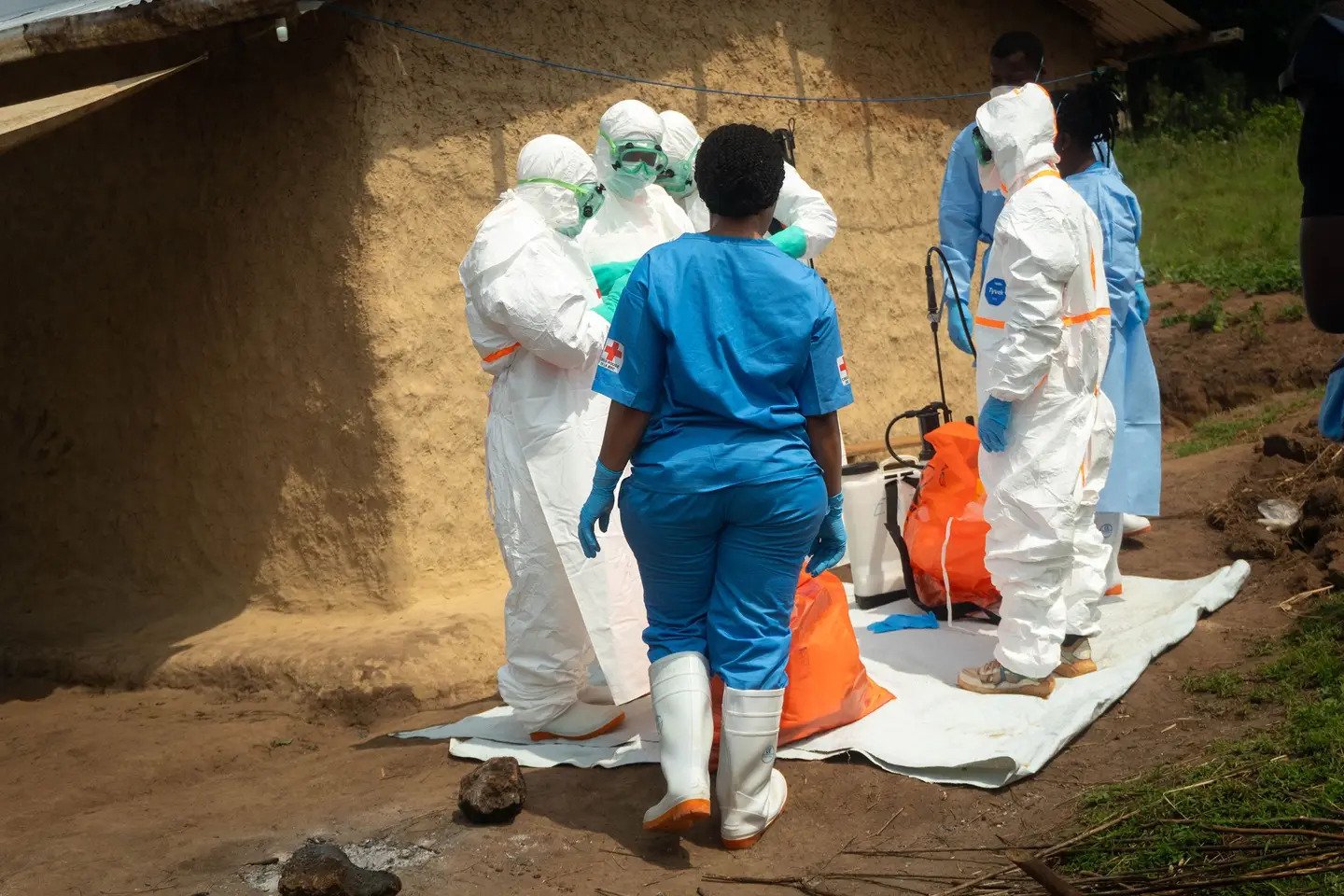
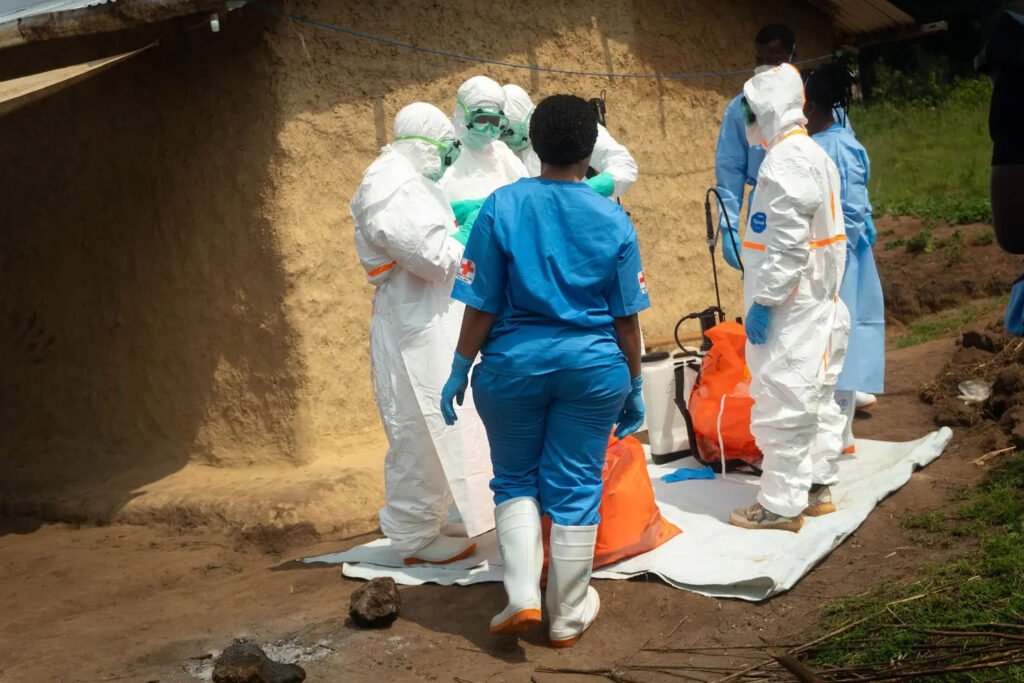
This outbreak is caused by the rare Bundibugyo species of the Ebola virus, for which there is no approved vaccine and no approved treatment. That single fact shapes everything about the response: without a vaccine to break chains of transmission, containment depends entirely on finding patients quickly, isolating them, tracing everyone they may have exposed, and burying the dead safely.
Ebola spreads through direct contact with the blood or other bodily fluids of people who are sick or have died from the disease. Containing it requires quickly identifying and treating patients in isolation, monitoring people who may have been exposed, and safely burying the dead — work that is slow, dangerous and painstaking at the best of times.
And these are not the best of times. Health officials say delayed detection, armed conflict and strained health services have made this outbreak spread faster than any before it. According to data presented by the Africa Centres for Disease Control and Prevention earlier this month, only 15 per cent of new cases come from contacts already known to health authorities — which means most chains of transmission are still being missed entirely.
With no vaccine and no treatment, the response has only shoe-leather epidemiology to work with — and right now, it is losing the race.
Fighting Around Bunia Cuts Off the Response
If the virus is the first enemy, armed violence is the second — and on Thursday it struck at the heart of the response itself. Fighting between the army and the Convention pour la révolution populaire (CRP) rebels resumed on Thursday morning in Iga-Barrière, a mining town about 25 kilometres (15 miles) north of Bunia, sending new waves of displaced people toward the city. Bunia, the capital of Ituri province, is a major hub for the Ebola response.
The CRP is one of more than 100 armed groups operating in eastern Congo, where conflict has created one of the world’s most severe humanitarian crises. The group was founded last year by former warlord Thomas Lubanga, who was convicted by the International Criminal Court in 2012 of recruiting children under 15 and using them in fighting.
Fighting earlier in the week had already prevented response teams from reaching some communities, disrupted the monitoring of people exposed to the virus, and left some treatment centres short of staff, according to Dr Catherine Smallwood, the World Health Organization’s Ebola incident manager. About a dozen people, including two WHO staff members and Congolese health officials, were evacuated to Bunia on Tuesday after spending three full days trapped in a hospital in Akwe, north-east of the provincial capital, amid intense crossfire. The WHO said earlier this week that heavy fighting near a hospital in Ituri had disrupted the Ebola response and that its team had been temporarily relocated from the Mongbwalu area until the situation calms.
Every day of fighting is a day the virus spreads unseen. The teams cannot trace contacts they cannot reach — and right now, in parts of Ituri, they cannot reach them.
A Death Toll That May Be Higher Still
The official figures may themselves understate the scale of the disaster. A Reuters analysis of satellite imagery found that the official death toll may be largely underestimated in two of the country’s hardest-hit areas — a finding that suggests many deaths are going uncounted, whether because families bury their dead without reporting them or because response teams simply cannot get to the places where people are dying.
That matters because the numbers are not only a record of the past; they are the map the response uses to decide where to send its scarce teams, vaccines-in-waiting and treatment beds. If the map is wrong, the response goes to the wrong places.
The toll on children, which this network reported on 18 November, remains one of the outbreak’s cruellest features: children have accounted for more than a quarter of confirmed cases and a third of all deaths, and seven in ten infected children under five have died. The new figures do not change that picture; they extend it, with more children orphaned and more families broken with every week the outbreak continues.
If the official count is an underestimate, then 12,021 cases is not the worst of it — it is the floor.
A New Plan, and a Race Against Time
There is, at least, a plan. The World Health Organization and the Africa Centres for Disease Control and Prevention this week unveiled an updated continental preparedness and response plan for the Bundibugyo virus, running from November 2026 through May 2027. Candidate vaccines and treatments are still under evaluation, and the agencies have warned that sustained transmission could continue until vaccines become available.
The Congolese government has unveiled a new 1.3-billion-US-dollar Ebola response plan, while a separate 2.2-billion-dollar appeal launched in June was only 54 per cent funded, with resources unevenly distributed among the response agencies. Money, like the response teams themselves, has to reach the places where the fighting is worst — and that is precisely where it is hardest to deliver.
The outbreak has already crossed borders: imported cases have been reported in Kenya and Nigeria, underlining the risk of wider regional spread if the epidemic in eastern Congo is not contained.
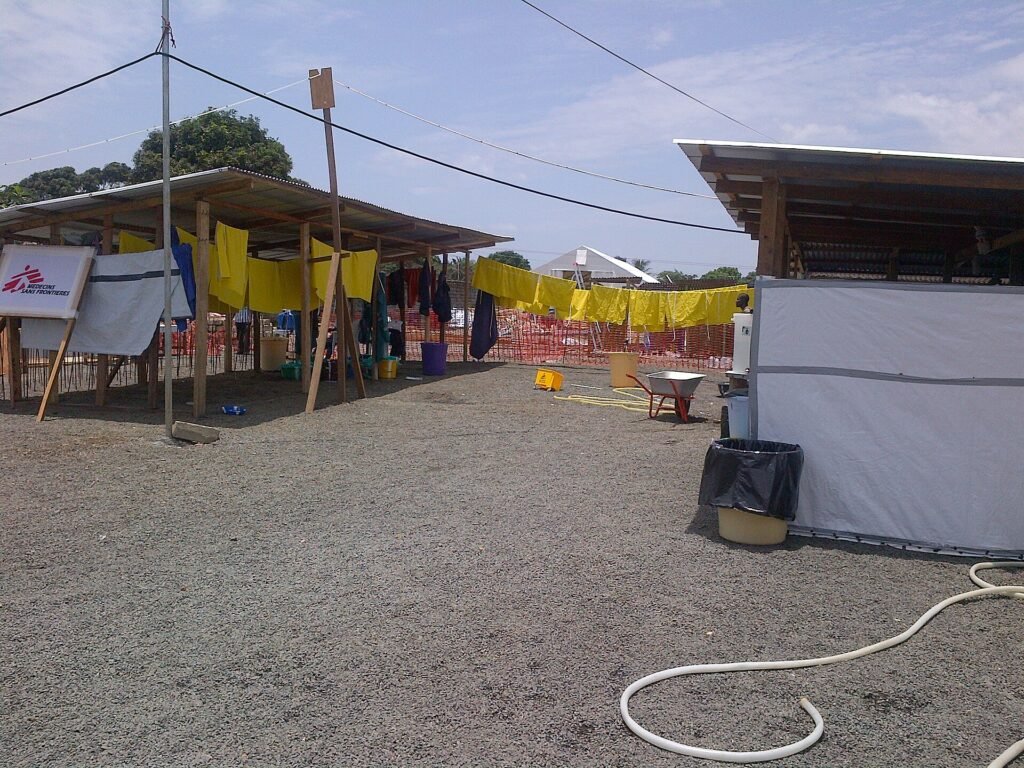
The plan runs to May 2027. The question is whether the response can hold the line until then — and whether the fighting will let it.
What Comes Next
Six and a half months after the outbreak was declared, the trajectory is still going the wrong way: more cases, more deaths, more provinces, and a response now being squeezed by the same conflict that helped the virus spread in the first place. The milestone of 12,000 cases is not a peak; nothing in the data suggests the outbreak has turned.
What would change the picture is the same as it has been since May: reaching the communities beyond the response’s current grasp, tracing the contacts it is still missing, and getting candidate vaccines and treatments from evaluation into use. Until then, the count will keep rising — and the next milestone, whatever it is, will arrive sooner than anyone wants.
The outbreak passed 12,000 cases on Thursday. The only number that matters now is how quickly the response can stop it reaching the next one.
By The BNN Media
The Best News Network
News Beyond the Borders