By
A year after 168 people died in the Wang Fuk Court inferno, a 1,154-page independent report says the tragedy was entirely preventable — and names the companies, the officials and the warnings that were ignored.
By Tariq Jamal
Freelance Journalist | The BNN Media – The Best News Network
News Beyond the Borders
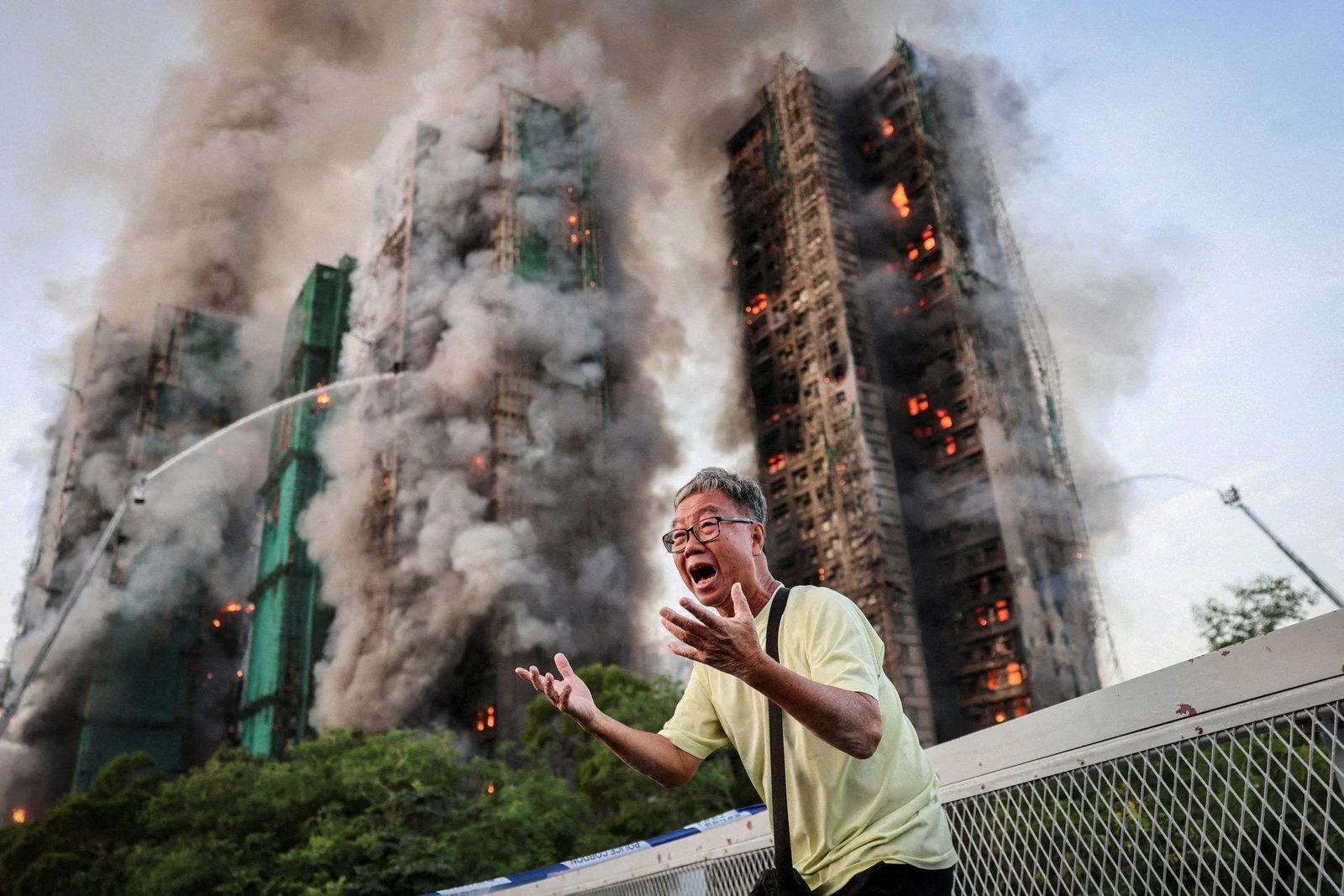
Hong Kong — One year ago today, on a sunny Wednesday afternoon, a fire broke out in the Wang Fuk Court housing estate in Tai Po and tore through seven of its eight 31-storey tower blocks, killing 168 people and injuring 79 more. Today, on the first anniversary of the blaze, a final independent report has laid out in devastating detail how a renovation meant to improve people’s homes ended in Hong Kong’s deadliest fire since 1948 — and why it should never have happened.
A fire that moved at 10 metres a second
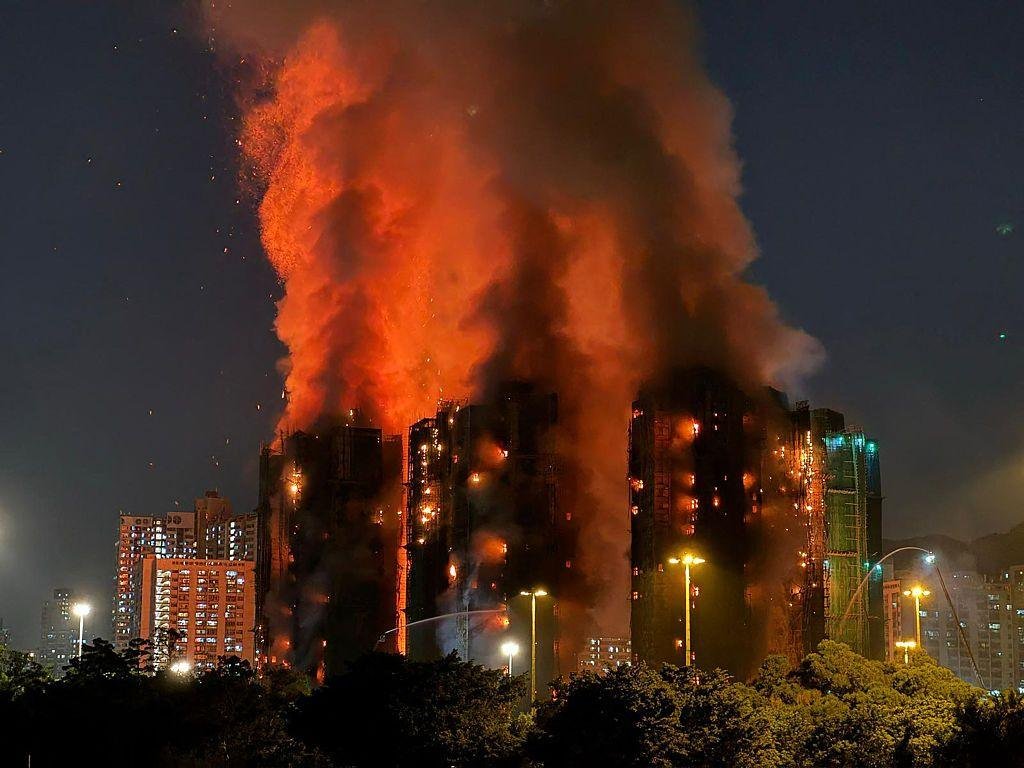
The fire began at around 2:45 p.m. on 26 November 2025, in an estate built in 1983 that was home to about 4,600 people in 1,984 flats. The independent committee’s report found that the blaze spread at a peak speed of about 10 metres (33 feet) per second — a rate the report called “unprecedented” — leaping from one tower to the next through the scaffolding and netting that wrapped the buildings.
It was, the report said, “a tragedy that was entirely preventable but happened as a result of a series of human errors, fire safety failures, alleged fraud and suspected corruption.”
The speed of the fire left many residents with no time to escape at all.
The cigarette, the netting and the foam boards
The report concluded that the fire was most likely started by a lit cigarette — a “glowing source” that caught the green mesh netting wrapped around the bamboo scaffolding. Workers on the site had repeatedly been seen smoking, residents told the BBC, dropping cigarette butts around the estate.
But the spark alone did not cause the disaster. The report found that after typhoons damaged the original scaffolding nets in 2025, cheaper replacement netting that did not meet fire-retardant standards was chosen — what the report described as a “cost-saving measure at the expense of the safety of the residents.” Tests on samples of the green mesh confirmed that they did not match fire-retardant standards.
The windows of most of the eight buildings had also been taped over with foam boards, to stop renovation debris falling inside — blocking daylight and any view for months. Hong Kong’s Secretary for Security, Chris Tang, said the highly flammable foam board contributed to the rapid spread of the fire.
A single cigarette should never have been able to burn down seven tower blocks — it was the materials wrapped around them that turned a spark into an inferno.
The alarms that never rang
Perhaps the most chilling finding concerns the fire alarms. The report revealed that a staff member of the estate’s property manager, ISS, had turned off the power supply to the fire alarms in all eight buildings — which is why no alarms rang on the day of the fire.
Mrs Lau, whose husband died in the blaze, told the BBC that her 74-year-old husband, a wheelchair user, called her to say he had not heard an alarm and that it was probably a small fire. She never spoke to him again. His body was later found in the toilet of their flat, still wearing his slippers and clutching his identity card.
ISS later told the BBC it had “reviewed and reinforced its procedures [and] staff training” in Hong Kong and that it takes the report’s findings “very seriously”.
When the alarm system is switched off, the people inside a burning building are left to guess — and guessing cost lives.
Stairwells that became death traps
For those who did try to flee, the escape routes themselves had become dangerous. Windows had been removed from some fire-escape stairwells to create temporary openings for workers, letting smoke pour in and cutting off vital escape routes. Dozens of people, including Christy’s husband, died in the stairwells from smoke inhalation.
Christy, who asked to be identified only by her first name, had celebrated her eldest child’s ninth birthday the day before the fire. Her husband was home alone when the blaze broke out. She has since been diagnosed with post-traumatic stress disorder and depression, and her seven-year-old son now tells her he will take care of the family because he is the only man left in it.
Other victims included a six-month-old baby who died alongside her 68-year-old grandmother, and an Indonesian domestic helper whose body was found huddled together with the elderly person she cared for.
Nearly 140 complaints — and no one acted
The report found that residents had filed nearly 140 complaints to six government departments, including the fire services and the buildings department, in and after 2024 — but these were largely ignored.
“No government department took effective ownership of various fire safety issues and complaints about fire hazards fell into a vacuum,” the report said. Professor John Burns of Hong Kong University described the disaster as the “largest governance crisis” the authorities have faced since 2020.
The scale of the failure is hard to overstate: the complaints, the smoking workers, the foam boards, the switched-off alarms and the substandard netting were all known about before the fire. Each on its own might have been fixed. Together, they were fatal.
One hundred and forty warnings were filed — and the system answered none of them.
Bid-rigging and rubber stamps
The problems at Wang Fuk Court began before the renovation work did. In 2024, mandatory renovations began on the estate, as Hong Kong requires all buildings over 30 years old to be inspected and repaired. Fifty-seven construction companies submitted bids — and the winner, Prestige Construction and Engineering (PC&E), submitted the most expensive bid, at HK$336 million (US$42.8 million).
According to the city’s Independent Commission Against Corruption (ICAC), the management company hired to oversee the project, Will Power, conspired with PC&E to defraud residents. Although PC&E had breached safety requirements and violated building department rules on multiple previous projects, homeowners were told the company had a clean record. The ICAC alleges that Will Power’s director, Wong Hap-yin, along with other individuals, laundered more than US$5 million in suspected proceeds from the tendering process.
Once PC&E won the contract, Will Power’s registered inspector — the person meant to oversee the renovations — merely rubber-stamped documents without having conducted any inspections personally, the report added.
Both companies and seven individuals have been charged with 25 counts of offences including manslaughter, conspiracy to defraud, attempting to pervert the course of public justice and tax evasion. Four of them remain in custody, but none of the cases has gone to trial yet. Will Power has since been liquidated, and PC&E could not be reached for a response.
The report named both companies as the “main culprits responsible” — but it also blamed the system that let them operate unchecked.
Apologies, resignations and a long wait for justice
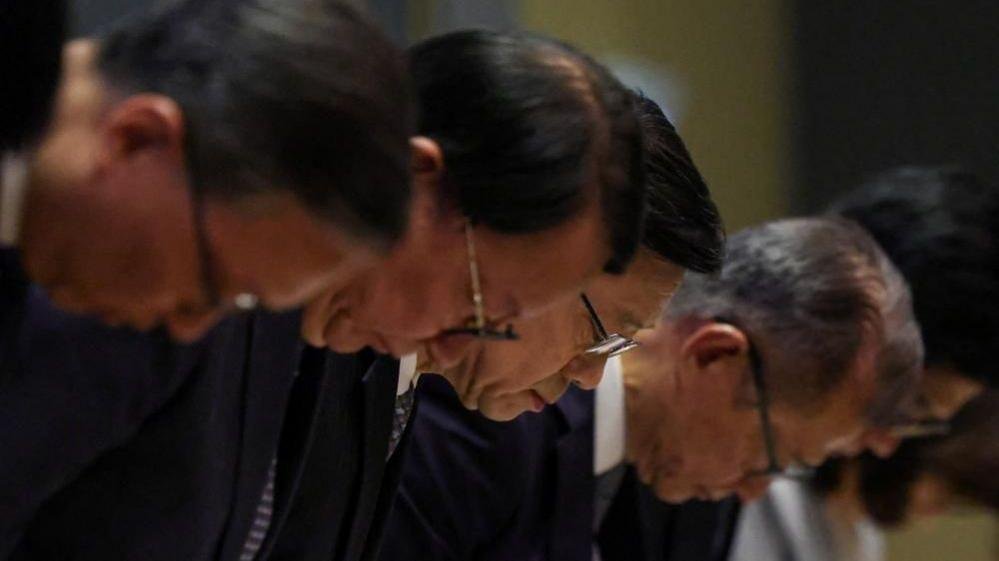
On the day the report was released, almost one year after the fire, Hong Kong’s housing chief, Winnie Ho, resigned, and the city’s top leader, John Lee, apologised for the first time, promising that a “large number” of reforms would be rolled out. The government has also promised laws to criminalise bid-rigging in the city’s lucrative building renovation industry.
The government has ruled out rebuilding the estate on its original site, saying it would take nearly a decade, and has said it will spend US$867 million to acquire the affected flats — though Mrs Lau says that is not nearly enough to buy a similarly sized flat in the area. Five months after the fire, she was allowed three hours to collect 40 years of belongings from her burnt-out home. Among the rubble, her children found pieces of a piggy bank her husband had filled with coins every day for 20 years.
Yip Ka Kui, 68, who lost his wife Pak Sui Lin in the fire, still sends her voice messages and photos on WhatsApp a year later. “I lost my husband but many families lost multiple family members,” Mrs Lau said. “Babies less than a year old died.”
Christy says she plans to file a lawsuit against those responsible — but knows that even if she wins, she cannot get her husband’s life back. “I share things that happen in our daily life, as if he still existed,” she said. “I often write to him, ‘I miss you so much. Are you doing well on the other side?'”
One year on, the families of Wang Fuk Court are still waiting for justice — and the report they waited for says the fire that took 168 lives was not an accident, but a failure that could have been stopped at almost every step.
By Tariq Jamal
Freelance Journalist | The BNN Media – The Best News Network
News Beyond the Borders
Source: BBC World Service / BBC Chinese (Grace Tsoi, Phoebe Kong and Yvette Tan, published 25 November 2026); Reuters (25 November 2026, via LA Post); AFP (via Daily Fox News).