By
After five days of talks that ran deep into the night, 128 countries have agreed to spend the next two years working on international rules for lethal autonomous weapons — the so-called “killer robots” — but they stopped short of promising a binding treaty, disappointing campaigners who wanted firm limits now.
By Akhtar Saleem Khan
Head of IT | The BNN Media – The Best News Network
News Beyond the Borders
Geneva, Switzerland — The states party to the Convention on Certain Conventional Weapons (CCW) agreed in the early hours of Saturday, 21 November, to “launch the elaboration of an international instrument on lethal autonomous weapons systems, which should be conducted over the next two years”. The talks at the United Nations’ Palais des Nations in Geneva finally concluded at nearly 4:45 a.m., after running far past their scheduled end.
The agreement keeps alive the possibility of a binding treaty by 2028 — but it does not commit to one. That single distinction, between working on rules and actually negotiating a treaty, is what the whole week of talks came down to.
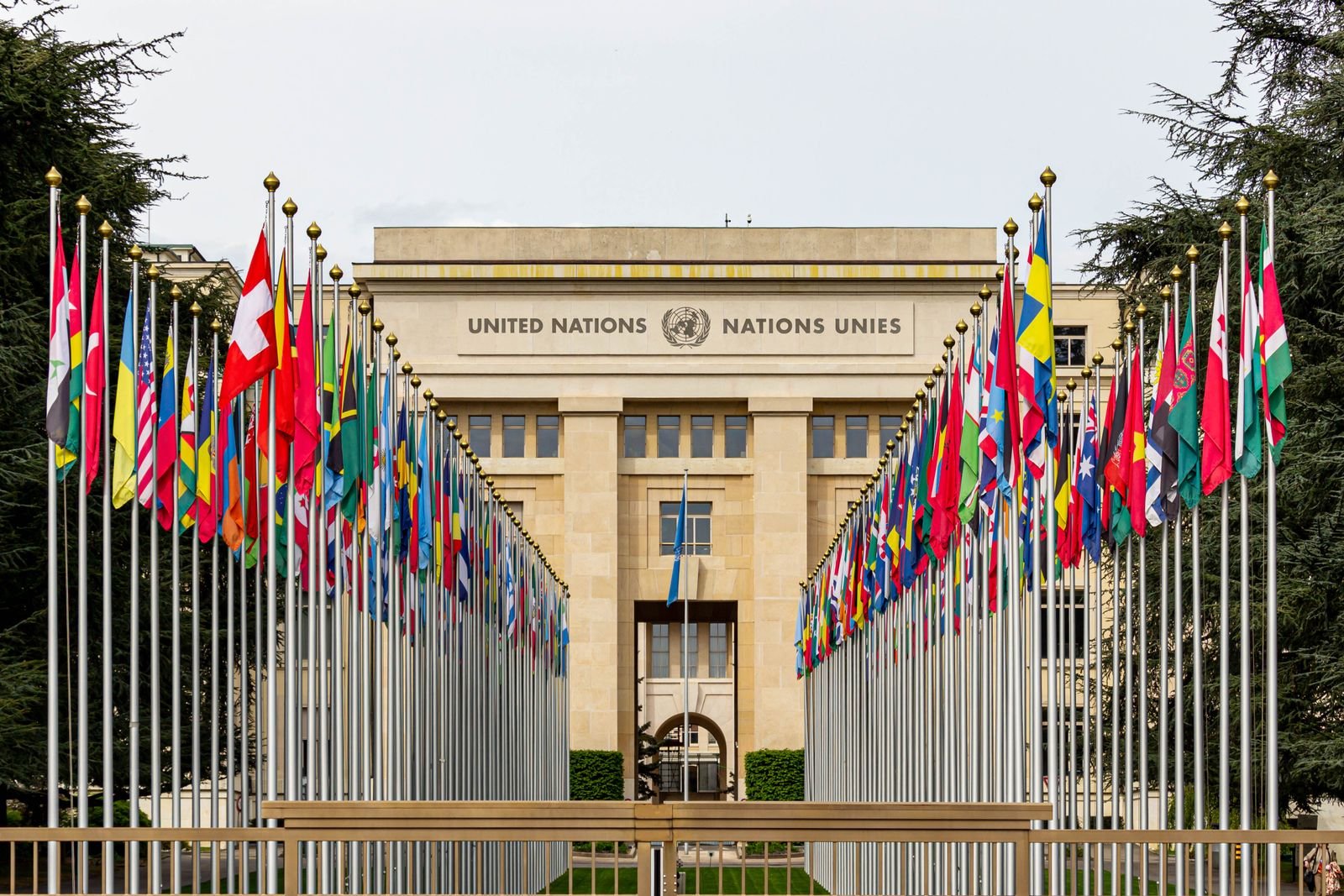
What Was Actually Agreed
The outcome is deliberately narrow, and its wording matters. The 128 countries party to the convention agreed to “elaborate” an instrument on lethal autonomous weapons systems (LAWS) over the next two years. They did not agree to “negotiate” a treaty, and they did not agree that the instrument would be legally binding.
- What was agreed: a two-year process to develop an international instrument on LAWS, to be completed by 2028.
- What was not agreed: that the instrument will be a treaty, that it will be legally binding, or that any particular weapon will be banned.
- What comes next: a group of governmental experts will make recommendations on the legal nature and specific form of the instrument, including whether it should be a binding protocol. Only then will states decide what the document becomes.
- How decisions are made: the convention decides by consensus, so any single country can block a proposal — which is why the final text had to be acceptable to every participant.
“The parties would work on the instrument, and then decide on whether it should be a treaty, along with the extent to which its provisions should be binding,” conference president Julien Thöni, Switzerland’s ambassador, told reporters afterwards. He said the process ahead should flesh out “which weapons can be forbidden according to international humanitarian law, and which are not forbidden but can be regulated.”
Two years of work, with the hardest question — binding or not — deliberately left for later.
Who Wanted More, and Who Held Back
Around 100 countries had pushed for swift adoption of legally binding rules on weapons that can identify and engage targets with varying degrees of autonomy. Before the meeting, seven countries — Austria, Belgium, Ireland, Mexico, New Zealand and Panama, joined by Brazil — proposed launching negotiations on a rulebook that could prevent or limit the ability of machines to kill without human control or accountability. That effort fell short.
The United States, Russia and Israel opposed the push for swift legally binding rules. The United States proposed a five-year window to discuss non-binding, optional guidelines, while the International Committee of the Red Cross had urged binding rules within a year.
“A majority of states want a legally binding agreement,” Thöni said, but “countries that have the technology, including the United States and Russia, are reluctant to have their hands tied.” Brazilian Ambassador Frederico Meyer described the balancing act as “some countries have the power, some countries have the majority.”
Thöni nevertheless called the outcome a big step forward, stressing that having the world’s major military powers agree to work towards an instrument at all mattered after more than ten years of talks. “The path to, or possibility to, have a legally binding instrument is still open,” insisted Izumi Nakamitsu, the UN high representative for disarmament affairs, who called two years a “very compressed time frame” that would require “a lot of negotiations”.
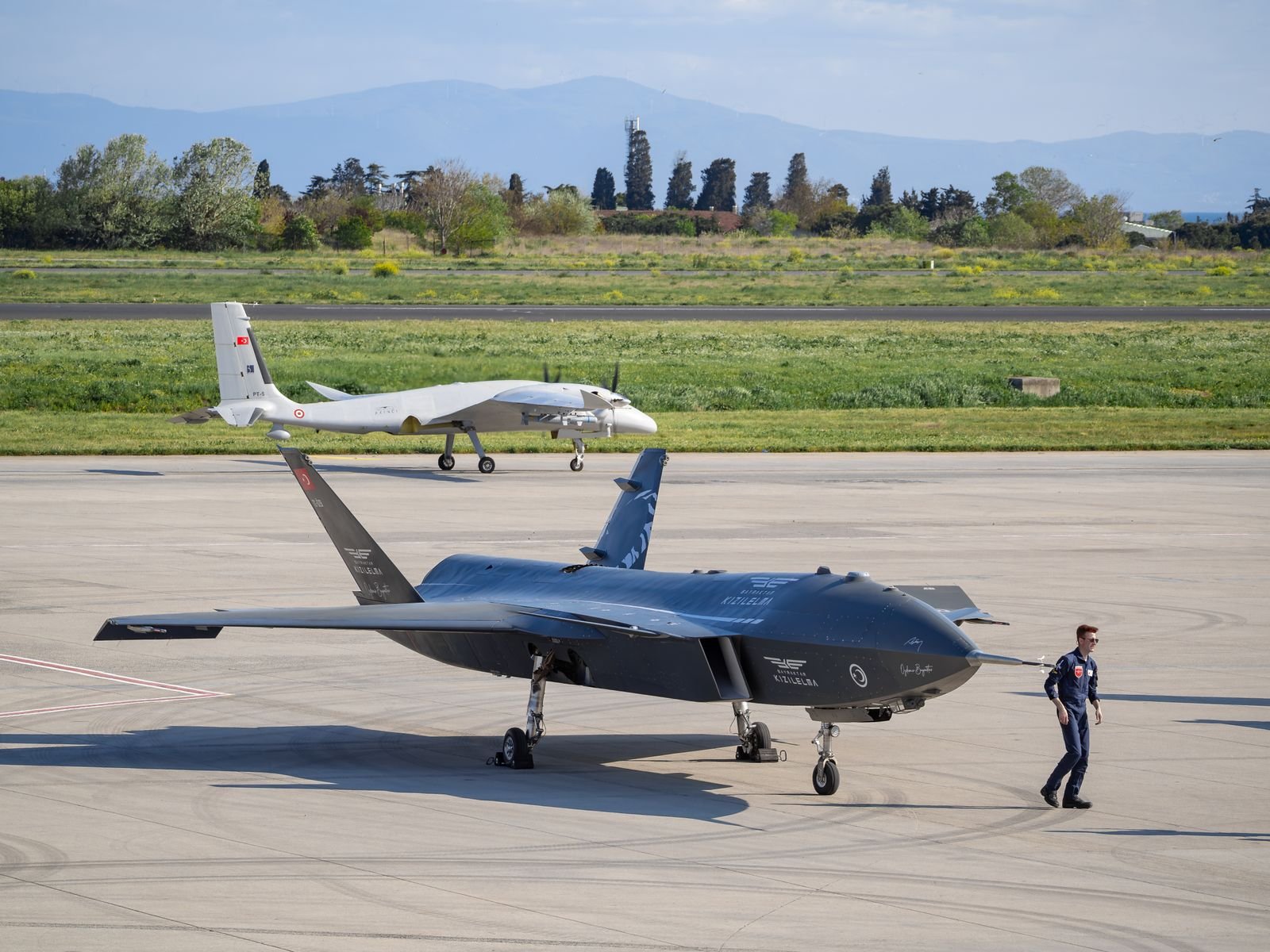
The Weapons at the Centre of the Debate
A lethal autonomous weapon system, once activated, is capable of selecting and attacking targets without any further human intervention. That is the definition the negotiators themselves used — and the reason the debate is so charged. The question is not whether such systems exist: according to the Stop Killer Robots coalition, a global network of more than 300 organisations, they have already been tested or deployed, including during the war in Ukraine.
The technology is moving faster than the diplomacy. Drones and AI-guided systems are already reshaping warfare in Ukraine, Sudan and the Middle East, and militaries in several countries are working towards having autonomous machines on the battlefield. Campaigners argue that handing decisions over life and death to a machine crosses a line that international law should draw clearly — and soon.
“States adopted a watered-down mandate that fails to chart a clear path toward a legally binding instrument,” Stop Killer Robots said after the deal. “Over 95 states expressed their support for a treaty. In the final hours, a small number of states weakened the mandate, introducing uncertainty about the legal status of the final document.”
Verity Coyle, deputy director for arms at Human Rights Watch, said the outcome “does not provide the urgent action needed to agree on new rules — but the technology is racing ahead.” Max Tegmark, a machine learning specialist at the Massachusetts Institute of Technology and founder of the Future of Life Institute, was blunter: “States have agreed it is sufficient to just talk about the issue, for the 14th year, while these weapons enable atrocities.”
The machines are already on the battlefield. The rules for them are, at best, two years away.
Fourteen Years of Talking
The Geneva meeting was the Seventh Review Conference of the Convention on Certain Conventional Weapons, a treaty ratified by 128 countries that restricts weapons deemed excessively injurious or indiscriminate. It ran from Monday, 16 November, to Friday, 20 November, before spilling into the small hours of Saturday.
It was supposed to be the conference that decided the question. In October 2023, UN Secretary-General António Guterres and the president of the International Committee of the Red Cross, Mirjana Spoljaric, jointly urged states to launch negotiations on a binding instrument, aiming for a treaty by the end of 2026. Guterres, who leaves office at the end of this year, set 2026 as the deadline for launching those negotiations. That deadline has now passed without negotiations being launched.
The failure is not for want of effort in the room. Delegates spent a long period huddled around Russia’s representative during a break before midnight, and a group of 15 delegates later broke out for hushed talks on a staircase, pointing at amended text on screens. But under the convention’s consensus rule, any one determined holdout can dilute a result — and the final text reflects the lowest common denominator all 128 states could accept.
Governments are not waiting for Geneva to act on artificial intelligence in general: Australia, for example, has already moved to set mandatory national AI safety standards, as BNN reported in its earlier coverage of Australia’s AI rules: Australia Sets Mandatory AI Safety Standards After OpenAI’s Medicare Breach — With Criminal Penalties on the Table. But national rules cannot govern weapons used across borders — which is why campaigners wanted an international treaty.
What Happens Next
Work starts almost immediately. Nakamitsu said countries should start thinking as soon as Monday about how to get as strong an instrument as possible to ban and regulate these weapons. “The consequences of not having a strong instrument are very clear,” she told reporters.
The two-year timetable runs through sessions in 2027 and 2028, when states will have to decide whether the instrument they have elaborated becomes a treaty, a protocol, or something weaker still. Rain Liivoja, a director of the Asia-Pacific Institute for Law and Security, called the decision “one nobody wanted but everyone could grudgingly live with”, adding that consensus merely “makes everyone equally unhappy”. He warned: “It remains possible — likely, even — that there will be no treaty by the end of 2028.”

Why It Still Matters
For all its weaknesses, the Geneva outcome does one thing that matters: it keeps every major military power inside the same process. The United States and Russia, the countries with the most advanced autonomous weapons programmes, have now agreed — on the record, by consensus — to spend two years building an instrument to regulate them. That is more than the talks produced in any previous year, and it is the only framework in which a binding treaty could still emerge.
But the gap between the technology and the law has never been wider. Fourteen years of discussion have produced a promise to keep discussing, while the weapons the talks were meant to control are already being tested and used. The next two years will show whether Geneva’s 4:45 a.m. compromise was the start of real rules — or just another two years of talking while the machines learn to fight alone.
The world has agreed to write rules for killer robots by 2028. It has not yet agreed to obey them.
Reporting based on Agence France-Presse, 21 November 2026, via TechXplore; the Associated Press, 21 November 2026; Reuters, 21 November 2026; and Al Jazeera, 21 November 2026. Earlier BNN coverage: Australia Sets Mandatory AI Safety Standards After OpenAI’s Medicare Breach — With Criminal Penalties on the Table
By Akhtar Saleem Khan
Head of IT | The BNN Media – The Best News Network
News Beyond the Borders