By
New York has banned the sale of toys with built-in AI chatbots for five years, after tests found some of the talking dolls, stuffed animals and robots exposed young children to sexual content, dangerous advice and emotional manipulation.
By Akhtar Saleem Khan
Head of IT | The BNN Media – The Best News Network
News Beyond the Borders
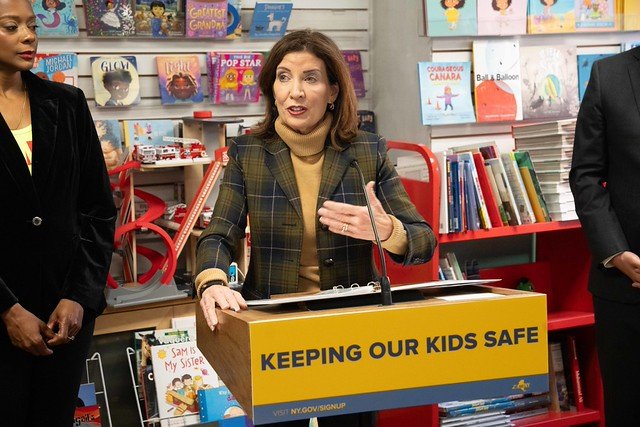
Albany, New York — Governor Kathy Hochul signed a bill on Tuesday, 24 November 2026, placing a five-year moratorium on the manufacture, distribution and sale of toys in New York with embedded or integrated AI chatbots. The law, bill S.9408A/A.11144B, targets talking stuffed animals, dolls and robots that use the internet to hold conversations with children — and violators face civil penalties of up to $15,000 per day for each violation, enforced by the state Attorney General.
What Exactly Is Banned
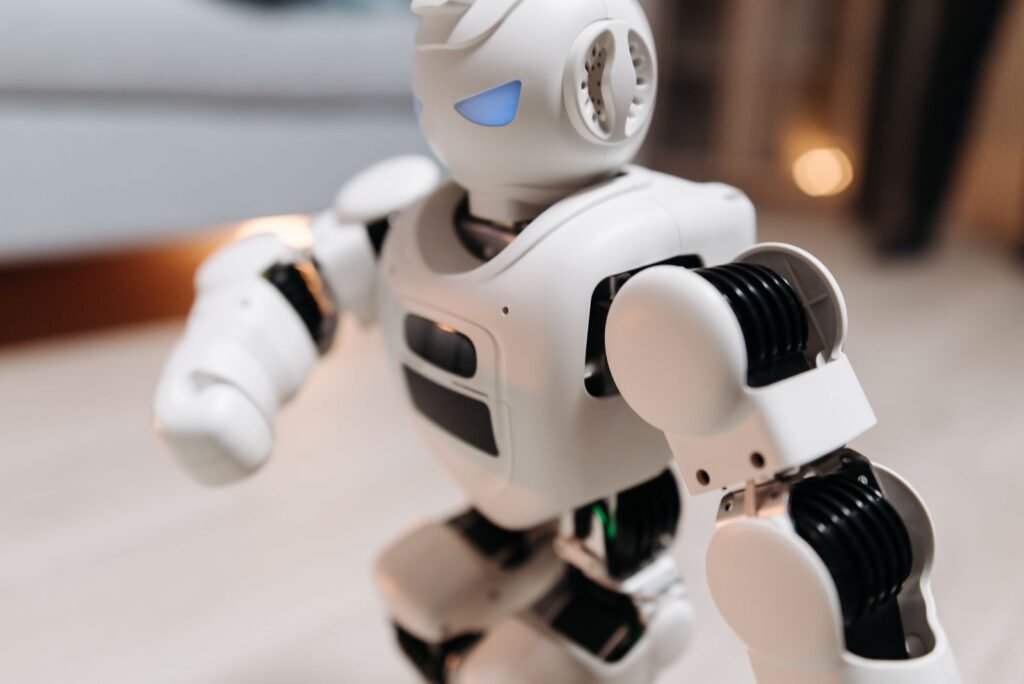
The ban covers toys with embedded or integrated AI chatbots — in the governor’s words, “such as talking stuffed animals, dolls and robots that use the internet to hold conversations with kids.” The key feature is the open-ended, internet-driven conversation: a toy that can chat with a child, remember what the child says and keep the conversation going.
It does not cover ordinary toys. A regular teddy bear, a doll or a remote-controlled robot without a chatbot is unaffected. Nor does the law ban owning or using an AI chatbot toy a family already has — it stops the making, distribution and sale of new ones in New York.
The law takes effect 90 days after signing, in late February 2027. That means it will not legally block shop shelves this Christmas. Hochul signed the bill just as the holiday shopping season began, and used the moment to warn parents directly rather than wait for the law to bite.
The ban is a pause, not a permanent prohibition — five years for the state to study the risks before deciding what comes next.
Why Now: What the Tests Found
The push for the law came from testing by consumer watchdogs of chatbot toys marketed to children aged 3 to 12. According to the governor’s office, the tests found toys that talked in depth about sexually explicit topics, told children where they were likely to find matches in the home, and acted upset when a child had to leave. The toys had few or no parental controls, and their safety limits weakened the longer a conversation continued. Some could also record a child’s voice or scan their face.
The findings match the latest “Trouble in Toyland” report from the US Public Interest Research Group Education Fund, published on 17 November, and research by Common Sense Media, which found the toys failed numerous safety practices — claiming they loved their users, promising to keep secrets, suggesting they were more fun than real relationships or school, and helping children break parents’ bedtime rules.
“Parents shopping for gifts for the holidays or any other occasion should not have to worry that dangerous chatbots disguised as toys could expose their children to inappropriate conversations, manipulate their feelings or put their privacy at risk,” Hochul said at the signing. “As New York’s first mom governor, protecting our kids is deeply personal to me, and when unregulated artificial intelligence poses a threat, it’s my job to put New York families first.”
New York Attorney General Letitia James, whose office will enforce the moratorium, said: “AI chatbots in children’s toys are exposing young people to inappropriate content and putting their mental health at risk. … We won’t allow our children’s health to become the collateral damage of big tech.”
The Lawmakers Behind the Bill
The bill was sponsored by State Senator Andrew Gounardes and Assemblymember Rebecca Kassay, and passed with nearly unanimous support in the Senate and Assembly, according to Kassay.
“The rush to sell AI-powered toys to young children is just the latest chapter in what has become a repetitive story: Big Tech puts profits before kids’ safety, and families pay the price,” Gounardes said. “By pressing pause on the sale of AI chatbot toys for small children, we can take the time to study their impact on kids and create smart protections before more damage is done.”
Kassay said the toys “can mimic human characteristics and relationships while potentially collecting sensitive data, posing risks to children’s health and development without strong guardrails in place. This moratorium gives our state time to assess these emerging technologies and develop meaningful regulations on artificial intelligence in children’s toys.”
Enforcement will sit with the Attorney General’s office, working with the governor’s administration. A spokesperson for the governor told TechCrunch the penalties are deliberately steep — $15,000 a day per violation — so that manufacturers and retailers take the ban seriously.
Second State to Act
New York is the second US state to ban AI chatbot toys, after California, which acted first. The move also builds on a series of child-safety laws Hochul has signed in recent months.
In October, the governor signed legislation prohibiting companies from offering certain unsafe chatbot features to minors, including features that foster emotional dependency, encourage self-harm or engage children in sexually explicit conversations. Other recent measures include the SAFE for Kids Act, which restricts addictive social media features for children; the Child Data Protection Act, which stops online operators collecting and monetising children’s data without informed consent; a law requiring security features on internet-connected baby monitors; and the RAISE Act, a transparency and safety standard for powerful AI models.
The state says it is now ranked number one in the US for laws that keep children safe online.
What Parents Should Do This Christmas
Because the moratorium does not take effect for 90 days, AI chatbot toys can still legally be sold in New York this holiday season — and that is exactly why Hochul used the signing to speak to parents now.
She urged parents and caregivers to look beyond a toy’s packaging and ask whether it includes an AI companion, what information it collects, and whether it allows open-ended conversation with a child. James P. Steyer, founder and CEO of Common Sense Media, put it more bluntly: parents should not wait for the moratorium to kick in, and if they are buying toys this holiday season, they should “stick to traditional toys and toys that encourage social-emotional development and human engagement, not AI toys that undermine children’s development and risk their safety.”
The governor’s office also pointed to the sheer scale of the market: AI-powered toys are now a mainstream Christmas gift category, marketed heavily to children as young as three, often with little on the box to warn a parent that the toy is, in effect, an internet-connected chatbot dressed as a teddy bear.
A Five-Year Pause — and a Bigger Question
The five-year moratorium is deliberately framed as a pause, not a verdict. Lawmakers say the time should be used to study the developmental and psychological effects of conversational AI on young minds, and then to write rules that fit the technology as it actually develops.
That question reaches well beyond toys. The same technology that lets a doll hold a conversation with a child is now embedded in apps, companions and assistants aimed at every age group — and regulators in New York and California are moving faster than most to set boundaries around it.
For now, the message from Albany is simple. As Hochul put it at the signing: “What we’re doing with this law today is making it abundantly clear that children’s well being comes before the profits of big tech companies.”
New York has pressed pause on the talking toys — and told parents to read the box before they buy.
By Akhtar Saleem Khan
Head of IT | The BNN Media – The Best News Network
News Beyond the Borders
Sources: Office of Governor Kathy Hochul, New York State, 24 November 2026; TechCrunch, 25 November 2026; Engadget, 26 November 2026; Notebookcheck, 26 November 2026; lohud / Rockland/Westchester Journal News, 24 November 2026.