By
A projectile struck Saudi Aramco’s Jazan refinery on Thursday, killing a Nepalese worker and injuring several others, in the latest attack on Saudi energy infrastructure as fighting between the Houthis and the Saudi-led coalition sharply escalates.
By The BNN Media
The Best News Network
News Beyond the Borders
Jazan, Saudi Arabia — A hostile aerial projectile struck Saudi Aramco’s Jazan refinery on Thursday, 26 November, killing one Nepalese worker and injuring several others, according to Saudi Arabia’s Ministry of Energy. The strike started a fire and temporarily halted some operations at the plant, which is designed to process up to 400,000 barrels of crude oil a day.
What happened at Jazan
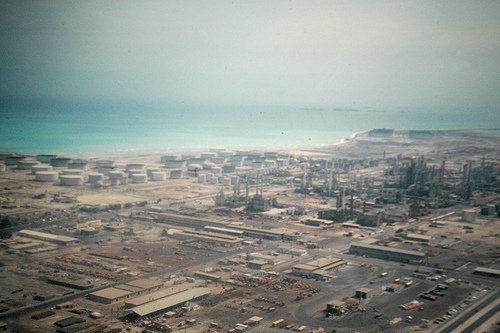
The refinery, in the southwestern city of Jazan near the Yemeni border on the kingdom’s Red Sea coast, was hit on Thursday by what the Saudi Ministry of Energy described as a hostile aerial projectile. The impact caused a fire, which the ministry said was later brought under control, and led to the temporary suspension of some of the refinery’s operational activities.
An official source at the ministry said the attack killed a Nepalese worker and left several others, of various nationalities, with injuries of varying severity. The injured are receiving medical care. Emergency teams and specialist technical crews responded immediately, the ministry said, and work is under way to assess the damage and verify the safety of the facilities in coordination with the relevant authorities.
The ministry expressed condolences to the family of the worker who died and wished the injured a speedy recovery.
One worker is dead, several are injured, and part of one of Saudi Arabia’s major refineries is shut while engineers check whether it is safe to restart.
Who is blamed — and what is not confirmed
The Saudi Energy Ministry’s statement did not identify who carried out the strike. The attribution came separately from the Saudi-led military coalition fighting Yemen’s Houthis, which said on Thursday that the Iran-aligned group had attacked the refinery.
Coalition spokesman Major General Turki al-Maliki said in a post on X: The Jazan refinery was attacked by the Houthi terrorist militia. The coalition said its forces later destroyed a ballistic missile launch platform in the Yemeni port city of Hodeidah, which it said the Houthis had used in Thursday’s attack. It warned earlier that targeting civilians and civilian infrastructure would be met with a firm military response.
Those coalition claims — both the attribution and the destruction of the launch platform — have not been independently verified. The Houthis themselves had claimed attacks the previous day on Ras Tanura, Jeddah and Jazan, but no direct Houthi claim of responsibility for the Jazan refinery strike itself was confirmed in the reporting reviewed for this article.
The distinction matters: the death, the injuries and the halted operations are confirmed by the Saudi government; the identity of the attacker rests on the coalition’s word.
Why Jazan matters
Jazan is not a remote outpost. The refinery sits in Saudi Arabia’s far southwest, close to the border with Yemen, and its capacity of 400,000 barrels a day makes it one of the kingdom’s significant refining assets. Its position on the Red Sea coast also places it near the shipping lanes that carry Gulf oil to world markets.
That geography is exactly why it is exposed. The Houthis, who control the most populous areas of Yemen including the capital Sanaa, have launched missiles and drones at Saudi airports, oil facilities and office buildings since Yemen’s civil war reignited in July, in what Reuters describes as a spillover from the US-Iran war.
Fighting has intensified since the Houthis seized strategic territory along Yemen’s Red Sea coast in September and advanced towards the Bab el-Mandeb Strait, the narrow waterway through which Gulf oil producers reach the Red Sea.
A week of escalating strikes
The Jazan attack did not come out of nowhere. It followed a day of claims and counter-claims:
- On Wednesday, the Houthis claimed attacks on Ras Tanura, Saudi Arabia’s largest refinery and a major crude export hub, and on the Red Sea ports of Jeddah and Jazan.
- The Saudi-led coalition said it had intercepted four drones over Ras Tanura and that air defences had destroyed a drone near Jeddah Islamic Port.
- CNN reported that a shipping source said oil loadings at the Ras Tanura terminal were suspended after the attack, though it was unclear whether they had resumed, and that satellite imagery showed a huge plume of black smoke after the Houthis claimed a strike on the kingdom’s biggest oil refinery.
- On Thursday, after the Jazan strike, the coalition said it had destroyed the launch platform at Hodeidah it blamed for the attack.
Previous attacks in this round of fighting have already disrupted parts of Aramco’s operations, caused the cancellation of most international flights to Riyadh, and forced Saudi Arabia to postpone or cancel major international events, including football’s AFC Asian Cup and the flagship FII investment conference, according to Reuters.
The human cost
Behind the language of projectiles and platforms is a single confirmed death: a Nepalese worker, whose name has not been released. Nepal’s Ministry of Foreign Affairs expressed condolences on Friday over the death of its citizen and said three other Nepali nationals were injured in the recent strikes in Saudi Arabia, one of whom has since recovered while the other two are receiving medical treatment. Kathmandu urged all sides to exercise maximum restraint and resolve disputes through peaceful means.
The Saudi ministry said only that the injured were of various nationalities and were receiving the medical care they needed. No further breakdown of the injured has been officially released, and no casualty figure beyond the one death and several injured should be treated as confirmed.
The dead worker was a migrant labourer, far from home, in a facility that had become a target in someone else’s war — a reminder that the costs of these strikes fall first on the people who keep the plants running.
Gulf energy shipping under pressure
The strike on a working refinery is a step beyond the threats to shipping that have dominated Gulf security news in recent weeks. Earlier this month, four tankers were hit by explosions in the Strait of Hormuz as oil prices jumped — a reminder that the region’s energy infrastructure, on land and at sea, is now being tested on more than one front at once.
The Bab el-Mandeb Strait, towards which the Houthis have been advancing since September, is a vital shipping route for Gulf oil producers seeking access to the Red Sea. Any sustained threat to refineries on the Red Sea coast, combined with pressure on the strait itself, would raise serious questions about the security of oil supplies from the world’s largest exporting region.
No official statement has yet quantified the damage at Jazan or given a timetable for full operations to resume. Until the safety checks are complete, the scale of the disruption — and its effect on fuel supplies and markets — remains uncertain.
What happens next
The immediate questions are practical ones: how badly was the refinery damaged, how long will the affected units stay shut, and whether the fire caused lasting harm to equipment. The ministry said emergency and technical teams were assessing the damage and verifying the safety of the facilities, but gave no timeline.
The wider question is whether this week’s exchange marks a new phase. The coalition has promised a firm military response to attacks on civilians and civilian infrastructure, and says it has already struck back at Hodeidah. The Houthis, for their part, have shown they can reach deep into Saudi territory — and have now, according to the coalition, hit a working refinery and killed a worker there.
The Jazan strike crossed a line that the earlier attacks on ports and terminals had not: it killed someone. What both sides do next will decide whether this remains a limited exchange or becomes something worse.
By The BNN Media
The Best News Network
News Beyond the Borders