 By
Almost one child in four on Earth now lives within reach of war — the highest number since records began in 1990 — and the fastest-growing violation against them is not bombing or recruitment, but the deliberate blocking of the aid that keeps them alive.
By The BNN Media
The Best News Network
News Beyond the Borders
AMMAN, Jordan — A record 589 million children — almost one in four worldwide — were living in conflict zones in 2025, the highest number since records began in 1990, according to a new Save the Children report released on Thursday, 19 November 2026. The figure has risen by more than 50 percent in a decade, from 378 million in 2015, and has more than doubled since the mid-1990s, when about one child in ten lived near conflict.
A Record That Keeps Being Broken
The report, Stop the War on Children: Changing the Odds, draws on analysis by the Peace Research Institute Oslo (PRIO), using the Uppsala Conflict Data Program’s Georeferenced Event Dataset. A “conflict zone” is defined as an area within 50 kilometres of where one or more conflict incidents take place in a given year. The share of the world’s children living in such zones has climbed from about 10 percent in the mid-1990s to 23.4 percent in 2025.
“We estimate that 589 million children were living close to armed conflict last year. These record-high figures are a stark reminder that conflict is devastating the daily lives, education, health and future prospects of hundreds of millions of children. Unless greater efforts are made to protect children in conflict settings, the consequences of today’s wars will be felt for decades to come,” said Gudrun Østby, Research Professor at PRIO.
Africa is home to the highest number of children living in conflict zones — about 260 million, or 44 percent of the global total. That is nearly a 20 percent increase from the 218 million African children who lived in conflict zones in 2024. Across Africa, the proportion of children living in conflict zones has more than tripled in 15 years, from about one in eight in 2010 to about two in five in 2025 — the highest level ever recorded for the continent.
The Middle East has now reached the same level: about two in five children there (40.2 percent) lived in conflict zones in 2025, up from 52 million in 2024 to 67 million last year — a rise of nearly 29 percent in a single year. Elsewhere, about one in four children (24.2 percent) in the Americas lived in conflict zones in 2025, one in seven (14.3 percent) in Asia, and nearly one in nine (10.6 percent) in Europe.
In a single generation, the share of the world’s children growing up within reach of war has more than doubled — and the rise is accelerating, not slowing.
Aid Itself Has Become a Weapon
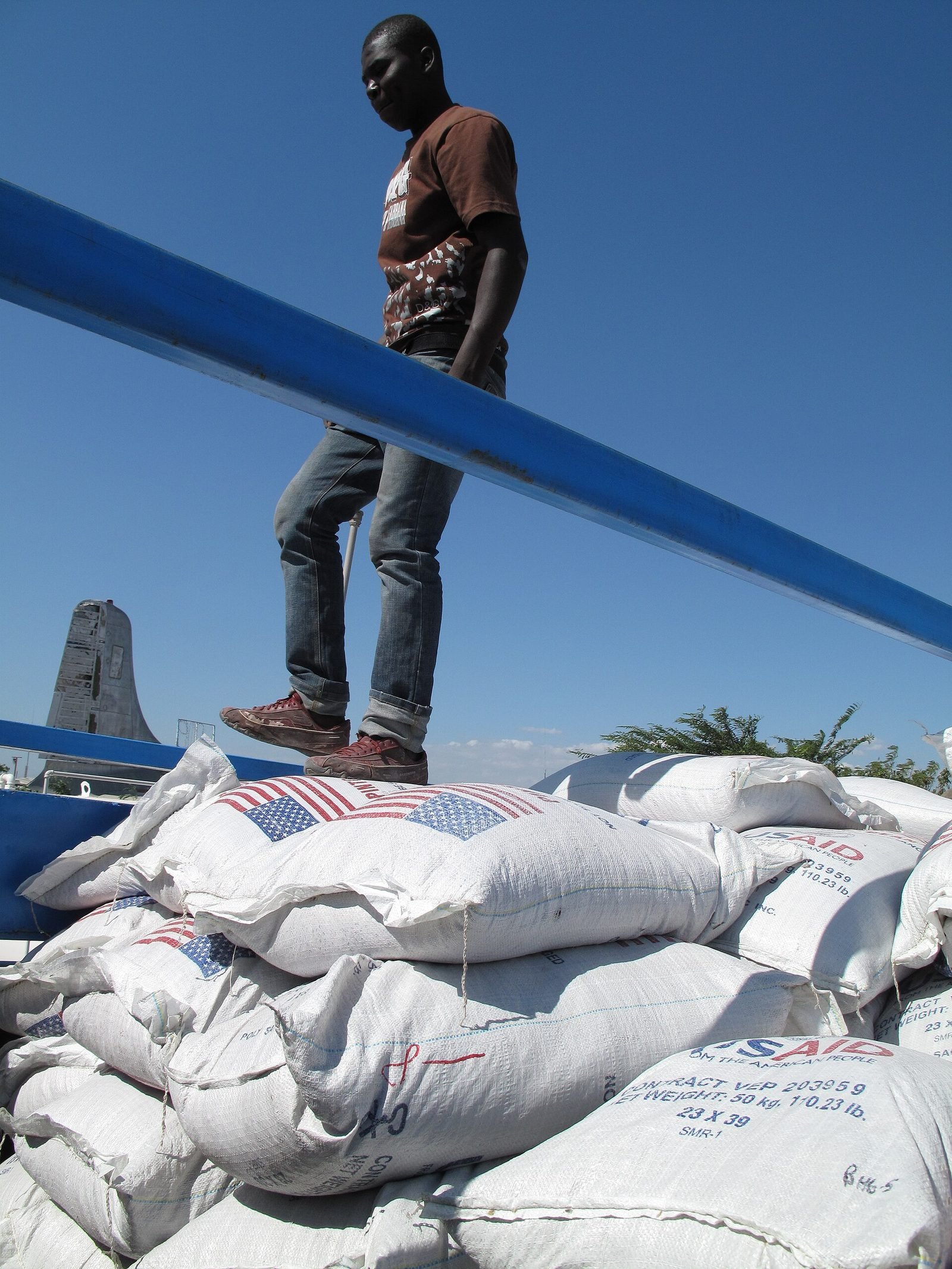
The report’s most alarming finding is not the number of children near fighting, but what is being done to them. The fastest-growing grave violation against children is the denial of humanitarian access: verified incidents skyrocketed from 509 in 2015 to 8,322 in 2025 — more than a sixteen-fold increase in a decade. That amounts to almost one verified incident of aid denial every hour, on average, through 2025. When the United Nations established its Monitoring and Reporting Mechanism in 2005, only eight such incidents were reported.
Denial of humanitarian access rose from just over 2 percent of all verified grave violations against children in 2015 to more than 21 percent in 2025, making it the second most frequently verified violation after killing and maiming. More than 70 percent of all verified aid denial last year — 5,946 incidents — took place against Palestinian children.
“No grave violation has increased as dramatically or changed the overall pattern of verified violations as much as the denial of humanitarian access,” the report notes.
“Almost one in four children around the world now lives in a conflict zone. What could be more important than their protection? The scale of this crisis is rapidly growing, and the systems meant to protect children are being pushed to breaking point,” said Inger Ashing, CEO of Save the Children International. “We’re seeing aid weaponised, attacked and deliberately disrupted. Humanitarian organisations are denied access, funding is being slashed, and needs are outpacing our ability to reach every child in crisis.”
When food, medicine and clean water are kept from children on purpose, denial of aid stops being a side effect of war and becomes a tactic of it.
The Violations Behind the Numbers
The report also examined United Nations-verified grave violations against children in armed conflict between 2005 and 2025 — killing and maiming, recruitment by armed forces or groups, sexual violence, abduction, attacks on schools and hospitals, and denial of humanitarian access. Save the Children stresses that the verified numbers represent only the tip of the iceberg, as most attacks on children go unverified.
In 2025, the UN verified 38,967 grave violations against children — the second-highest annual total since monitoring began, surpassed only by the record 41,763 documented in 2024. More than half of these took place in just three areas: the Palestinian Territories, the Democratic Republic of Congo and Nigeria. The Palestinian Territories alone accounted for 12,449 verified violations, nearly one-third of all cases.
Violations verified in 2025 included:
- 14,224 children killed or maimed in conflicts in 2025 (verified cases only)
- A record 5,128 child abductions
- 1,787 cases of sexual violence, a 71 percent increase over the past decade — with the sharpest rises in the Democratic Republic of Congo, where cases jumped from 358 in 2024 to 592 in 2025, and Sudan, which rose from 74 to 193. Around 86 percent of all cases were documented in African conflict zones.
- 2,930 attacks on schools and hospitals, a fifth straight year of increase. The Palestinian Territories recorded the highest number, with 837 incidents, followed by Ukraine with 643. Together the two accounted for more than half of all reported cases worldwide.
Killing and maiming accounted for the largest share of violations over the past two decades, with 171,712 cases verified since 2005. More than 70 percent of those cases were committed against children in five countries: the occupied Palestinian territory, Afghanistan, Somalia, Syria and Yemen. Rape and other forms of sexual violence are widely underreported; even so, 28,909 cases have been verified since reporting began, with the Democratic Republic of Congo accounting for 12,698 — almost 44 percent of the total.
The report also tells, in restrained terms, the story of a 17-year-old girl in eastern DRC whose family was forced from their home by violence, returned, and was then attacked again — her brother killed before her eyes. Neighbours helped her reach a local health centre supported by Save the Children, where she received emergency medical care and ongoing psychosocial support.
Every one of these figures is a verified case. The true totals, the report says, are higher — because most violations against children are never recorded at all.
Why the Systems Meant to Protect Children Are Failing
Save the Children argues that the protection system built over two decades of monitoring is being pushed to breaking point. Humanitarian organisations are denied access, funding is being slashed, and needs are outpacing the ability to reach every child in crisis — while parties to conflict continue to disregard the rules of war, and new military technologies change how wars are fought, increasing the risk further for children.
“For millions of children, fear, violence and displacement are part of every day life,” said Save the Children Germany CEO Florian Westphal. He said the findings needed to be a “wake-up call” for the international community.
The organisation is calling on parties to conflict to uphold international humanitarian law, account for children’s distinct vulnerabilities, and facilitate safe and unimpeded humanitarian relief to civilians. It is also urging governments to strengthen accountability for violations against children, implement international treaties and declarations that protect children and education in war zones, address the root causes of conflict, and ensure children’s voices are heard in decisions affecting their futures.
“Children’s rights and needs must be at the centre of decisions about war, peace and security. More than 20 years of monitoring violations have made the horrors children face visible and created opportunities to prevent further harm. This work must be protected, supported and translated into action,” said Ashing. “Parties to conflict must uphold the rules of war, and those responsible for violations must be held to account. But ensuring the protection of children isn’t only the responsibility of those fighting. States, donors and companies with leverage over perpetrators must use it, through diplomatic and political pressure. To truly change the odds for children living in conflict zones, we must put their protection first and work towards the peace they deserve.”
What Happens Next
In 2025, Save the Children worked in 107 countries, reaching more than 58.2 million people, including 37.8 million children, and responded to 113 humanitarian crises in 63 countries. But the organisation’s message is that reach alone is not enough: the trend lines in its own report point the wrong way on every front — more children in conflict zones, more aid denied, more schools and hospitals attacked, more children abducted.
“Children have the right to live free from violence. Changing the odds requires political choices that put children’s safety first, and a sustained commitment to stop the war on children,” the organisation said.
The report’s title is a promise as much as a description: changing the odds. On the evidence of 2025, the odds are moving in the opposite direction — and the children paying for it number 589 million.
Sources: ReliefWeb / Save the Children; The Business Standard (TBS News); The Eastleigh Voice; Save the Children, Stop the War on Children: Changing the Odds.
By The BNN Media
The Best News Network
News Beyond the Borders