By
Democrats have won at least 258 seats in the US House of Representatives — their largest majority since 1992 — after a recount in North Carolina handed them the seat that took them past the milestone, and set up two years of divided government in Washington.
By Shoaib Khan
Chief Journalist | The BNN Media – The Best News Network
News Beyond the Borders
Washington, United States — The 258th seat fell on Sunday 22 November, when the Associated Press called North Carolina’s 5th Congressional District for Democrat Chuck Hubbard, a retired journalist, who defeated longtime Republican Representative Virginia Foxx after a recount. With four races still uncalled, Democrats are guaranteed at least 258 of the House’s 435 seats — the biggest majority held by either party in the chamber in more than three decades.

The result completes a sweeping midterm victory for the Democrats, who also won the Senate, and leaves a Republican president facing a Democratic Congress for the remainder of his second term.
The Seat That Made History
North Carolina’s 5th District was the seat that turned a big Democratic win into a historic one. Foxx had represented the district since 2005 and chaired the powerful House Rules Committee, which decides which bills reach the House floor for a vote. Her defeat, confirmed only after a recount, was one of the most striking results of the midterms.
Hubbard, a retired journalist, is one of the new faces of a Democratic class that the party’s leaders have described as one of the largest in memory. “This is a historic moment for our country. This is one of the largest classes we have seen,” said progressive leader Representative Alexandria Ocasio-Cortez of New York, who called the result “a mandate for change”.
The Democrats’ leader, Hakeem Jeffries of New York, who is in line to become House speaker, celebrated the milestone on X: “House Democrats have just secured the largest majority any party in Congress has held this century. BOOM.”
One recount in North Carolina turned a midterm victory into the biggest House majority in 34 years.
A Majority Not Seen in 34 Years
The numbers put the scale of the Democratic sweep in perspective:
- At least 258 seats for the Democrats, with four races still to be called — one each in Minnesota and Tennessee, and two in Louisiana heading to a December runoff.
- At least 173 seats for the Republicans, one of their lowest tallies in decades.
- 44 seats gained by Democrats so far — four more than the 40 they picked up in President Donald Trump’s first midterm in 2018.
- 258 seats in 1992 — the last time Democrats won this many, when Bill Clinton was first elected president. Their next-best showing since then was 257 seats in 2008, when Barack Obama was elected.
- 247 seats — the most Republicans have ever won in a House majority, in the 114th Congress from 2015 to 2017.
The majority is the largest for either party in the 21st century — but it is not the largest in American history. Democrats held 313 or more seats for much of the 1930s, and more than 290 seats in the mid-1960s and late 1970s. The 258-seat tally equals, rather than exceeds, the 1992 total, and because four races remain uncalled, the final figure could still grow.
North Carolina Led the Way
North Carolina was the centre of the Democratic surge. The party won 11 of the state’s 14 House seats and gained seven seats there — a remarkable result in a state that President Trump won by three points in 2024.
It was also a rebuke to Republican redistricting. Before the midterms, North Carolina Republicans redrew two of the state’s districts along partisan lines in the hope of winning an additional seat. Instead, they lost both of them.
The pattern repeated across the country. Democrats scored some of their biggest victories in traditionally competitive states and in Republican strongholds alike, including Texas, Georgia, Kansas, Iowa, Ohio, Maine, North Carolina and South Carolina. The Associated Press reported that voters, angry over high prices and the Iran war and concerned about corruption, made their discontent with Trump clear.
What Democrats Plan to Do First
With the House and the Senate both in their hands, Democrats are preparing a 100-day agenda built around the cost of living — the issue they say won them the election.
The first votes, according to the Associated Press, will aim to reverse the Republicans’ Medicaid cuts and restore the Affordable Care Act tax credits the Republicans allowed to expire. Representative Tom Suozzi, a centrist Democrat from New York, said the party should spend 75 percent of its time on affordability issues and 25 percent on accountability.
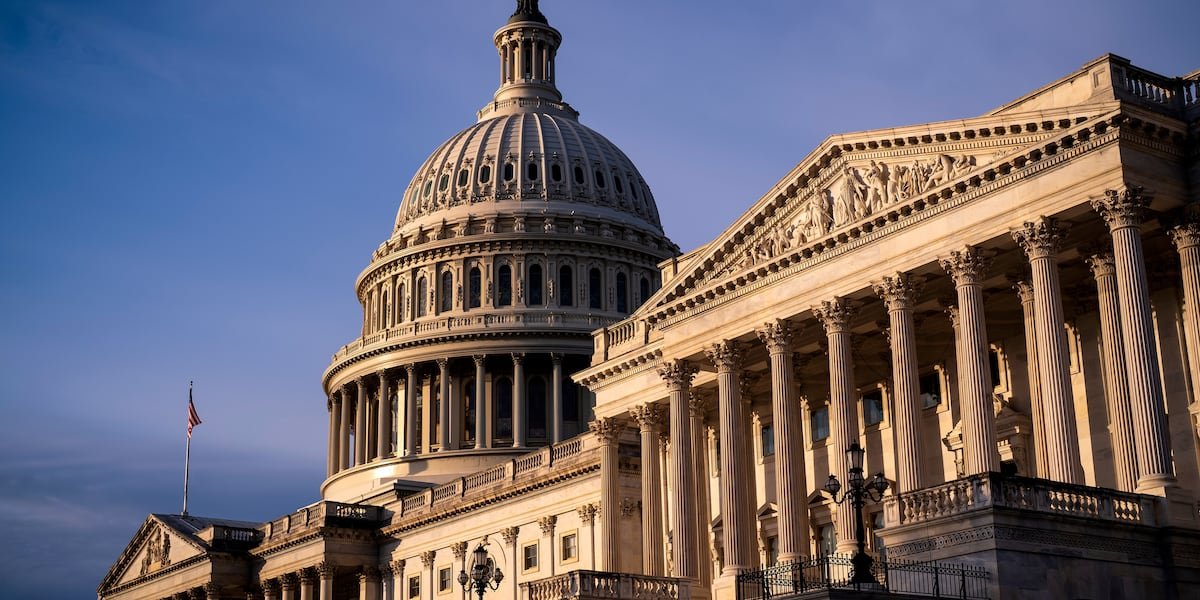
The pressure to deliver is something Democratic lawmakers are openly acknowledging. “Like, hell yeah, we should feel pressure,” said Democratic Representative Jason Crow of Colorado, a former Army Ranger, speaking earlier this month at the Capitol. “There are people dying in this country and people losing their healthcare, losing their livelihoods, losing their farms, being terrorized from ICE. If you don’t feel a sense of urgency and pressure in this job, and a desperation to deliver for folks, then you don’t belong under this Capitol dome.”
The majority is a mandate, the Democrats’ own members say — and a mandate comes with a deadline.
Oversight — and the Limits of the Mandate
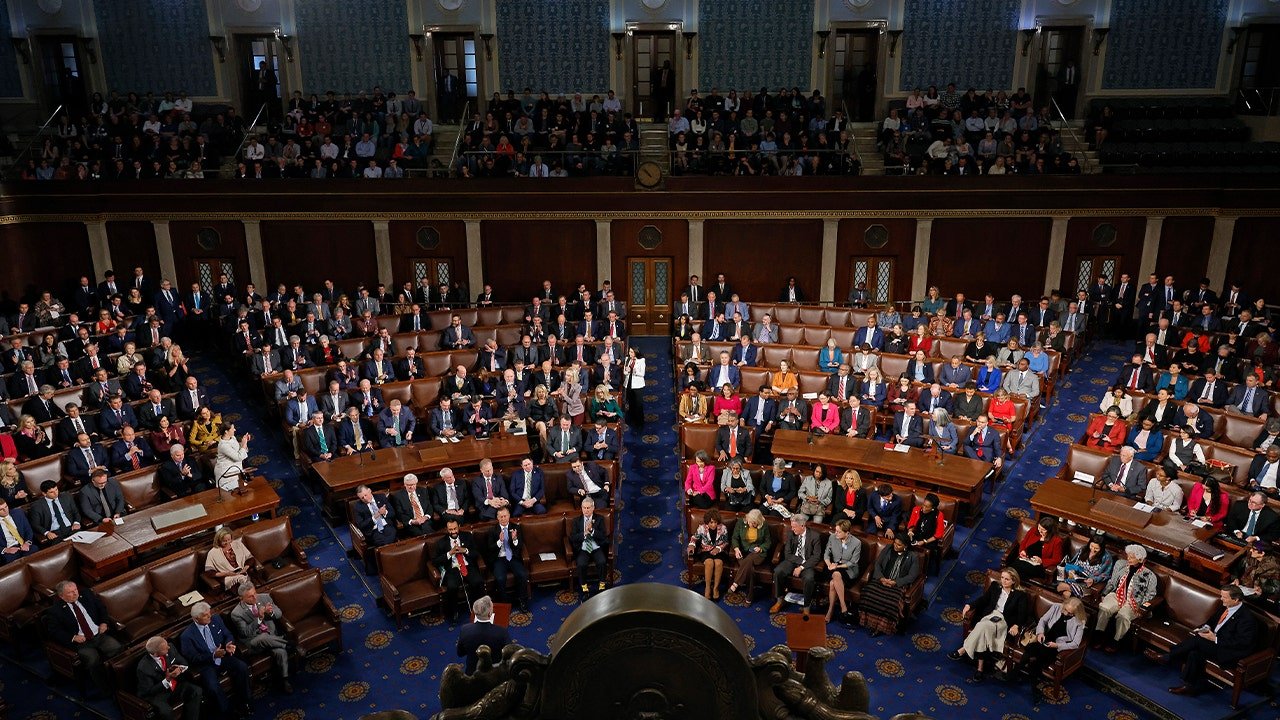
A majority of 258 also gives Democrats something a narrow majority never could: room to lose votes. Jeffries, who is poised to make history as the first Black speaker of the House if his colleagues elect him on 3 January, will be able to lose dozens of Democrats on any given vote and still have the 218 needed for passage.
That margin matters because the Democrats’ plans go beyond legislation. They have vowed to use their subpoena powers and launch a flurry of investigations, including into how Trump and his family have become wealthier since he returned to office. Jeffries has not ruled out trying to impeach Trump for a third time.
The White House has already issued a warning over the planned investigations, going as far as claiming that such probes — a standard oversight function of Congress — may amount to “blatant criminality”.
The contrast with the outgoing House could hardly be sharper. For the past two years, House Speaker Mike Johnson, a Republican from Louisiana, struggled to keep the House functioning with a narrow single-digit majority, meaning a few Republican lawmakers could derail the agenda. The new Democratic leadership will have far more room to manoeuvre — and far less excuse if it cannot.
Divided Government
The House result sets up divided government: a Democratic House and a Democratic Senate, with a Republican president in the White House. Senate Democrats won a 56-seat majority in the 100-member chamber, their biggest advantage in over a decade — a result BNN reported last week when Democrat Mary Peltola won Alaska’s Senate seat.
Democrats will take control of both chambers of Congress on 3 January, taking over the leadership of the powerful committees. On the Republican side, Representative Jim Jordan of Ohio, elected by his colleagues to be the Republican leader in the minority, vowed to fight back. “Over the next two years, House Republicans will fight for American families,” Jordan said.
Four races remain to be called, and the final tally may yet rise above 258. But the shape of the next Congress is already settled: the largest Democratic House majority since 1992, a Democratic Senate, and a president who will now need Congress’s agreement — or face its investigations — for the rest of his term.
Reporting based on the Associated Press, 22 November 2026; Reuters, 22 November 2026; The Times; Fox News.
By Shoaib Khan
Chief Journalist | The BNN Media – The Best News Network
News Beyond the Borders