By
Washington’s new rules on advanced AI chips are doing more than redrawing the map of the US–China technology race — they are freezing the bank loans behind Asia’s data-centre boom and pushing prized Nvidia processors onto the resale market.
By Akhtar Saleem Khan
Head of IT | The BNN Media – The Best News Network
News Beyond the Borders
Singapore — Lenders have paused billions of dollars in loans for Asian data-centre projects after the United States tightened its export rules on advanced AI chips, Bloomberg reported on Tuesday, 25 November 2026, in a sign that the chip curbs are now biting far beyond the semiconductor industry itself.
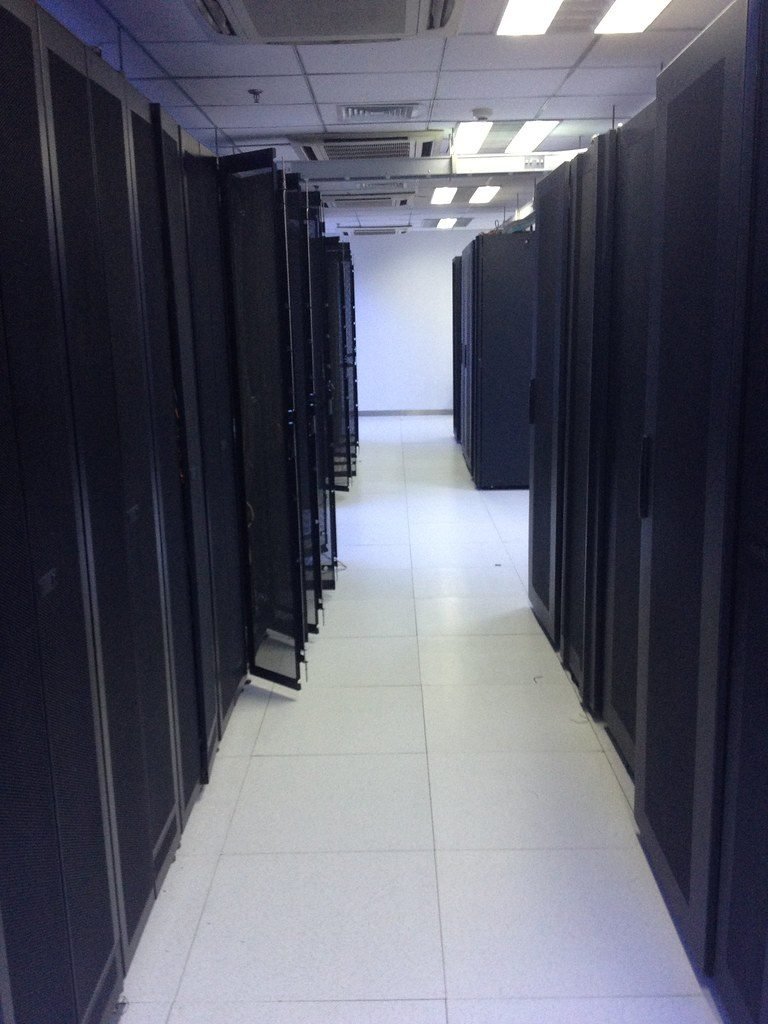
The Rule That Changed the Lending Math
The disruption traces back to a new rule from the US Commerce Department’s Bureau of Industry and Security, announced on 16 November and effective from 19 November 2026.
The rule adds licence requirements for advanced AI chips shipped to five countries — Indonesia, Malaysia, Singapore, Thailand and Brazil — and clamps down on data centres that rent large volumes of computing power to Chinese-headquartered firms. Existing operators were given a 90-day transition period to obtain licences.
Until the rule, companies in countries such as Singapore could buy advanced AI chips for their data centres licence-free, and Chinese firms could rent that computing power remotely to train and deploy AI models. That gap has now been closed.
A data centre is only as valuable as the chips inside it — and Washington has just made those chips a controlled asset.
Billions in Loans Frozen or Reworked
Because data-centre loans are repaid from rental income, banks now face a simple problem: no licence, no rent. Bloomberg reported that lenders have delayed or are reviewing loans tied to Chinese technology giants ByteDance, Alibaba and Tencent, including:
- Bridge Data Centres — $6.6 billion: an upsized loan for the Bain Capital-owned operator has been delayed, with Citigroup and JPMorgan adding a clause requiring compliance with US export controls. Its Malaysian facility serves ByteDance.
- Digital Halo — $372 million: some banks have withdrawn from the loan for the Malaysian operator, which serves Alibaba.
- Aolani — $480 million: a loan for the Singapore AI cloud firm is under review by its banks; the firm counts ByteDance among its customers.
- GMI Cloud — $300 million: a fund retreated from a loan for chips at a Thai data centre serving Tencent.
United Overseas Bank is also seeking a roughly $1 billion risk transfer involving data-centre and infrastructure loans, as banks look to shed exposure to the sector.
Twelve officials at Asia- and Europe-based banks operating in Asia told Bloomberg their institutions had not yet changed loan terms, suggesting the caution is so far sharpest among US lenders — but the direction of travel is unmistakable.
The AI buildout runs on borrowed money, and the lenders have just discovered that the collateral can be switched off by a licence decision in Washington.
Chips on the Resale Market
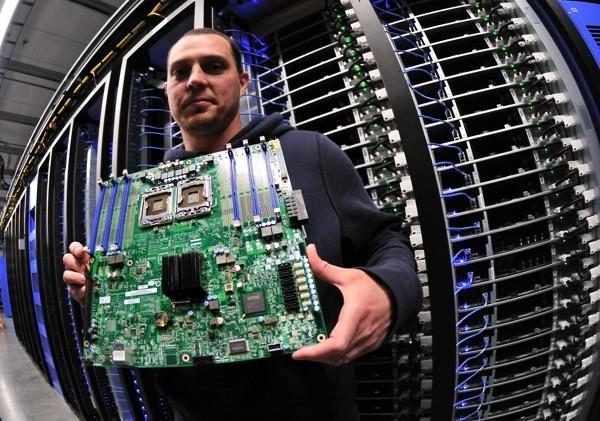
The rule is also reshaping the market for the chips themselves. Buyers have been approached about thousands of Nvidia B300 processors, including chips intended for data centres where Chinese companies would rent computing access, according to market reporting.
With some data-centre projects suddenly unsure whether they can legally use the chips they ordered, hardware meant for Asian server halls is being offered for resale instead.
Markets have felt the chill. In a two-day selloff, Nvidia fell 8.5% to a fresh low, while 64 of 65 tracked AI stocks fell in premarket trading as Nasdaq 100 futures dropped almost 3%, market coverage reported. Nvidia said during its 17 November earnings call that it was still studying the new controls, while maintaining that demand for its chips remained above supply.
How China Kept Getting the Chips
The new rule is the latest turn in a controls regime that began in October 2022, when Washington unveiled sweeping restrictions on advanced chips to China, and was tightened a year later to catch chips engineered to sit just below the performance thresholds.
A Reuters explainer published on 25 November sets out how the loophole survived for so long. In January 2025, the Biden administration extended the restrictions globally with a worldwide licence requirement — but in May, days before it was due to take effect, the Trump administration said it would not enforce it. The rule was only formally rescinded and replaced last week, leaving a gap in which data-centre capacity proliferated in countries such as Singapore, where Chinese companies could rent computing power remotely.
The stakes are large. Data released by the House Foreign Affairs Committee last week showed the Trump administration approved shipments of nearly 900,000 advanced AI chips made by Nvidia and AMD for Chinese companies from December 2025 through May 2026.
And the diversion risk is not theoretical. In March, US prosecutors charged three people associated with California-based AI server maker Super Micro Computer, including its co-founder, in a scheme to divert about $2.5 billion of US technology into China, including AI servers packed with Nvidia chips.
The controls were written for a world of shipping containers. The industry moved to rented computing power in another country — and the rules are only now catching up.
Nvidia Caught in the Middle
Nvidia, the top US exporter of AI chips to China, sits at the centre of the storm. Its chief executive, Jensen Huang, has long said there is no evidence of chip smuggling to China — an assertion experts already viewed sceptically, Reuters noted.
The company at the centre of the latest scrutiny is Megaspeed, a Singapore cloud company under investigation for more than two years over whether it diverted chips to China. It was added to a US trade blacklist this week, along with its Thai and Malaysian subsidiaries, effectively blocking shipments. Nvidia said it cut off sales to Megaspeed in June 2025.
Nvidia has built location-verification technology that could indicate which country its chips are operating in, the company confirmed in December 2025, and has offered it as a software option for customers. But it has opposed proposed legislation that would make such verification and diversion reporting mandatory.
That legislation, known as the Chip Security Act, is among several export-control bills that gained new momentum after the Nvidia scandal and may be included in the National Defense Authorization Act that Congress is expected to pass next month.
For context, Nvidia’s board unanimously reinstated Huang as chief executive on Monday after a brief removal, as BNN reported — a reminder of how quickly the company’s fortunes have swung in the past fortnight.
What Happens Next
The immediate question is whether the licences will flow. The 90-day transition period gives existing operators time to apply, but banks are unlikely to release billions in funding until they see approvals in hand. A public comment period on the rule runs until 19 January 2027.
Longer term, the curbs are already pushing Chinese AI firms towards domestic hardware. Reporting this week said MiniMax is remotely using thousands of Blackwell chips in Australia that are now subject to licensing reviews, and its chief executive has said internally the company will accelerate adoption of Huawei and Alibaba chips, while DeepSeek has begun training on Huawei’s Ascend chips.
For the data-centre industry, the lesson is stark: the buildings are no longer the asset. The asset is the permitted chain of use — the licence, the customer and the chip, in that order.
Washington set out to stop chips reaching China. It has ended up repricing the entire business of building the places where AI lives.
By Akhtar Saleem Khan
Head of IT | The BNN Media – The Best News Network
News Beyond the Borders
Source: Reuters (25 November 2026) — “How China got access to Nvidia’s AI chips despite rules to stop them”; Bloomberg reporting (25 November 2026) on stalled data-centre loans, as summarised by Techmeme and other market coverage; KuCoin/ME News and The Joai summaries of the loan figures and market moves.