By
Rescuers in Indonesia are digging through a flooded, 100-metre-deep illegal gold mine after torrential rain turned its shafts into a death trap, with thirteen miners confirmed dead and thirteen more still missing underground.
By Salman Qureshi
Cameraman / Photographer | The BNN Media – The Best News Network
News Beyond the Borders
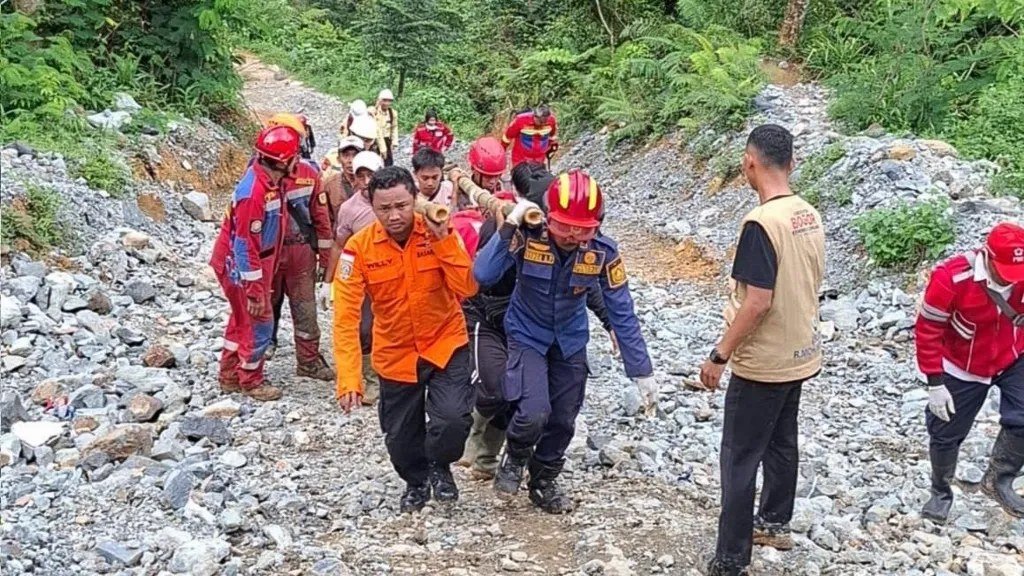
Pongkor, Bogor, Indonesia — Thirteen miners have been found dead and thirteen more are still missing after floodwater swamped an illegal gold mine in West Java, Indonesian authorities said on Thursday. Rescue teams were back at the site on Thursday morning, working with ropes in narrow, dark and slippery shafts 100 metres below the surface.
The Flood That Came in Hours
A total of 26 workers entered the mine on Monday, in the Pongkor area of Bogor Regency, south of the capital Jakarta, when heavy rain swept the region. Later that day, torrential rain caused a nearby river to overflow, and the floodwater poured into the excavation, filling the two shafts of the open-pit mine and trapping the men about 100 metres (328 feet) underground.
Eleven miners managed to escape from one section of the excavation before the water filled the pit. The rest did not get out.
By Thursday morning, the bodies of 13 workers had been recovered from the site, local search and rescue chief Desiana Kartika Bahari said in a statement. Six of the dead had been identified by Thursday, West Java police chief Hengki told Reuters. The victims identified so far were aged between 20 and 50, police said.
Twenty-six men went underground on Monday. Eleven escaped. Thirteen are confirmed dead. Thirteen are still down there.
A Rescue in the Dark
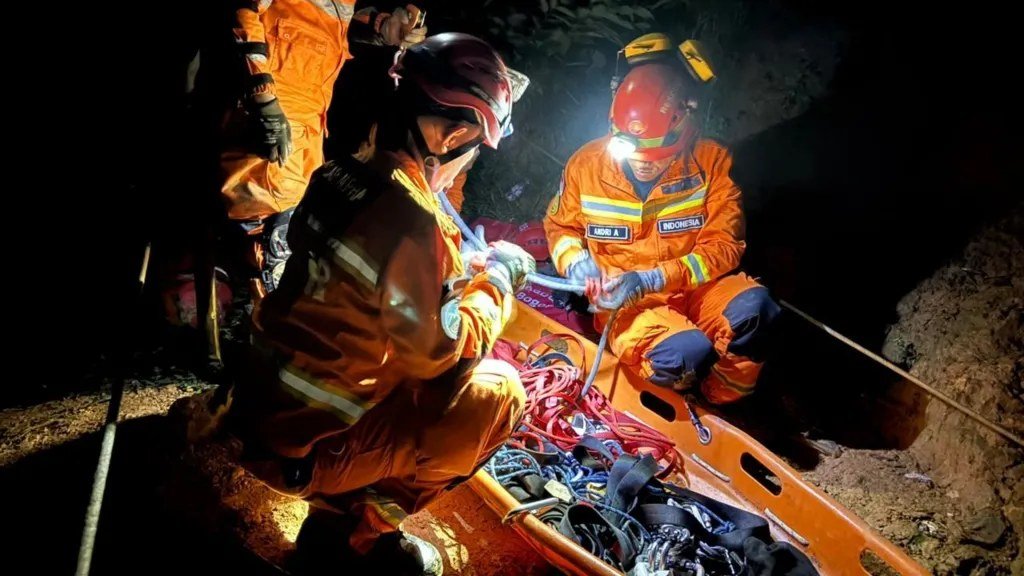
Indonesia’s National Search and Rescue Agency, Basarnas, said its teams were focusing on two mine shafts and using ropes to gain access, but the depth of the excavation and the conditions inside made the work slow and dangerous.
“The depth of the shaft, narrow access and limited lighting are key considerations in determining the search strategy so that personnel can operate safely,” Desiana Kartika Bahari, head of the Jakarta Search and Rescue Office, said in a statement on Wednesday.
Rescuers have been working day and night. Photographs from the site show teams in orange hi-vis suits and helmets handling ropes and stretchers in the dark at the mouth of the shaft, while ambulances and medical staff wait above ground to take victims away. The shafts, authorities said, are continually being flooded from below, and the water level has been slow to fall.
The search was due to continue on Thursday, weather permitting, police said. Above all, rescuers’ safety is the priority: the narrow, slippery and dark conditions of the shaft, 100 metres down, leave little room for error.
Three days after the flood, hope is fading — but the search has not stopped.
The Families Waiting Above Ground
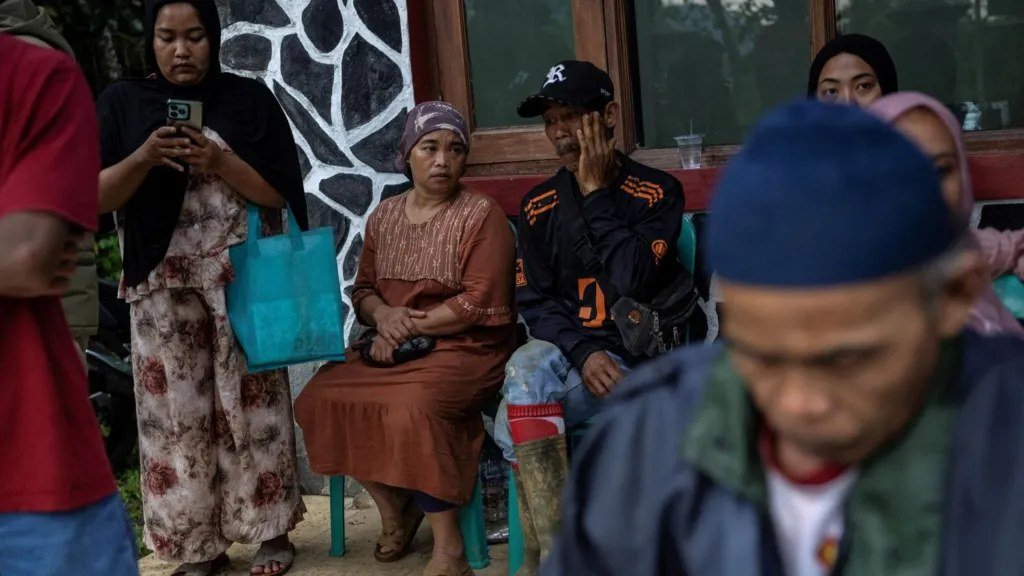
For the families gathered near the site, the wait has been agonising. Rani, whose father Rais, 50, was among the miners who went underground on Monday, last saw him as he left for work. Early on Tuesday, she received the news that he was trapped.
“I hope he’s found soon,” she said, as she waited with other relatives near the site.
Men and women have been milling around in front of a hut near the mine, anxious expressions on their faces, waiting for any word from the rescue teams. Some of the missing men’s families have been there since Monday night.
The uncertainty is made worse by the nature of the work. Because the mine was unlicensed and unreported, even the number of people underground is disputed. M Adam Hamdani, head of emergency and logistics at the Bogor Regency disaster management agency, told Indonesian news outlet Detik that the total casualty figure “is still unclear”.
“Some say 20 people, others say 29 people,” he said. “The problem is that no one reported it and no one wants to report it.”
Police and rescue authorities have worked on the figure of 26 miners who entered the pit — the number used in this report — but the true toll may only become clear as the search goes on.
An Illegal Mine, and a Gold Rush
The mine was not a legal operation. Small-scale gold mining is banned in Indonesia, but it remains widespread in rural parts of the mineral-rich archipelago, and the industry has grown rapidly over the past decade, often in step with rising gold prices.
In early 2026, gold prices reached an all-time high, spurring a rush that prompted mine operators across the country to expand. State-owned mining company Aneka Tambang, known as Antam, holds the business permit for the area where this week’s flooded mine sits — but Antam has said the mine was not its operation and was running without its authorisation.
The Pongkor area is no stranger to such deaths. Earlier this year, in the same area as this week’s flooded mine, 11 illegal gold miners died after a carbon monoxide leak inside a shaft. In May, in West Sumatra, nine people were killed at an illegal gold mine after heavy rain triggered the collapse of a 30-metre cliff, burying 12 miners in total.
The scale of the problem is far larger than the official figures suggest. While rescue operations were under way in Bogor on Wednesday, West Java Regional Police separately announced that they had uncovered 24 cases of illegal mining across the province between October and November alone.
Bisman Bakhtiar, executive director of the Center for Energy and Mining Law Studies, told the BBC earlier this year that the actual number of illegal mines in Indonesia is higher than the government’s figures. “[The government figures are] what’s been recorded. That means there must be more than that,” he said, noting that law enforcement operations have had little impact on the sector. “It’s still very massive and very big because this has been going on for a very long time.”
The gold is legal tender in the markets of the world. The mines that produce it, very often, are not legal at all.
Who Profits, Who Pays
Others allege that the illegal industry survives because it is protected. Laode M Syarif, a former deputy chairman of Indonesia’s Corruption Eradication Commission, has said unofficial mining is difficult to eradicate because every illegal mine has “backing”, usually from “police and military or high-ranking officials in local and provincial governments”.
“As long as these backers are not dealt with firmly, illegal mining will continue,” he said.
For the men who go underground, the calculation is simpler and more desperate. The mines offer an economic lifeline to people with few other viable prospects. Despite the value of gold having dipped in recent months, countless illegal miners throughout Indonesia are still eagerly digging for paydirt — in pits with no regulation, poor construction, and no safety net.
Accidents are relatively common, whether from landslides, floods or exposure to hazardous gases, all of which have claimed lives in recent years. Because the sector is illegal, the true number of casualties across the archipelago is obscured — nobody reports the dead, and nobody wants to.
Calls for a Full Investigation
Indonesia’s Ombudsman on Thursday urged law enforcement officials to conduct a thorough investigation of the incident and to address the larger systemic problem behind it.
“This should be a momentum for all parties to resolve the [illegal gold mining] problem comprehensively, not just taking action after the incident or closing the holes discovered,” said Abdul Ghoffar, a member of the Ombudsman.
“We need to uncover the entire [illegal gold mining] chain,” he continued. “We must not allow only the miners in the field to be seen and prosecuted, while those who control the activities, provide capital and facilities, store, and market the mined products remain untouched. Law enforcement must target the actors and networks that keep this illegal activity going.”
As rescue operations continue and more bodies are recovered, the picture is becoming less murky. But even if there are survivors among those who remain missing, time may be running out. More than three days have passed since the shafts flooded, and the families above ground are still waiting for news that may never come.
By Salman Qureshi
Cameraman / Photographer | The BNN Media – The Best News Network
News Beyond the Borders
Sources: Reuters via CNA / Channel News Asia (26 Nov 2026); BBC News (27 Nov 2026); China Daily Asia (26 Nov 2026); People (26 Nov 2026).