By
Spain goes to the polls on Sunday in a snap election that could put the far-right Vox party into government for the first time since the death of dictator Francisco Franco — if the final opinion polls, which point to a clear right-wing majority, are proved right.
By The BNN Media
The Best News Network
News Beyond the Borders
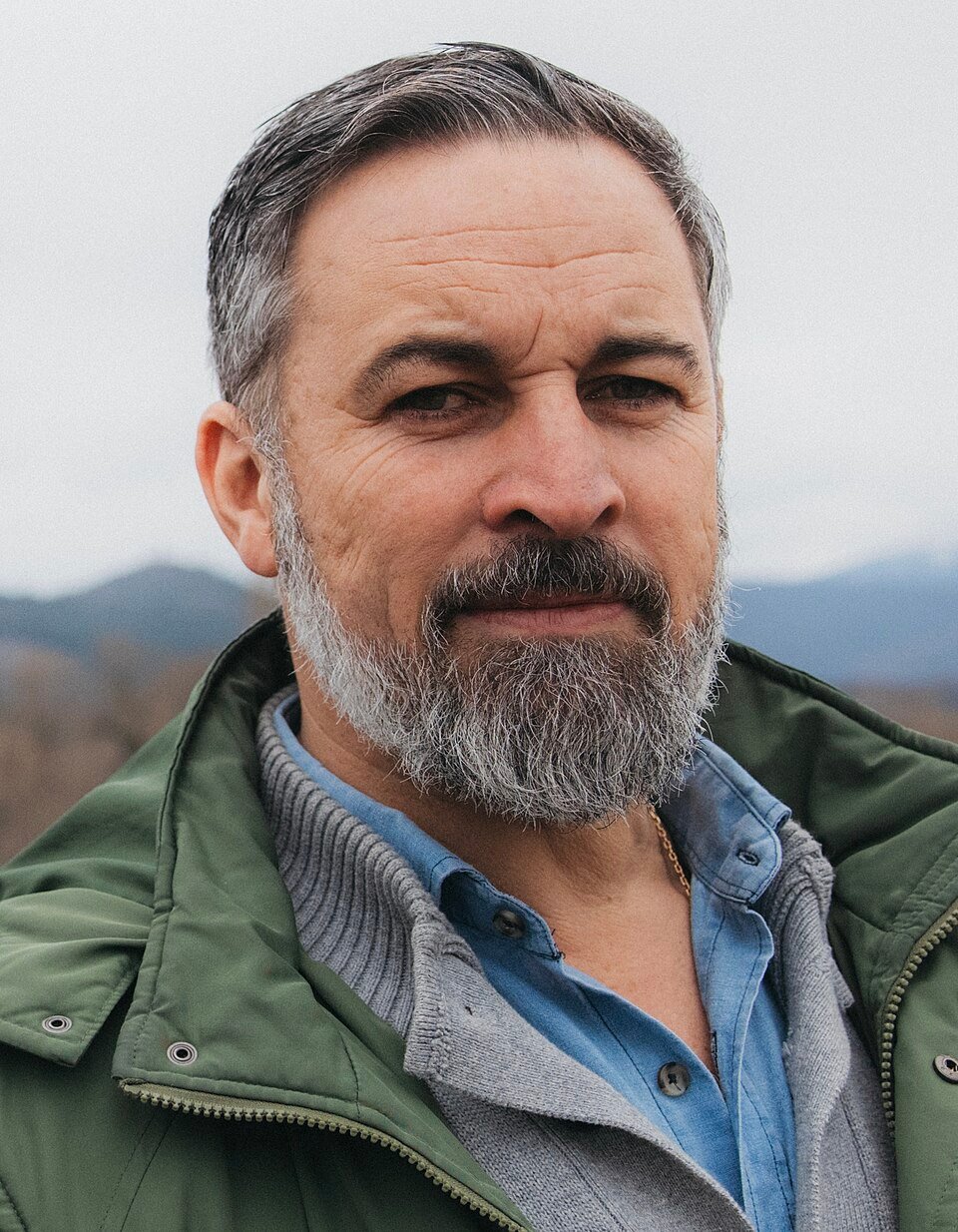
Madrid, Spain — Spain votes on Sunday, 29 November, in a snap general election, and practically every final opinion poll points to the same outcome: a parliamentary majority for the conservative People’s Party (PP) and the far-right Vox. If that result holds, Vox could take a cabinet role in Madrid — something no far-right party has done since Franco died in 1975.
A snap election called on a gamble
Prime Minister Pedro Sánchez called the early election after parliament rejected his decrees on rising rents and evictions on 2 October. The move was widely seen as an attempt to harness the momentum of nationwide housing protests and to repair political damage from a migration crisis in Spain’s North African enclave of Ceuta, two deadly train crashes this year and corruption investigations touching his inner circle.
So far, according to Reuters, that plan appears to be falling short. Sánchez, who has led the Socialist Party (PSOE) since 2017 and has been prime minister since 2018, is one of Europe’s last leftist leaders — and he is fighting an election his own timing created.
The gamble is stark: Sánchez called this vote to strengthen his hand, and the polls suggest it may instead end his eight years in office.
What the final polls say
Monday 23 November was the last day polls could legally be published before a blackout ahead of voting day, so the final surveys are the last hard evidence of the state of the race. Their message is strikingly consistent:
- The PP is the largest party, on around 31 to 32 per cent of the vote.
- The Socialists have risen to almost 30 per cent, closing the gap but still mostly expected to finish second.
- Vox stands at roughly 17 to 18 per cent, well up on its 2023 result.
- The PP and Vox together are projected to win around 190 to 205 seats in the 350-seat Congress of Deputies — comfortably above the 176 seats needed for an absolute majority.
The details vary by pollster, but the direction does not. A daily survey by 40dB for El País put the PP on 31.5 per cent, the Socialists on 30.3 per cent and Vox on 18 per cent, giving the right-wing bloc more than 190 seats. NC Report for La Razón projected 201 to 205 seats for the PP and Vox combined. A GAD3 survey for ABC gave the PP 131 seats, the Socialists 110 and Vox 63 — a combined 194.
There is one major outlier. The state-run CIS pollster projected the Socialists on 34.4 per cent, far ahead of the PP on 24.9 per cent and Vox on 15.6 per cent, suggesting Sánchez could still stay in power through a broad left-wing coalition. Almost every other pollster disagrees.
The polls are not votes, and Spain’s pollsters have been wrong before — but the consistency of the right-wing lead across so many surveys is itself the story of this campaign.
Vox: from fringe force to kingmaker
Vox was co-founded in 2014 by its leader, Santiago Abascal, who built his political profile in the Basque Country opposing separatism. For years it was a minor force. In the 2023 general election it won 12.4 per cent of the vote and 33 seats, making it Spain’s third-largest party. The final polls for Sunday’s vote put it on between 51 and 70 seats — potentially doubling its presence in parliament.
Pollsters say Vox’s surge has been driven in particular by younger and male voters, and by an uncompromising message on the issues dominating this campaign. The party advocates tougher immigration controls, the recentralisation of powers held by Spain’s regions, lower taxes and the reversal of many progressive social policies adopted in recent years.
That platform is precisely what makes the prospect of Vox in government so consequential — and so contested. Sánchez has spent the campaign warning that a PP-Vox government would threaten social rights won in recent decades, in an effort to rally disillusioned left-wing voters.
Vox no longer needs to win the election to shape Spain’s future: as the likely kingmaker, its price for supporting a PP government is the central question of the race.
What a PP-Vox government would mean
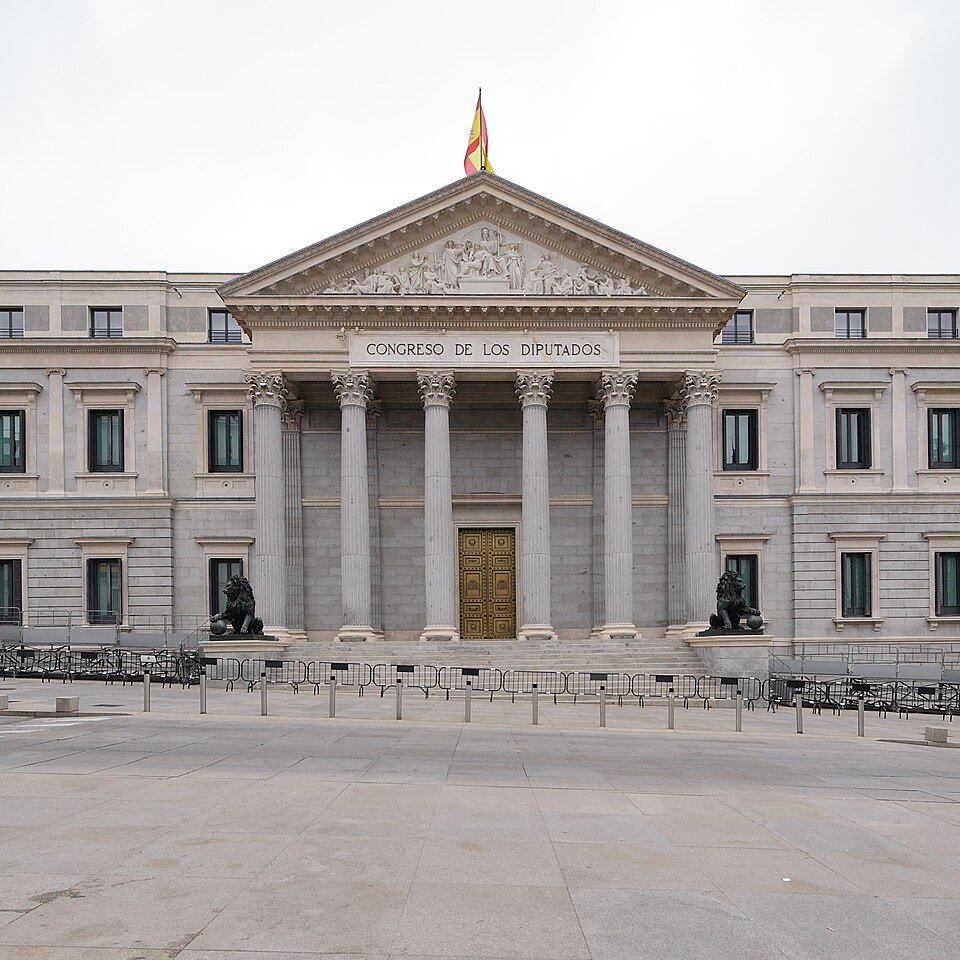
If the PP and Vox together pass 176 seats, a coalition between them could give a cabinet role to a far-right party for the first time since the death of dictator Francisco Franco in 1975, according to Reuters. That historical weight explains why this election is being watched far beyond Spain.
The shape of any such government is still unknown. PP leader Alberto Núñez Feijóo, 65, a former president of the region of Galicia who has led the PP since April 2022, has pitched himself nationally as a moderate and pragmatic administrator. Whether he governs alone with Vox’s outside support or brings Vox ministers into his cabinet would decide how far the party’s agenda reaches into government policy.
What is clear is that the two parties would have to agree on the issues that defined the campaign — above all housing and immigration — where their instincts differ. The PP has promised deregulation to ease the housing crisis; Vox has made immigration control its signature demand. The negotiations, if they happen, will test both.
The two men at the top — and the one fighting to stay
Feijóo led the PP to first place in the 2023 election but failed to secure enough support to form a government, leaving him as leader of the opposition. Sunday is his second chance, and the polls suggest the arithmetic is finally on his side.
Sánchez, meanwhile, is running on a record he insists is strong: years of Spanish economic outperformance in Europe, and a foreign policy that has kept Spain in the international spotlight — including opposing United States pressure for higher military spending and denying Washington the use of Spanish airspace in the war on Iran. After eight years in office, he is already the second-longest-serving premier since Spain’s return to democracy in 1978, and he has repeatedly proved able to surprise those who had written him off.
Abascal, the third man in the race, may end up the most powerful of all. He does not need to win the most votes. He needs only for the PP to need his seats — and on the current polls, it will.
Feijóo may win the election, but Abascal could decide what the next government looks like.
Why Sánchez called it — and why it may backfire
The campaign’s hottest subject has been scarce, unaffordable housing. The debate followed nationwide protests over the eviction of an 87-year-old woman from her home in Madrid. Sánchez has favoured rent caps and bans on short leases; his main opponent has argued for deregulation instead.
Immigration has been the other defining issue. Sánchez is one of Europe’s loudest advocates of immigration’s benefits for the economy, while Vox wants far tighter controls — a divide that has shaped the whole campaign.
Corruption has been a third theme. Opposition parties made it central after convictions involving members of Sánchez’s inner circle and family, though they failed to tie Sánchez himself to the scandals. Sánchez has repeatedly denied any wrongdoing.
A fractured left
Sánchez’s difficulties are not only about his opponents. Parties to the PSOE’s left have failed to agree on a common candidate list, reducing the chances of a leftist coalition staying in power — and Spain’s electoral system disadvantages smaller parties that run separately.
Some, such as Podemos, the former junior coalition partners of the PSOE, risk losing their parliamentary representation altogether, the polls suggest. The Broad Front, a platform of several parties in the minority government, is expected to win more than 5 per cent of the vote. Regional parties — EH Bildu in the Basque Country, BNG in Galicia, and ERC and Junts in Catalonia — will also shape the arithmetic, but few expect them to be enough to save a left-wing government on the current numbers.
What happens after Sunday
All 350 seats in the lower house are up for election on closed party lists, along with 208 of the 266 Senate seats — though only the lower house chooses the prime minister. The new lower house will meet on 23 December and elect a speaker. King Felipe will then nominate a candidate for the premiership, usually the leader of the most-voted party.
The nominee needs an absolute majority of at least 176 seats in the investiture vote, or a simple majority in a second round. Coalition talks have no deadline, but a new government must be formed within two months of that vote to avoid another election.
Whatever happens on Sunday, Spain will not have a new government overnight — but it may know by Monday morning whether the far right is about to enter government for the first time in half a century.
By The BNN Media
The Best News Network
News Beyond the Borders