 By
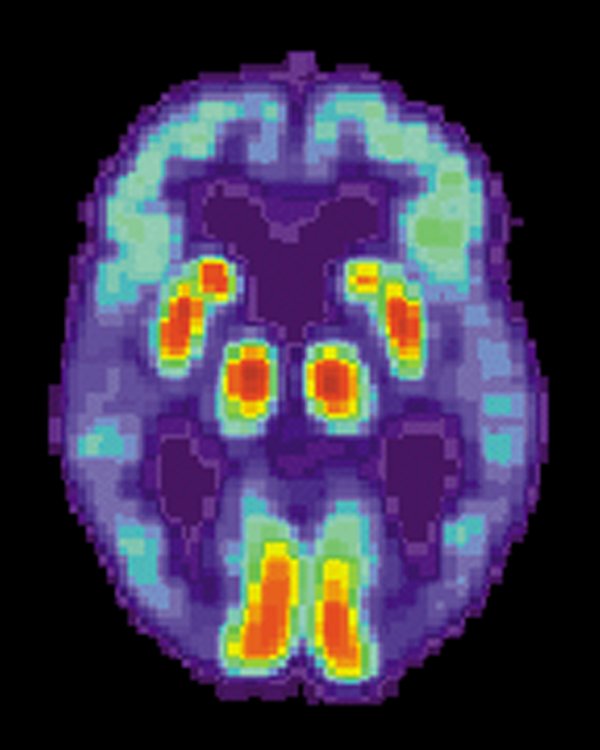
The US Food and Drug Administration has approved a brain imaging agent that lets doctors see tau — one of the two proteins that define Alzheimer’s disease — building up in a living patient’s brain, a view that until now was only possible after death. The approval rests in large part on years of research at the University of Wisconsin, where scientists performed more than 2,200 scans with the tracer.
By The BNN Media
The Best News Network
News Beyond the Borders
Madison, Wisconsin, United States — The US Food and Drug Administration approved in August 2026 TAUKLARIFY, a brain imaging agent that allows clinicians and researchers to visualise the buildup of tau, a protein closely associated with Alzheimer’s disease, in the brains of living patients. The University of Wisconsin announced on 20 November that research data from its scientists had helped provide the evidence behind the approval.
What TAUKLARIFY Does
TAUKLARIFY, previously known by its research name MK-6240 and generically as florquinitau F 18 injection, is a radiodiagnostic agent used in brain PET imaging for adults with cognitive impairment who are being evaluated for Alzheimer’s disease. It is given intravenously before a positron emission tomography (PET) scan of the brain.
The agent is intended to identify tau neurofibrillary tangle pathology, including tangles isolated to the medial temporal lobe — the tangled clumps of tau protein that are one of the hallmark changes of Alzheimer’s disease. It was developed by Enigma Biomedical USA, and the company says it will be available through Cerveau Technologies, a Lantheus company.
Until now, a definitive Alzheimer’s diagnosis could only be established after death, when an autopsy revealed that two abnormal proteins — beta amyloid and tau — had morphed into malformed clumps in the brain. A post-mortem diagnosis is of little use to the patient, so researchers spent decades pursuing imaging that could show these proteins in living people. The first breakthrough came 20 years ago with a PET tracer that visualises beta amyloid plaque, followed about a decade later by a tracer for tau tangles.
For the first time, doctors can watch tau — the protein most closely tied to how the illness progresses — while the disease is still unfolding.
How the Approval Was Earned
The FDA’s decision was supported by two blinded image-reading studies that evaluated TAUKLARIFY PET scans from more than 500 participants across three clinical trials. The participants included people with mild cognitive impairment, people with mild Alzheimer’s disease dementia, and cognitively unimpaired individuals.
In one study involving 279 participants, positive percent agreement among image readers ranged from 80 percent to 88 percent, while negative percent agreement ranged from 98 percent to 99 percent — meaning readers of the scans agreed with each other, and with the reference standard, most of the time.
The approval follows FDA Fast Track designation for the agent, according to Rick Hiatt, president and chief executive officer of Enigma Biomedical USA. He said its development was supported by two large independent clinical studies demonstrating efficacy and safety in assessing tau neurofibrillary tangles.
Hundreds of patients, three trials and two blinded reading studies stand behind a single approval — the evidence was built scan by scan.
Safety and Limits
Safety was assessed in 1,734 individuals who received an approximate intravenous dose of 185 MBq, or 5 mCi, of TAUKLARIFY for tau PET imaging.
The most common adverse reactions, each reported in at least 0.1 percent of patients, were headache, nausea, injection-site reactions, dizziness and abdominal discomfort. Headache occurred in 0.7 percent of patients and nausea in 0.2 percent.
The agent’s label also carries clear limitations. Its safety and effectiveness have not been established for evaluating non-Alzheimer’s disease tauopathies. A negative scan does not necessarily rule out tau neurofibrillary tangle pathology, while a positive scan does not necessarily confirm pathology through tissue examination. Additional evaluation should be considered when clinical uncertainty remains.
TAUKLARIFY is a diagnostic aid, not a verdict — a scan result still has to be read alongside the rest of the patient’s assessment.
The Wisconsin Story Behind the Scan
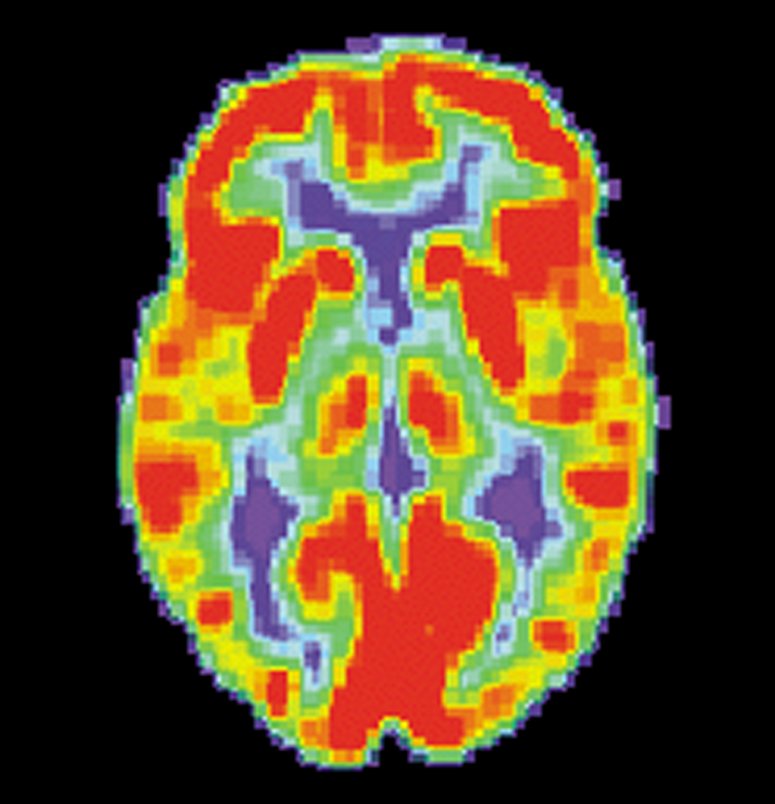
Wisconsin researchers were among the earliest adopters of MK-6240, and data generated through years of research at the University of Wisconsin School of Medicine and Public Health helped provide critical evidence supporting the FDA approval.
The tracer was evaluated through years of collaboration among the Wisconsin Alzheimer’s Disease Research Center, the Cyclotron Research Group within the Department of Medical Physics and the Brain Imaging Core at the Waisman Center. Because the tracer contains a radioactive isotope that decays quickly, the medical school’s cyclotron and its expertise in nuclear physics were key — the ability to manufacture the tracer on demand, often daily, was critical to advancing the research.
Tobey Betthauser, assistant professor of medicine, and Bradley Christian, professor of medical physics, led one of the first teams in the United States to test MK-6240 while imaging the brains of research volunteers. Their 2018 study was among the first to show that the substance could accurately image tau pathology in the brain.
A study published in 2020 in the journal Brain showed how MK-6240 gives a fuller view of how tau and amyloid together are linked to cognitive decline. Conducted on 167 volunteers in the long-running Wisconsin Registry for Alzheimer’s Prevention study, it allowed scientists to show a link between rising tau and beta amyloid levels and declining thinking, learning and memory.
To date, UW researchers have performed more than 2,200 scans using the tracer across 800 to 900 research volunteers and patients — more data on MK-6240 than almost any other site in the world. Funding from the National Institutes of Health, which started in 2017, sustained the work.
“It is tremendously rewarding to see a tracer we helped advance from its earliest human studies become an FDA-approved diagnostic agent and move closer to clinical use for patients and clinicians across the country,” said Sterling Johnson, associate director of the Wisconsin Alzheimer’s Disease Research Center.
A university cyclotron, two decades of funding and more than 2,200 scans turned a research chemical into a medicine doctors can now use.
Why Tau Matters
“For years, we could only see the effects of Alzheimer’s disease after symptoms appeared,” said Dr. Nate Chin, medical director of the Wisconsin Alzheimer’s Disease Research Center. “Now, with amyloid and tau imaging, we can better understand what is happening in the brain while the disease is unfolding. That information can help us diagnose patients more accurately, determine where they are in the disease process and make more informed treatment decisions.”
Tau matters because it tracks the disease more closely than amyloid does. Amyloid plaques can be present for years before symptoms appear; tau tangles spread as memory and thinking decline, and their pattern mirrors how far the illness has progressed. Being able to see tau in a living brain gives doctors a way to stage the disease, not just to name it.
“The ability to track tau in the living brain over time is helping us better understand how Alzheimer’s disease develops and progresses,” Betthauser said. “As we learn more about how tau, amyloid and other pathologies interact, we move closer to understanding why symptoms emerge differently from person to person.”
Amyloid says the disease may be there. Tau says how far it has gone — and that is the information doctors and patients need most.

What Happens Next
A commercial launch timeline for MK-6240 has not yet been announced by the companies bringing it to market. UW Health, however, is already preparing for its use in geriatric memory clinics by establishing a clinical tau PET programme, with input from clinicians in geriatrics, neurology and radiology — including experts trained to interpret tau PET brain scans, dedicated imaging capabilities, and clear steps for connecting patients with a team of specialists.
“Years of research have allowed us to build the expertise, workflows and partnerships needed to bring tau imaging into clinical care,” said Dr. Robert Przybelski, director of UW Health Geriatric Memory Clinics. “When MK-6240 becomes commercially available, our teams will be well positioned to integrate this technology into our memory clinics, giving providers a critical tool for accurate patient diagnosis and the assessment of response to the emerging therapies for Alzheimer’s disease and related dementias.”
Drugs targeting tau are currently in development, and researchers are using tau PET imaging in clinical trials to sort out which patients may benefit most from experimental Alzheimer’s treatments and whether therapies are having their intended effect. “There is a lot of emphasis on tau PET imaging in clinical trials because several anti-tau drugs are being developed,” Betthauser said. “Researchers want to know whether a therapy is effectively reaching its target and whether it is altering the disease process in the brain.”
The scan is approved; the rollout is not yet scheduled — but the clinics that helped prove it are already getting ready to use it.
By The BNN Media
The Best News Network
News Beyond the Borders
Sources for this article: University of Wisconsin School of Medicine and Public Health (20 Nov 2026); Applied Radiology (28 Nov 2026); American Pharmaceutical Review (14 Aug 2026); TrialMedPath (24 Nov 2026).