By
Sierra Leone was once ranked as the most dangerous place in the world to give birth. Today, maternal deaths have fallen by nearly four-fifths — but women still face unofficial fees, long journeys and hospitals that sometimes operate by flashlight.
By The BNN Media
The Best News Network
News Beyond the Borders
Freetown, Sierra Leone — Sierra Leone has recorded one of Africa’s steepest declines in maternal mortality, with the country’s maternal mortality ratio falling by nearly 80 percent, from more than 1,600 deaths per 100,000 live births in 2000 to 354 in 2023, according to the latest available United Nations estimates reported by The Associated Press on Thursday, 26 November.
A Country Once Feared as the Worst Place to Give Birth
For years, Sierra Leone carried a grim reputation. It was ranked as the most dangerous place in the world to give birth, and the figures bore that out: in 2000, more than 1,600 mothers died for every 100,000 babies born alive. The latest UN estimates put that figure at 354 in 2023 — still high by global standards, but a transformation in a single generation.
The World Health Organization attributes the decline partly to expanded health services, the introduction of free maternal health care in 2010 and the training of more skilled birth attendants, the AP reported.
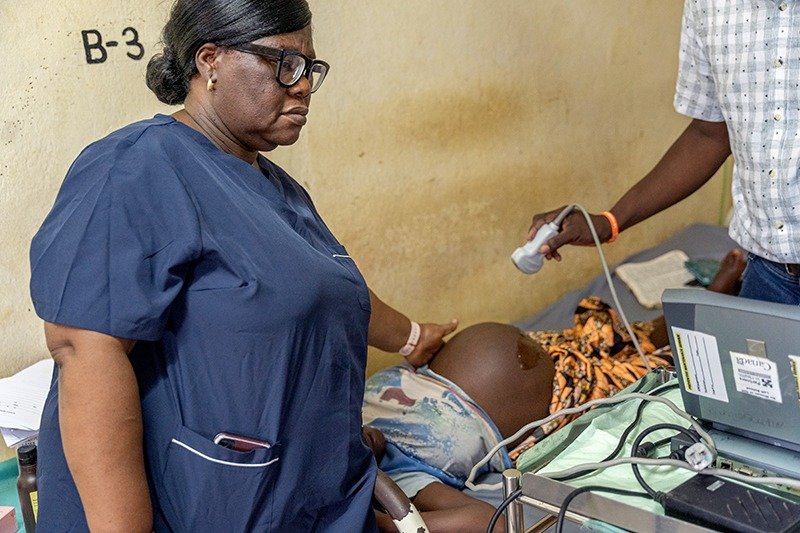
The change is visible in the daily life of the country’s maternity wards. At Freetown’s Princess Christian Maternity Hospital, trader Fatmata Kamara, 28, told the AP that during her first two pregnancies she could not afford ultrasound scans. By her third, she was receiving scans and medication and spending less time waiting to see a doctor.
The numbers describe a country where childbirth has become far safer — and the women in its maternity wards can feel the difference.
What Changed Inside the Hospitals
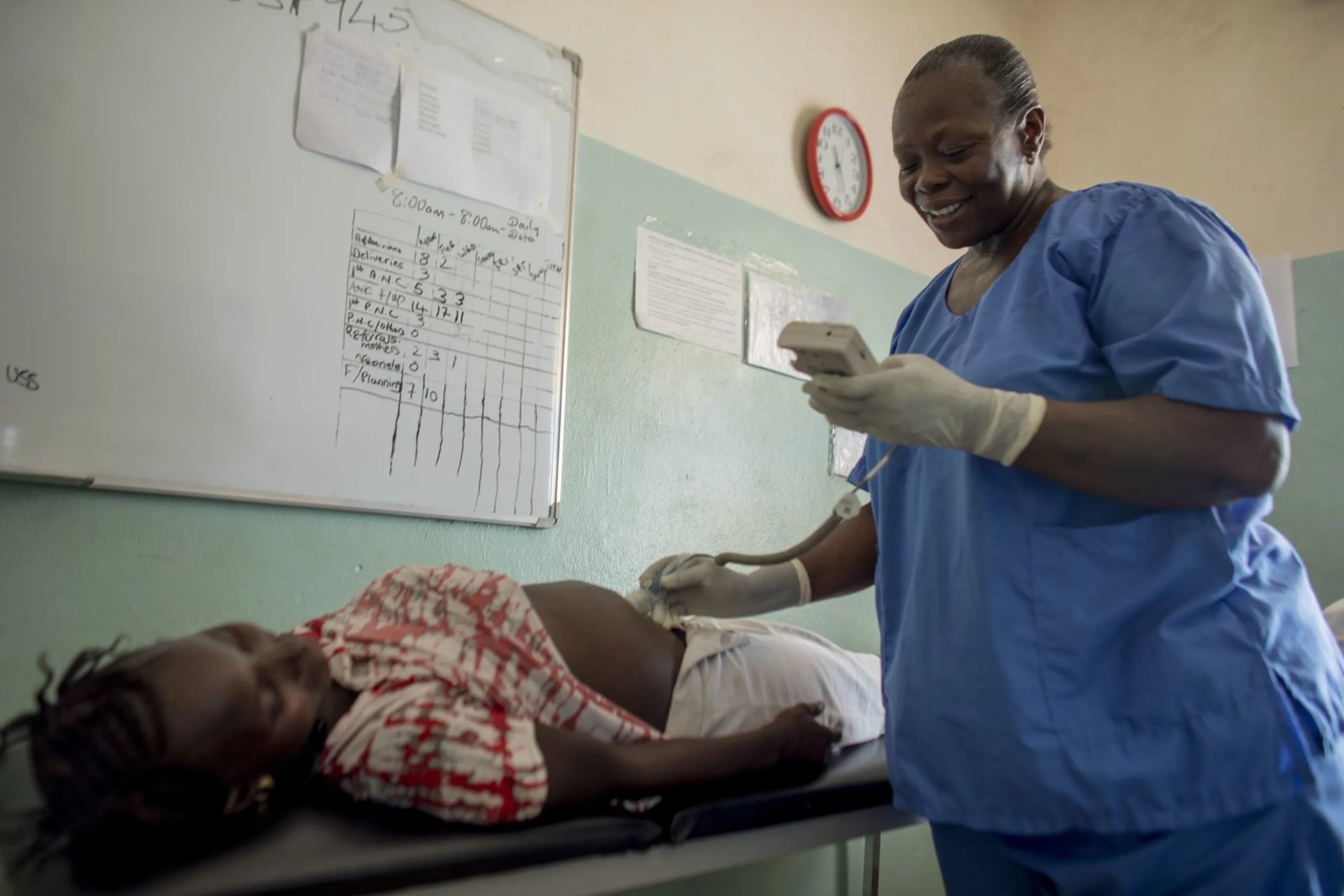
The improvement is not the result of a single reform. Midwives say training has changed what they can do on the spot. Umu Fye, the midwife in charge of the antenatal unit at Princess Christian Maternity Hospital, said staff used to have to send patients elsewhere for scans. Now midwives are trained to assess foetal heart rates and babies’ positions themselves, and three ultrasound machines were installed at the hospital in 2025, she told the AP.
There is also more medicine available, including drugs to treat severe bleeding after childbirth, one of the major causes of maternal death. Dr. Francis Moses, the Health Ministry official leading the campaign against maternal deaths, said Sierra Leone is also training more specialists at home. “We have now shifted from having our specialists being trained in other countries to having homegrown post-graduate training here,” he said.
The hospital used to record a “really high number of (pregnancy-related) deaths” because it was the main referral facility in the city, Fye said. “There have been a lot of changes,” she added.
- Maternal mortality ratio in 2000: more than 1,600 deaths per 100,000 live births
- Maternal mortality ratio in 2023: 354 per 100,000 live births (UN estimates)
- Free maternal health care: introduced in 2010
- New ultrasound machines at Princess Christian Maternity Hospital: three, installed in 2025
The 300-Day Campaign to Reach Zero
Sierra Leone’s latest push is a 300-day national campaign launched in March 2026 by Health Minister Austin Demby. Called “300 Days of Activism for Triple Zero”, it aims to reach zero preventable maternal deaths, zero preventable child deaths and zero unvaccinated children, with support from the UN Population Fund and other development partners.
Authorities have presented the campaign as a success. In its 30 October update, the Health Ministry reported that maternal deaths had fallen 31.3 percent and child deaths 12.7 percent compared with the same period in 2025, citing data from hospitals. It also said more than 10,000 previously unvaccinated children had received vaccines.
Devex, reporting on the ministry’s internal review, put the campaign-period figures slightly differently — 219 maternal deaths since the campaign began against 331 in the same weeks of 2025, a 33.8 percent drop — with 15 of the country’s 16 districts recording fewer maternal deaths. Behind the gains is a strict weekly review in which health teams from all 16 districts examine each reported maternal death: who died, why, and where care broke down.
The campaign’s discipline is its signature: every death is counted, reviewed and traced back to the failure that caused it.
Continental Recognition in Addis Ababa
The progress earned Sierra Leone recognition on the continental stage. President Dr. Julius Maada Bio received the Grand Award for Continental Health Solidarity and Political Mobilization at the 5th International Conference on Public Health in Africa (CPHIA 2026), presented during the opening ceremony on Monday, 23 November 2026, in Addis Ababa, Ethiopia, according to The Calabash Newspaper.
The award recognised his leadership on maternal and child health through the Triple Zero initiative, which President Bio championed at the African Union Assembly in Addis Ababa in February. The same gathering — the African public health gathering in Addis Ababa — brought together heads of state, scientists and policymakers to debate the continent’s health priorities.
The ministry’s figures cited in connection with the award put the reduction in maternal deaths at 33.8 percent and the fall in child deaths at 12.1 percent since the campaign began, with more than 10,700 previously unreached children vaccinated.
The Barriers That Remain
For all the progress, giving birth safely in Sierra Leone still depends on things that should not matter: money, roads and luck. Care that the government says should be free still came at a cost for Kamara, who said she spent 1,000 leones — about $44 — on medication and unofficial fees during her latest pregnancy. Her family later spent more than 500 leones (about $22) on supplies the health centre required them to bring, including soap and disinfectant, and were asked by nurses to pay another $22 as a tip, which they negotiated down.
Kamara lives in Susan’s Bay, an impoverished neighbourhood in central Freetown. Reaching the hospital for an ultrasound sometimes took up to an hour’s ride on a tricycle, at a round-trip cost of 10 leones, about 44 cents. Money is tight: her husband is a moto-taxi driver, and before she stopped trading during her pregnancy she made 50 to 100 leones — $2 to $4 — a day selling seasonal fruit, and sometimes nothing at all.
The Health Ministry acknowledged the harm caused by unofficial fees in a statement last month, saying “no patient should be denied, delayed or humiliated while seeking essential care because they cannot make an unofficial payment.” Dr. Amadu Sesay, the hospital’s medical superintendent, said all available services for pregnant women and lactating mothers were free, and staff had been reminded of the policy in an official memo.
Mistrust also keeps women away. Kamara said mistrust and demands for money had contributed to her decision to deliver her second child at home. “If I give birth at home, I wouldn’t spend more than 300 (leones),” she said — against the costs she faced at the health centre.
Roads, Power and the Journey to Care
Even reaching a hospital can be the hardest part. Moses described a pregnant woman in the northern district of Falaba who died after the ambulance taking her to a hospital became stuck on a rough road. A second ambulance also got stuck. It was the third maternal death in similar circumstances this year, he said.
Victor Lansanah Koroma, who heads the advocacy group Health Alert, said too much emphasis falls on women delaying seeking help, rather than on the obstacles they encounter. A lack of transport, medicines and equipment can prevent treatment or discourage women from seeking it, he said.
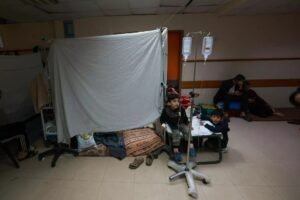
Even inside hospitals, some surgeries have been performed by flashlight during electricity cuts, Moses said. Officials say the campaign received no dedicated funding and relied on existing government resources and support from partners even as donor funding dwindled. Earlier in November, the Chinese government and UNICEF donated medical supplies and equipment to the Health Ministry to support such initiatives.
A woman can arrive at a hospital in time and still die if the blood bank is empty, the oxygen has run out, or care is delayed in the critical first hour after a haemorrhage — and that is what the campaign is now trying to fix.
A Warning for the Whole Continent
Sierra Leone’s story matters beyond its borders. The AP reports that sub-Saharan Africa, the world’s fastest-growing population, accounts for 70 percent of global maternal deaths. Around 180,000 maternal deaths are estimated to occur every year across the continent, along with the deaths of about 1 million newborns.
The lesson of Sierra Leone, according to the campaign’s supporters, is that progress came from choices, not luck: free care for pregnant women, more skilled birth attendants, midwives trained to scan, weekly reviews of every death, and daily checks of blood and oxygen supplies. The question now is whether the gains last once the 300-day campaign ends. Fye, the midwife who has witnessed preventable deaths at the maternity hospital, said more training is needed and worried about resources beyond the campaign.
For Kamara, the outcome was the one that mattered most. Her husband was happy she had delivered safely at the health centre last month, even as she worried about the bills. She knew giving birth there was safer — but she also had to consider what she could afford.
Sierra Leone has shown that maternal deaths can be cut by nearly four-fifths in a generation. Keeping them down will take the same work, every day, long after the campaign is over.
By The BNN Media
The Best News Network
News Beyond the Borders