By
Spaniards go to the polls today in a snap general election that could end eight years of Socialist rule, with the centre-right People’s Party ahead in the final polls and the far-right Vox party poised to enter national government for the first time since Spain returned to democracy.
By Ihsan Ur Rehman
Editor-in-Chief | The BNN Media – The Best News Network
News Beyond the Borders
Madrid, Spain — Some 38.7 million Spaniards are eligible to vote on Sunday, 29 November, to renew both chambers of parliament, in an election Prime Minister Pedro Sánchez called early after his government lost a key vote on housing. Polling stations open at 09:00 CET (13:00 PKT) and close at 20:00 CET (midnight PKT), with the first results expected about an hour after voting ends.
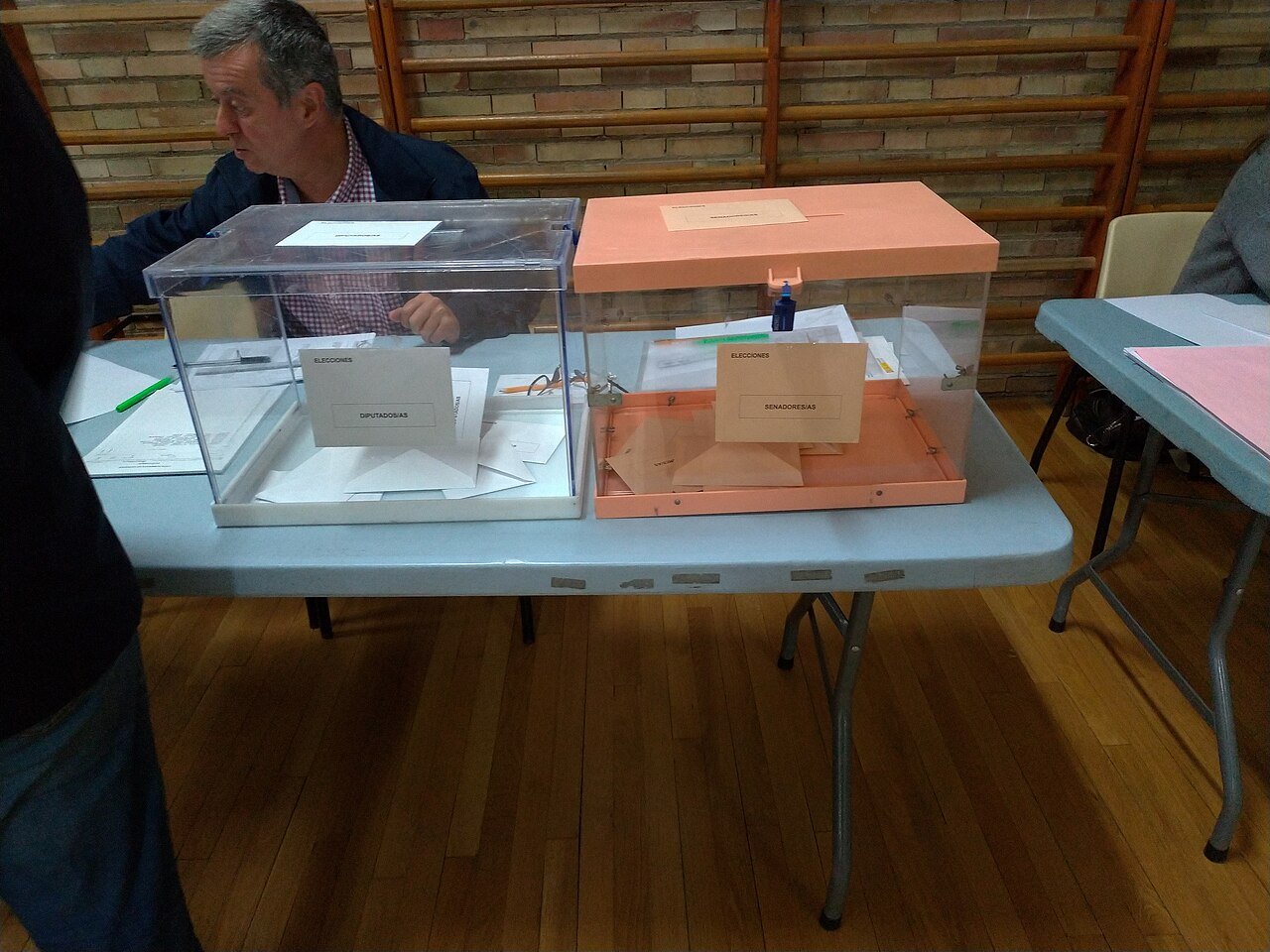
A Referendum on Eight Years of Sánchez
The campaign played out, in the words of Le Monde, like a referendum for or against the Socialist prime minister, who has governed since 2018 — always, as Reuters noted, with fragile minority coalitions. Sánchez chose to call the early vote on 5 October, after parliament rejected his package of measures to address the housing crisis on 2 October. The next election had not been due until the summer of 2027.
Since the 2023 legislative elections, Sánchez’s coalition government with the far-left Sumar alliance had lost its absolute majority, forcing him to negotiate every bill — above all with pro-independence Catalan and Basque lawmakers. He was also criticised for granting an amnesty to leaders of the attempt to separate Catalonia from Spain, in exchange for their support in swearing him in after the 2023 election, when the PP won the most votes but fell short of a majority.
Corruption scandals involving people in his inner circle and his family have further tarnished the prime minister’s image, and two deadly train crashes shook public confidence. Sánchez has answered with a flurry of decrees since the election was called — more than a dozen of them, including a 5.3% rise in the minimum wage, a 4.5% increase in civil servant pay for 2027, protections against evictions for vulnerable tenants extended until 2030, maternity and paternity leave extended to 20 weeks, and renewed public transport subsidies and the bank tax.
Eight years in, Sánchez is asking voters for one more chance — and his opponents say the country has already decided.
The Numbers That Decide It
The contest comes down to two numbers, as Sánchez himself told a rally in the south-eastern city of Murcia on 22 November: 75 and 176. His goal is a 75% voter turnout, to win back left-wing voters from abstention, and 176 seats out of the 350 in the Congress of Deputies — the threshold for an absolute majority.
The final polls pointed to a PP lead: estimates published by El País on Thursday put the People’s Party, led by Alberto Núñez Feijóo, at 31.4% of voting intentions, against 29.1% for Sánchez’s Spanish Socialist Workers’ Party (PSOE). Other pre-election polls put the PP at around 32% and the PSOE at around 31%, with Vox, led by Santiago Abascal, in third place on roughly 17–18%.
Together, the PP and Vox are projected to win about 190 seats — comfortably above the 176 needed for a majority. Vox won 33 seats in the 2023 election; this time it is set to nearly double that, to about 60 seats, which would make it the biggest winner of the night. The gap between the two main parties narrowed in the final week, and there were significant vote transfers within each of the two major blocs — the PP regaining ground at Vox’s expense on the right, and the PSOE attracting part of the far-left electorate on the left.
- Eligible voters: 38,616,949, including more than 2.6 million Spaniards living abroad and around 1.6 million first-time voters
- Seats in the Congress: 350 — 176 needed for a majority
- Polls open: 09:00 CET (13:00 PKT) — close: 20:00 CET (midnight PKT)
- First results: expected about an hour after polls close
- Security: the Interior Ministry has mobilised 100,727 personnel for election-day security
No result can be known until the count begins tonight — but the polls agree on the shape of the race.
The Far Right at the Door of Government
The historic stakes of this election lie in what a PP victory would mean. A defeat for Sánchez could bring a far-right party into national government for the first time since the death of Francisco Franco in 1975 allowed for the restoration of democracy three years later. Spain is one of the few large European countries still governed by social democrats, and a defeat would leave only three countries in the European Union — Denmark, Lithuania and Malta — with centre-left leaders.
Vox advocates tougher immigration controls, the recentralisation of state powers, lower taxes and the reversal of many progressive social policies. It campaigned heavily on immigration, promising mass deportations and priority for Spanish citizens. A coalition between the PP and Vox is seen as the most likely outcome, although it would involve hard bargaining over the share of ministries that Vox would get. Analysts say that, depending on how many seats Vox wins, it could also choose to support a PP government from outside the cabinet.
The two parties already govern together in coalition in four regions, so a national partnership would not be new in form — only in scale. For Feijóo, who has led the PP since 2022, the vote is the opportunity to end Sánchez’s long tenure. For Sánchez, who has urged a left-wing turnout surge, the fight is to keep Spain’s social-democratic government alive.
A Divided Left, a Narrowing Race
On the left, Sánchez’s governing partner is heading into the election divided, split between Frente Amplio — led by former Barcelona mayor Ada Colau and heir to the Sumar coalition — and Podemos. Sánchez has tried to remobilise left-wing voters by appealing for a strategic vote, and the latest polls suggested the PSOE was catching the PP, but at the expense of its own allies.
Saturday was the traditional day of reflection, during which Spanish electoral law prohibits campaigning and the distribution of election material. With a legal ban on publishing opinion surveys in force before the vote, the polls taken in the final week of the campaign will only be released once voting ends at 20:00 CET.
Turnout is projected to be unusually high, at around 75–78%, making last-minute mobilisation a key factor that could still alter the expected seat totals under Spain’s province-based proportional system. That is why both camps spent the final days chasing not just their own voters, but the voters most likely to stay at home.
If turnout surges, the left still has a path; if it does not, the right’s arithmetic is hard to beat.
What Happens After Tonight
Whoever wins the most seats faces the same hard arithmetic. No party is expected to win 176 seats alone, so coalition talks will follow the count — and those talks face no formal deadline before the first investiture vote, but if no candidate wins parliament’s confidence within two months of that attempt, fresh elections are automatically triggered.
If a PP–Vox partnership forms, it would shift policy on immigration, housing and taxes, and carry implications for Spain’s role in the European Union. If Sánchez somehow holds on, he would need to rebuild a governing majority from a parliament that has repeatedly blocked his programme.

For now, though, the decision belongs to the voters. Polling stations across Spain — and at consulates for the millions of Spaniards abroad — will count the ballots through the night, and by Monday morning Spain will know whether eight years of Sánchez are over, or whether the prime minister has pulled off one more escape.
Spain votes today; by tomorrow, Europe will know whether its largest remaining centre-left government still stands.
By Ihsan Ur Rehman
Editor-in-Chief | The BNN Media – The Best News Network
News Beyond the Borders