By
OpenAI has countersued Apple, accusing the iPhone maker of stealing its trade secrets, pressuring shared suppliers not to work with it, and using employment rules to choke off hiring — the sharpest escalation yet in a legal fight over who will build the first great artificial intelligence device. Apple denies the claims and calls the filing a distraction. Nothing has been decided: every claim on both sides is, for now, only an allegation.
By Akhtar Saleem Khan
Head of IT | The BNN Media – The Best News Network
News Beyond the Borders
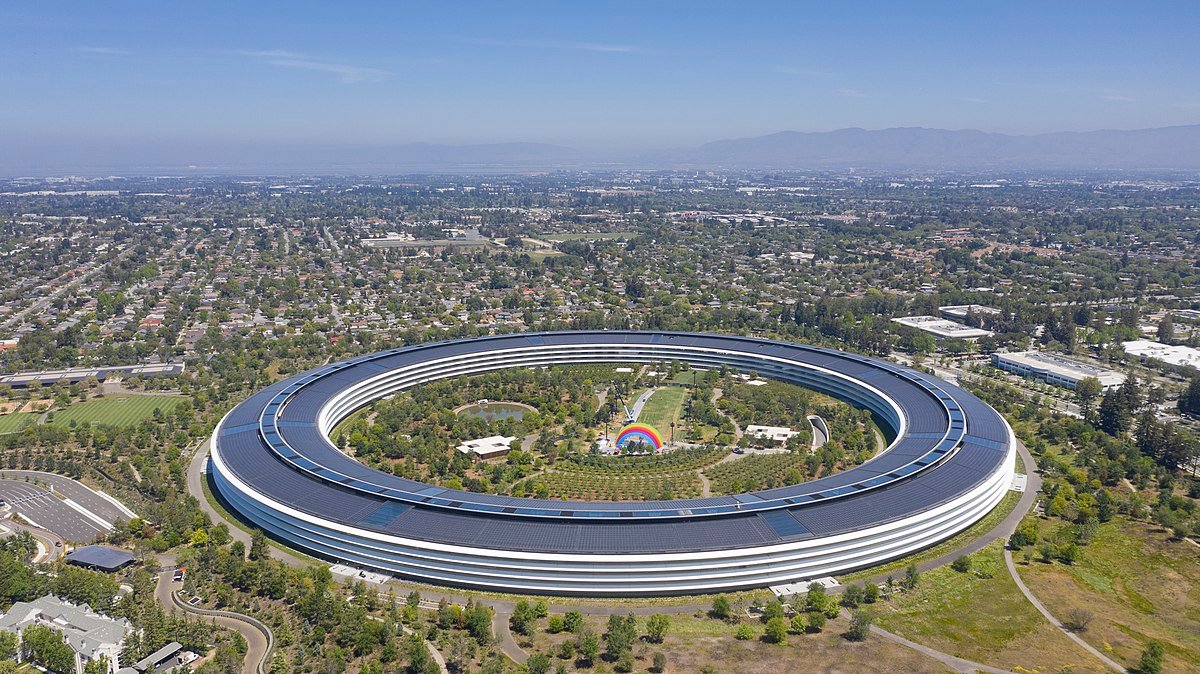
San Jose, United States — OpenAI filed its countersuit on Friday, 27 November, in the US District Court for the Northern District of California, San Jose Division — an 81-page filing carrying 12 counterclaims and a demand for a jury trial, according to the court record. The filing accuses Apple of “unlawful, tortious, and unfair business practices” in the race to build AI-enabled gadgets, and it lands four months after Apple sued OpenAI first.
The Countersuit Lands
The filing, entered as docket number 217 in the case Apple Inc. v. Liu, case 5:26-cv-07078-EJD, is assigned to US District Judge Edward J. Davila. It is not a single claim but a bundle: four counterclaims are brought by OpenAI and its hardware unit, io Products; five by former Apple engineer Chang Liu; and three by Tang Yew Tan, another former Apple engineer Apple sued in July.
The OpenAI side’s claims include trade secret misappropriation under the federal Defend Trade Secrets Act, intentional interference with existing contracts, and two unfair competition claims under California law. The filing also answers Apple’s original complaint, denies that OpenAI stole Apple’s trade secrets, and lists 19 affirmative and other defences. It seeks damages, injunctions and attorneys’ fees, and demands a jury trial on every issue that can be tried to a jury. No sum of money is named.
OpenAI declined to comment beyond the contents of the filing, CNN reported. The Financial Times first reported the countersuit.
Twelve counterclaims, 81 pages, one message: OpenAI is no longer only defending itself — it is now accusing Apple of the very thing Apple accused it of.
“Employee X” and the 100 Files
At the centre of the countersuit is an unnamed engineer OpenAI calls “Employee X”. According to the filing, as reported by Reuters, he worked on OpenAI’s devices team from December 2025 until early June 2026 — about six months — and then returned to Apple.
OpenAI alleges that before leaving, he sent more than 100 confidential files about an unreleased OpenAI device to personal accounts — files that allegedly included device images, engineering data and supplier information. The filing further alleges that he later briefed Apple operations staff in July, and, in OpenAI’s words as reported by Reuters, that “given the timing, it now appears that stealing those documents may have been his reason for joining OpenAI in the first place.”
OpenAI had already raised the matter in October, when it said the employee had sent the files to personal accounts, and sent Apple a cease-and-desist letter on 9 October 2026. Apple has said its own investigation found no evidence to support OpenAI’s trade secret theft allegations, and, according to Reuters, Apple denies that it rehired the worker to obtain OpenAI files.
The allegation is stark — a six-month stay, 100 files, and a return to Apple — but it remains, for now, only an allegation, and Apple denies it.
The Supplier Squeeze
The countersuit’s second front is the factory floor. OpenAI alleges that Apple leaned on the contract manufacturers both companies share, demanding that they identify the staff assigned to OpenAI projects and keep those workers off Apple jobs.
Two episodes are alleged in the filing, as reported by Bloomberg and Reuters:
- One metal-finishing supplier — a company that finishes parts for both firms, running them through the same chemical tanks — allegedly moved OpenAI’s work onto an overnight shift after Apple objected to the shared tanks, raising OpenAI’s costs.
- Another supplier allegedly dropped planned work for OpenAI altogether, citing threats from Apple, while a company that had been working closely with OpenAI withdrew from the collaboration.
OpenAI describes the pattern in the filing as Apple “coercing and threatening” suppliers, in an effort to “compete unfairly by any means available” — the Financial Times’ summary of the claim. Apple denies that it pressured suppliers to shun OpenAI’s future devices.
If the allegations are true, the fight is not only in court — it is on the production line, where a night shift and a cancelled order can slow a device before it ever exists.
The Hiring Restraints
The third front is people. OpenAI alleges that Apple uses its employment practices to stop engineers leaving for rival AI hardware teams.
According to the filing, as reported by CNN, Apple allegedly encourages employees to store work files on their personal iCloud and iMessage accounts, making it hard to separate work material from personal information across their devices. When an employee tells Apple they are leaving for a competitor, the filing alleges, they are asked to leave on the same day, preventing the departing employee from working with Apple to separate Apple confidential information from personal information.
The filing calls this a system of “trapdoors” — arrangements that, OpenAI alleges, leave nearly every Apple employee holding material Apple could later call confidential when they leave, and that allow Apple to accuse former employees of trade secret theft.
Apple rejects that account. It says it trains employees to keep work and personal files separate, with a work-specific iCloud account, and does not pursue claims against former employees who accidentally retain files on personal iCloud accounts.
Two versions of the same workplace: a trapdoor, or a clean separation policy. A court will have to decide which one it is.
How the Fight Began
The dispute began on 10 July 2026, when Apple sued OpenAI, its hardware unit io Products, and former Apple engineers Chang Liu and Tang Yew Tan in California federal court. Apple alleged that OpenAI and the two engineers used Apple’s confidential information to speed up its push into consumer devices. Tan had previously led product design for the iPhone and Apple Watch at Apple, and co-founded Jony Ive’s startup io, which OpenAI acquired in 2025.
OpenAI disputed those allegations from the start, and has characterised Apple’s case as an attempt to stop it hiring Apple employees. The countersuit now turns the same charge around: OpenAI says Apple is the one stealing secrets, and that Apple filed its lawsuit because it “has struggled to incorporate innovative AI capabilities into its previously popular products.”
The hardware at stake is OpenAI’s first device, reportedly planned for launch in 2027 — a personal AI device built by the io team, said to be aimed at competing with Apple on its own turf. Apple, meanwhile, is fighting to protect the unreleased technologies, processes and products at the heart of its own AI plans.
Each side now accuses the other of the same offence — taking secrets to build the device the other wants to sell.
Apple’s Answer
Apple’s response to the countersuit was swift and uncompromising. An Apple spokesperson told CNN and 9to5Mac:
“This case is about OpenAI employees deliberately stealing, accessing, and using Apple’s secret and confidential information regarding our unreleased technologies, processes, and products — not about inadvertent retention of Apple information. OpenAI’s counterclaims are a transparent attempt to distract from the substance of Apple’s lawsuit, in which OpenAI has already been ordered to stop using Apple’s confidential information.”
Apple’s position, in short, is that the real case is the July lawsuit, and that the countersuit is a diversion from it. One detail in Apple’s statement needs care: the claim that OpenAI was “already ordered” to stop using its confidential information appears to refer to an October agreement that ended Apple’s injunction request without deciding whether anything was taken, according to Digital Trends. Apple has also sought a preliminary injunction to prevent further use of its alleged trade secrets and won expanded access to evidence during discovery.
Apple’s message is blunt — distraction, not defence — and it is, like OpenAI’s, a claim a court has yet to rule on.
What Happens Next
The case now moves to the next stage. Apple’s response to the counterclaims is due on 18 December 2026, and a jury trial is scheduled for 19 July 2027 — a date both sides will spend the next eight months preparing for.
Until then, every claim in the dispute remains an allegation. No judge has ruled that Apple stole OpenAI’s secrets, pressured its suppliers or restrained its hiring; no judge has ruled that OpenAI stole Apple’s. The October agreement, the docket entries and the duelling statements are the only settled facts so far.
What is settled is the scale of what is at stake. Two of the most powerful technology companies in the world are fighting over the same prize — the first device that puts artificial intelligence in people’s hands and pockets — and each now says the other is cheating to win it. The courtroom in San Jose will decide who is right. Until it does, both stories are only that: stories told in filings, denied in statements, and awaiting a jury.
Twelve counterclaims, one trial date, and two companies that each say the other stole the future — the verdict, whichever way it goes, will shape the AI device race for years.
By Akhtar Saleem Khan
Head of IT | The BNN Media – The Best News Network
News Beyond the Borders