By
All five Great Lakes are sitting at record or near-record high water temperatures for this time of year, new satellite data shows, in the latest sign that the region’s winters are warming faster than any other season.
By Faseeh Ur Rehman
Senior Journalist | The BNN Media – The Best News Network
News Beyond the Borders
Milwaukee, United States — All five of the Great Lakes are at record, or near-record, high temperatures for late November, according to satellite data from 23 November published by the National Oceanic and Atmospheric Administration (NOAA), with records going back to 1995.
Lake Erie, Lake Huron and Lake Ontario have all set records for this time of year, while Lake Michigan and Lake Superior are nearly tied with the record highs set in 2024. The warmth is not marginal: Erie is running more than six degrees Fahrenheit above its 30-year average, and every lake is at least three degrees above normal.
The Numbers Behind the Record
NOAA’s satellite data put the average surface water temperatures on 23 November at:
- Lake Erie — 54.6°F (12.6°C), more than six degrees above the 30-year average
- Lake Michigan — 51.8°F (11°C), running about five degrees above average
- Lake Ontario — 51.4°F (10.8°C), about 4.6 degrees above average
- Lake Huron — 50.2°F (10.1°C), about 4.4 degrees above average
- Lake Superior — 45.9°F (7.7°C), about three degrees above average
Three lakes have broken their late-November records outright. The other two are sitting just short of records set only last year — a sign of how consistently warm the lakes have become, not of a one-off spike.
Five lakes, five readings above normal, three outright records: this is not a warm week, it is a warming system.
Why Warm Water Matters More Than a Warm Week
The warmth matters far beyond the surface. When the lakes are this warm, the atmosphere has to work hard to cool them off before winter can take hold, said Eric Anderson, Associate Director of Science at the Cooperative Institute for Research in Environmental Sciences at the University of Colorado Boulder.
The delayed onset of cooler autumn weather over the past three decades has played a large part in why winters are the fastest-changing season in the Great Lakes. Winters are becoming warmer and wetter, with less snow, and the region’s signature season has shortened by weeks, with an overall decline in ice cover over the past half century.
And the lakes may not get much of a chance to cool off. NOAA’s latest winter outlook favours warmer air temperatures across the basin this winter, driven by a strong El Niño — the same Pacific warming pattern that has been supercharging global heat through 2026.
The Lakes Are Losing Their Winter Rhythm
Deep lakes like Michigan and Huron depend on a twice-a-year mixing of their waters. The layers turn over when the surface temperature falls to a specific threshold — 4°C, or roughly 39°F — the point at which water is at its densest and sinks, letting oxygen and nutrients circulate between the surface and the depths.
That rhythm is breaking down. In Lake Michigan, scientists have observed climate change’s effects hitting hardest in the south. The southern half of the lake, where researchers have nearly 40 years of data, has not formed layers in a long time. The northern half, which gets more ice, still does — for now.
“This is consistent with the trends we’ve seen in the Great Lakes overall,” Anderson said.
When a lake stops mixing, the water at the bottom is cut off from its oxygen supply — and everything that lives down there pays the price.
A $7 Billion Fishery at Risk
The changes to the timing of lake mixing and the overall decline in ice cover can affect what lives in the lakes, which in turn can affect fisheries — a $7 billion industry in the region.
The clearest warning comes from lake whitefish. Warmer winters and the decline in ice cover are largely to blame for why the species is on the verge of collapse, according to a 2025 report. Whitefish lay their eggs along the shoreline in the autumn and early winter, and ice acts like a shield protecting them from harsh conditions. With less ice, fewer eggs survive.
If a lake no longer mixes, the oxygen supply at the bottom can fail — a threat to cold-water fish that depend on those deep, cold, oxygen-rich waters through the winter.
A Warmer Planet, Measured in Water
The Great Lakes are not warming in isolation. The same El Niño that is keeping the lakes warm has pushed global temperatures to extraordinary levels: preliminary Copernicus data recorded the Earth’s hottest day ever measured earlier this week, at 2.23°C above pre-industrial levels. The lakes, which hold about a fifth of the world’s surface fresh water, are absorbing that heat and holding on to it longer into the winter.
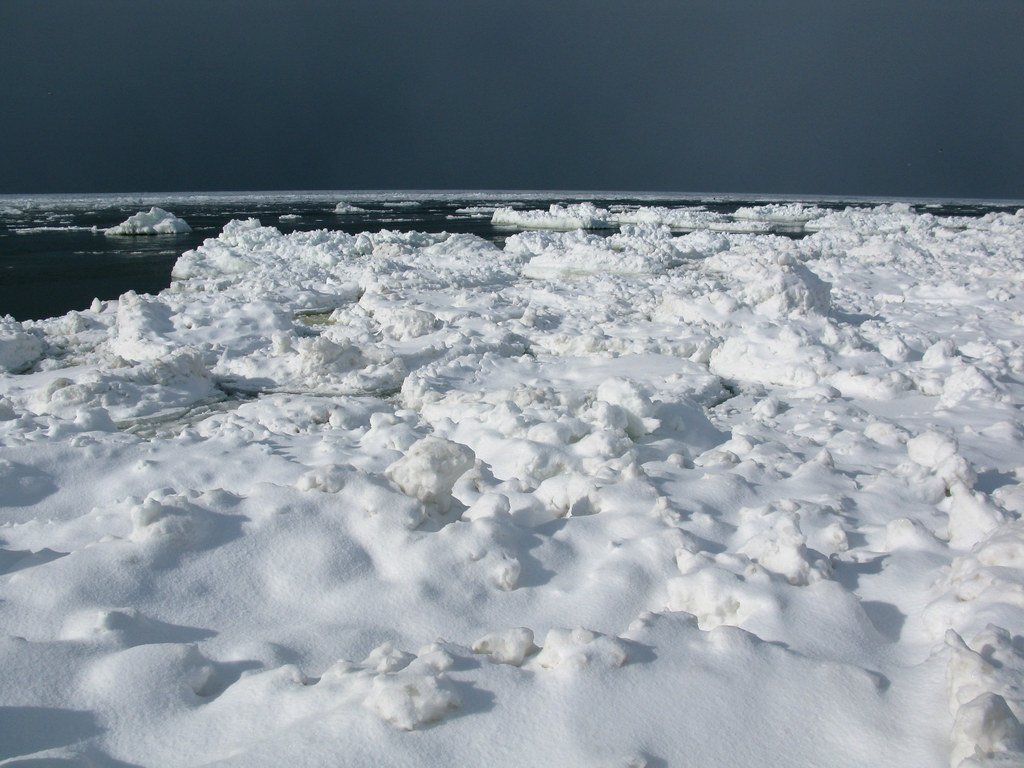
Scientists who study the lakes say the pattern is now unmistakable: shorter winters, thinner ice, warmer water — and a system that cools down later and warms up earlier every year.
What Comes Next
NOAA’s winter outlook offers little relief for the lakes. With warmer air favoured across the basin and a strong El Niño in play, the lakes are likely to enter the coldest months still warm — and to form less ice than they did even a generation ago.
For the communities around the lakes, the stakes are practical as well as scientific: shipping seasons, winter tourism, drinking water, power generation and a fishing industry worth billions all depend on the lakes behaving the way they used to. Increasingly, they do not.
The Great Lakes are the largest system of fresh surface water on Earth — and this November, they are telling the same story as the rest of the planet: the cold season is shrinking, and the heat is staying longer.
By Faseeh Ur Rehman
Senior Journalist | The BNN Media – The Best News Network
News Beyond the Borders
Source: Milwaukee Journal Sentinel (NOAA satellite data, 23 November 2026; Eric Anderson, Cooperative Institute for Research in Environmental Sciences, University of Colorado Boulder); Copernicus Climate Change Service (via BNN, 25 November 2026).