 By
The world turns orange today as the United Nations marks the International Day for the Elimination of Violence Against Women, opening 16 days of action with a stark new warning: nearly 47,000 women and girls were killed by intimate partners or family members last year.
By The BNN Media
The Best News Network
News Beyond the Borders
Geneva, Switzerland — The United Nations opens its annual 16 Days of Activism against Gender-Based Violence today, Wednesday, 25 November, with landmarks, parliaments and public buildings around the world lit in orange and a new set of figures showing how rarely violence against women is punished. The campaign, which runs until Human Rights Day on 10 December, is held this year under the theme “UNiTE to End Violence Against Women and Girls: Ensure justice, protect survivors, end impunity.”
A Day That Opens 16 Days of Action
The 25th of November is observed every year as the International Day for the Elimination of Violence Against Women. The date honours the Mirabal sisters — Patria, Minerva and María Teresa — three political activists in the Dominican Republic who were murdered on 25 November 1960 under the dictatorship of Rafael Trujillo. The United Nations formally designated the day in 1999, and it now launches the 16 Days of Activism, a campaign that has run for 35 years.
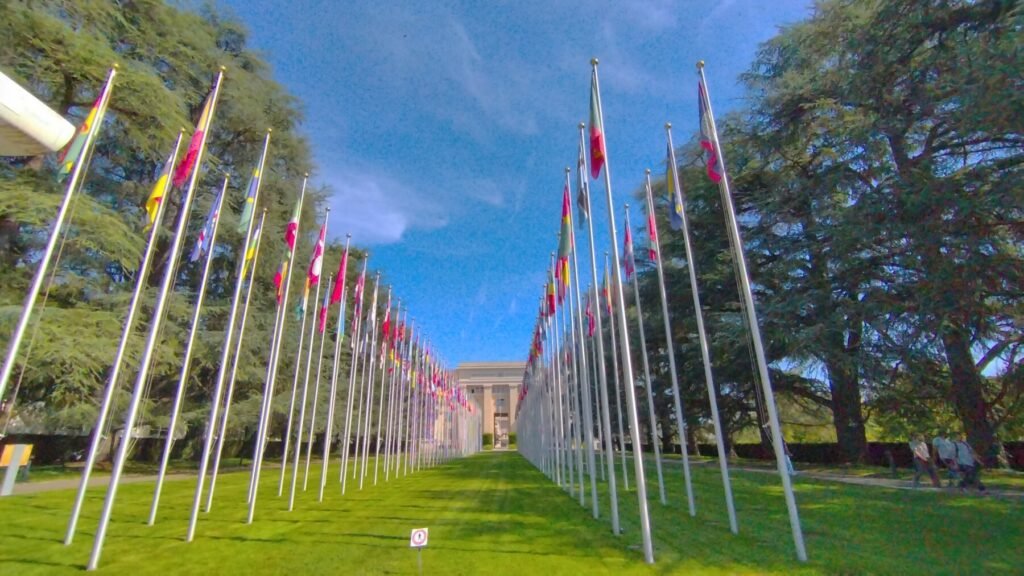
This year’s launch is being marked with events in cities across the world. At the United Nations Office at Geneva, a participatory event at the Palais des Nations opens the campaign at 12:30 p.m. local time, while the United Nations headquarters in New York holds its official commemoration, bringing together UN and member-state leaders, justice advocates and women’s rights voices. In Addis Ababa, cars carrying orange hands are taking to the roads with the message “Stop! End Violence against women”, and in Australia, European delegations are taking part in an “Orange Chair in a Square” initiative, placing an empty orange chair in public spaces to represent the voices that go unheard.
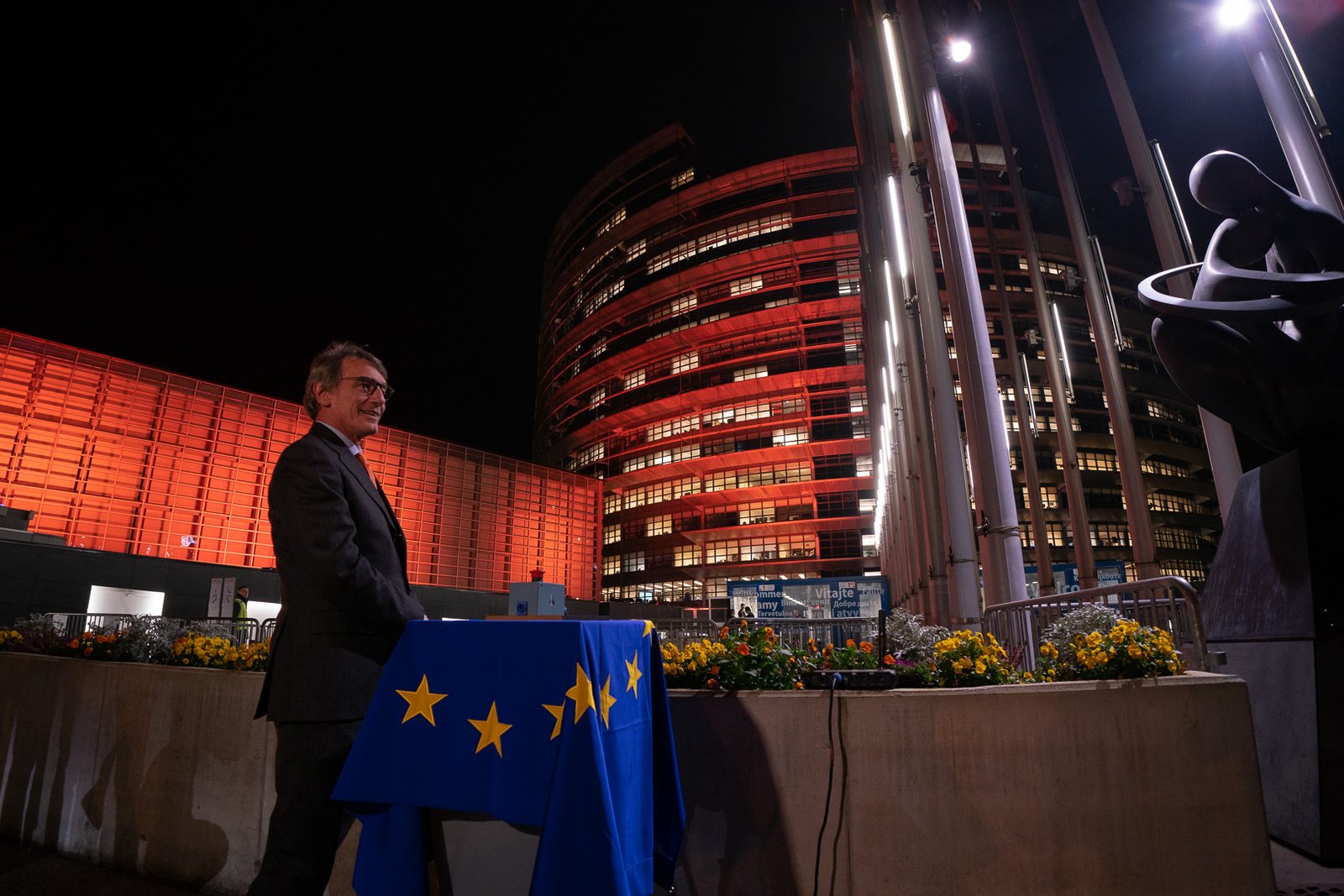
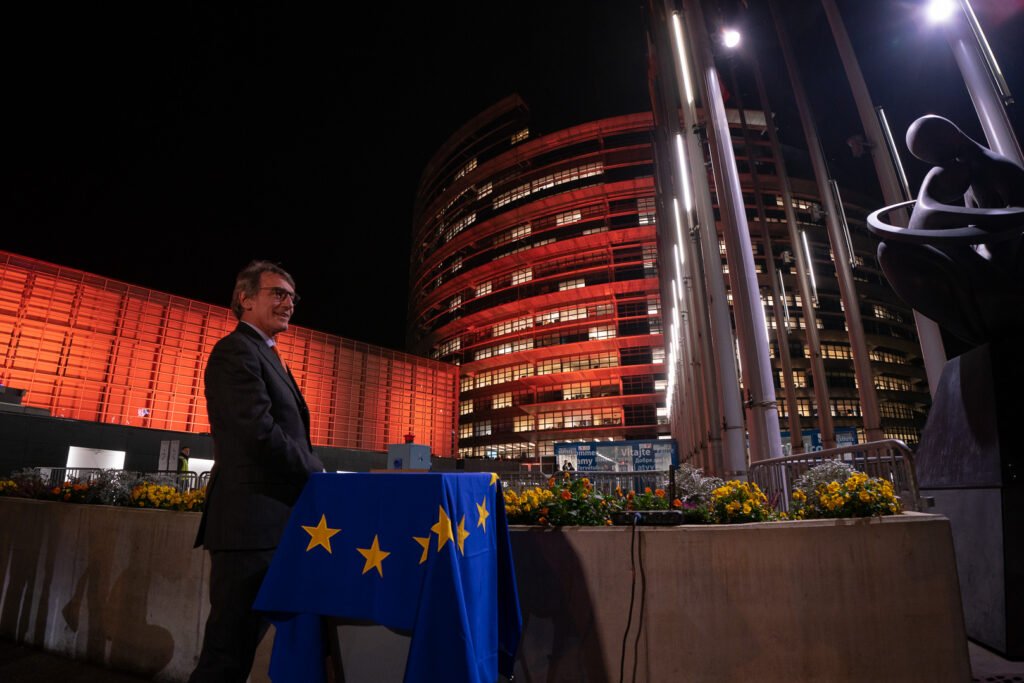
Orange is the campaign’s colour, chosen to represent a brighter future free from violence. Buildings, bridges and monuments are being lit in orange, and people are being asked to wear orange and share the campaign’s message.
The day is not a celebration. It is the start of 16 days in which governments, communities and the United Nations are being asked to show what they are doing — not just what they believe.
Five Women Killed Every Hour
The launch comes with two new reports that set out the scale of the problem in the hardest terms. The 2026 Femicide Brief, published by the UN Office on Drugs and Crime (UNODC) and UN Women ahead of the day, finds that partners and relatives were behind 60 per cent of the 78,000 intentional killings of women and girls worldwide last year.
Some 47,000 women and girls were killed by intimate partners or family members in 2025 — five every hour, according to the figures published on Tuesday. Africa recorded the highest rate of intimate partner and family-related femicide, at 2.9 victims per 100,000 female population, followed by the Americas at 1.4, Oceania at 1.1, Asia at 0.6 and Europe at 0.5.
The figures also show a troubling pattern over time: while homicide rates have declined globally, femicide rates have fallen more slowly. Between 2010 and 2025, homicide rates fell nearly twice as fast as femicide rates in the Americas, and about 1.5 times as fast in Europe.
“Frightening attitudes, social norms, and the failure of institutional safeguards create an environment in which killing a wife, daughter, mother, or sister becomes ‘tolerable’,” UNODC Executive Director Monica Juma said.
Behind every one of those numbers is a woman killed by someone she knew — most often someone she trusted.
One in Three Women, and Almost No Justice
The second report, UN Women’s Access to Justice for Women Survivors of Violence, draws on data from 54 countries and traces the barriers women face from the moment they seek help to the end of a court case. Its headline finding is that an estimated 840 million women and girls — nearly one in three — have experienced physical or sexual violence in their lifetime.
Yet only 23 per cent of survivors seek help of any sort, from family, their community or the authorities. Only 7 per cent report the violence to the police. And between 63 and 97 per cent of reported cases do not result in a conviction, according to the report.
The picture differs sharply by region. Just 16 per cent of survivors in Asia seek help, compared with 31 per cent in Africa and 40 per cent in Latin America and the Caribbean. In the European Union, 64 per cent confide in someone close to them, but only 14 per cent go to the police.
Briefing journalists at UN headquarters in New York, UN Women Deputy Executive Director Nyaradzayi Gumbonzvanda said women were losing trust in the systems meant to protect them. “The silence is getting louder in most countries where we have tracked it over time. Fewer women are seeking help today than before. We are going backwards,” she said. “Our data shows justice systems globally make silence the safest choice a woman can make.”
Why Survivors Stay Silent
The reports describe a system in which silence is the norm and accountability the exception. For many survivors, reporting abuse can mean risking everything: their homes, their children, their financial security and even their lives. Survivors face repeated questioning and intimidation, the report says, and perpetrators in positions of power are often never convicted.
“Cases fall out of the system along the way. Survivors face repeated questioning and intimidation. Perpetrators in positions of power are often never convicted,” said Kalliopi Mingeirou, chief of UN Women’s Ending Violence Against Women Section, warning of a culture of impunity.
Violence is also spreading online. Seventy per cent of women in public life surveyed by UN Women — including human rights defenders, activists and journalists — had experienced online violence. Rather than perpetrators being held to account, women are being pushed out of digital spaces and public life, Ms Mingeirou warned. Artificial intelligence can now create deepfake images of women’s bodies in seconds, Ms Gumbonzvanda added — images that can follow them for the rest of their lives.
The 2026 campaign builds on last year’s focus on digital violence, and its message is that online and offline violence are connected: justice, protection and accountability are needed in both spaces.
When only 7 in 100 survivors ever reach the police, the problem is not that women do not speak. It is that the system does not hear them.
What the Campaign Is Asking For
This year’s theme has three parts, and each is a demand. Ensure justice: courts that hear survivors without putting them on trial, and police who receive complaints and investigate them. Protect survivors: services that keep women safe, including shelters, legal aid and support that reaches women wherever they live. End impunity: perpetrators held to account, so that violence stops being a crime a person can expect to get away with.
UN Women and UNODC are calling on governments, the private sector, the media, women’s organisations and communities to strengthen prevention, protect survivors and hold perpetrators to account. Ms Gumbonzvanda urged police to receive complaints and investigate, courts to hear survivors without putting them on trial, governments to provide services that keep women safe, and technology companies to act against online abuse.
Her message to survivors was direct: “To every survivor watching today, we believe you every single time. You should never have to prove that you deserve to be believed.” She added: “It costs nothing to believe someone. And it changes everything to believe a survivor, every single time.”
The campaign also invites people everywhere to “orange the world” — to wear orange, light buildings in orange, and share verified information about where survivors can find help.
Marches, Orange Benches and Empty Chairs
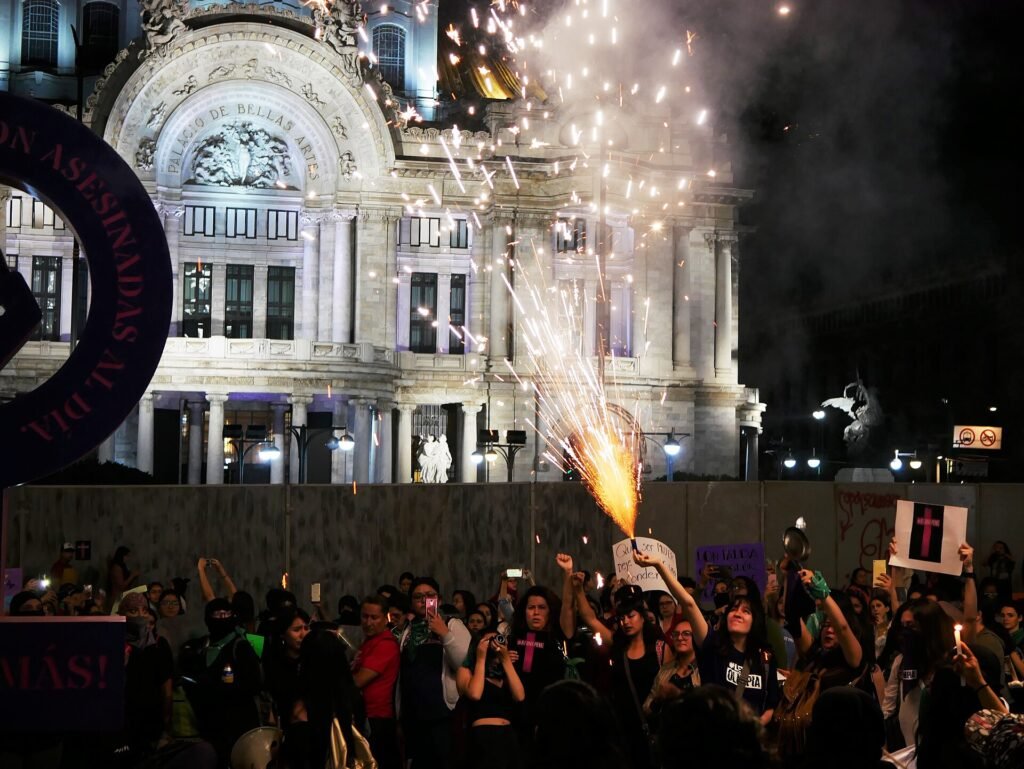
Around the world, the day is being marked in streets and squares as well as in conference halls. Cities and organisations are setting up symbolic orange benches, holding demonstrations and wearing orange clothing and ribbons to raise visibility. In Germany, this year’s campaign highlights the responsibility of men in preventing gender-based violence, alongside growing awareness of digital violence such as cyberstalking and deepfakes, and calls for expanded shelter capacity.
In Vienna, the United Nations hosted the third Orange the World Forum on 20 November, bringing together international experts, media, educators and the public to highlight technology-facilitated violence against women and girls, under the banner “From Online Harm to Real-World Violence: Building a Whole-of-Society Response”. A fifth Orange Run followed, carrying the message from the conference hall into the streets.
The 16 Days of Activism runs from today until 10 December, Human Rights Day — a deliberate link between the two dates, and a reminder that violence against women is, as the campaign puts it, the most pervasive breach of human rights worldwide.
What Happens After the 16 Days
Campaigns end; the figures do not. The test of this year’s 16 Days will be whether the justice gap it documents starts to close: whether more survivors seek help and find it, whether more cases reach court, and whether more perpetrators are convicted. The reports published this week give the world a baseline against which to measure that — 47,000 women killed by partners or family in a year, 840 million who have lived through violence, and just 7 per cent who ever report it to the police.
For now, the orange lights, the marches and the empty chairs are a signal that the world is watching. The campaign’s own message is that watching is not enough: justice must work, survivors must be protected, and impunity must end. As Geneva prepares to host the world’s largest gathering on business and human rights, the city is once again the stage for a global conversation about rights — this time, about the right of every woman and girl to live free from violence.
Sixteen days of orange will not end violence against women. But a justice system that believes survivors, protects them and punishes those who harm them just might.
By The BNN Media
The Best News Network
News Beyond the Borders