By
In a landmark judgment delivered in The Hague, the International Court of Justice has found Myanmar responsible for genocide against its Rohingya minority — the first time the world’s highest court has ever held a state guilty of the crime.
By Tariq Jamal
Freelance Journalist | The BNN Media – The Best News Network
News Beyond the Borders
The Hague, Netherlands — The International Court of Justice (ICJ) ruled on Thursday, 19 November 2026, that Myanmar committed genocide against the Rohingya people, finding the state responsible for a campaign of killings, sexual violence and destruction carried out by its security forces in northern Rakhine State in 2017.
A Verdict Nine Years in the Making
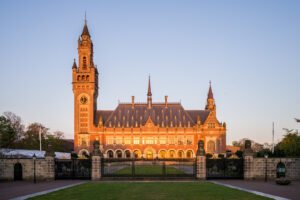
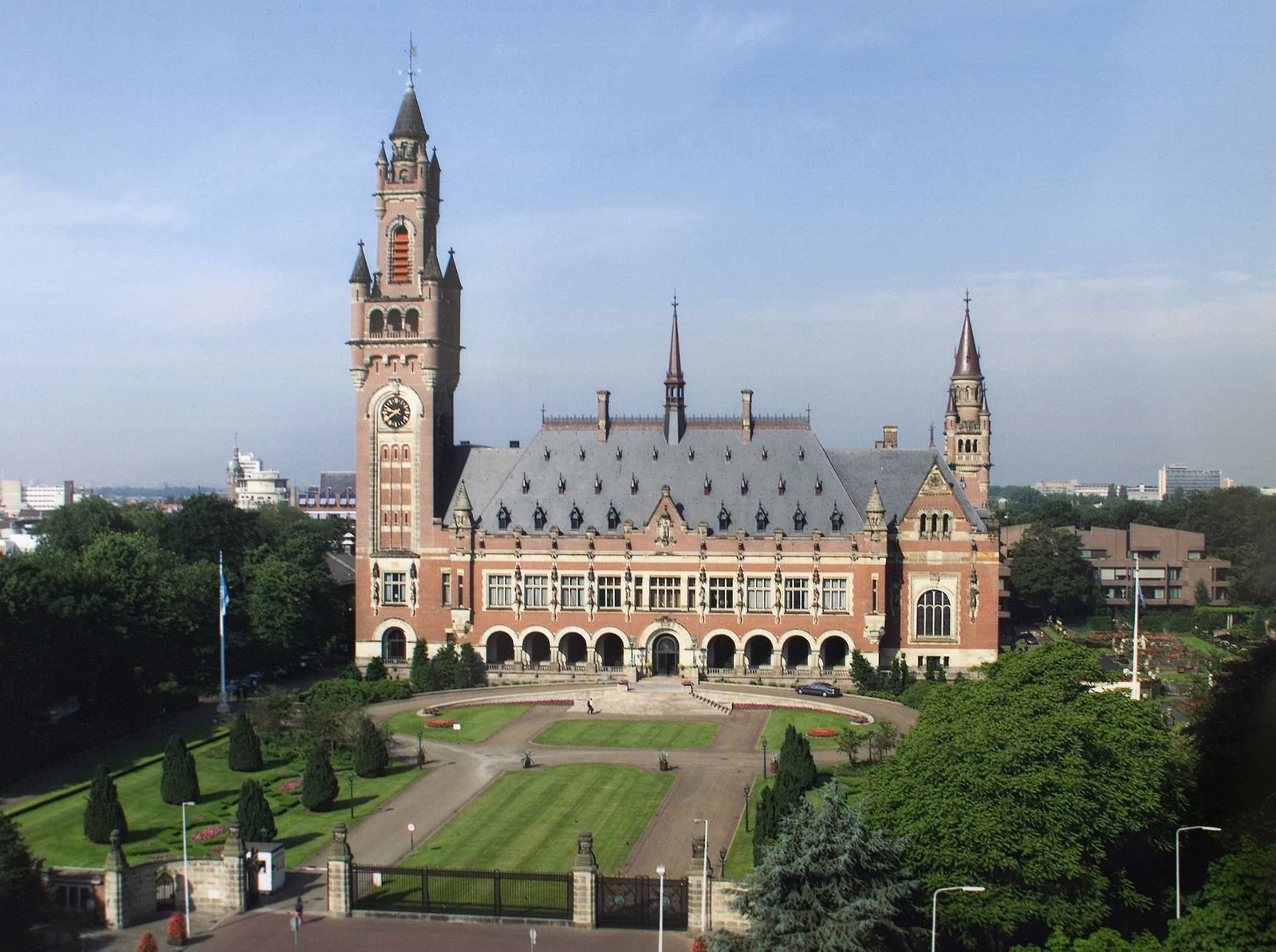
The judgment was read out by the court’s president, Judge Yuji Iwasawa of Japan, at the end of a reading that lasted nearly three hours at the Peace Palace in The Hague. The court found, by nine votes to six, that Myanmar had violated the Convention on the Prevention and Punishment of the Crime of Genocide — the treaty adopted by the United Nations in 1948 in the aftermath of the Second World War and the Holocaust.
“The court finds that the Republic of Myanmar has committed genocide against the Rohingya group in northern Rakhine State, in violation of its obligations under the Convention on the Prevention and Punishment of the Crime of Genocide,” Judge Iwasawa said as he read the verdict.
The ruling, which runs to nearly 200 pages, is final, binding on the parties, and without appeal. It is the first time in the court’s 80-year history that it has held a state responsible for committing genocide. In an earlier case, Bosnia and Herzegovina v. Serbia and Montenegro, decided in 2007, the court ruled that Serbia had failed to prevent the Srebrenica genocide but had not committed genocide itself.
For the survivors who waited almost a decade to hear the word spoken by a court of law, the finding was the moment that mattered most.
What the Court Found
The court established that Myanmar’s security forces “and other State organs” intentionally committed acts prohibited under Article II of the Genocide Convention. It found Myanmar responsible for three of the five categories of genocidal acts listed in the treaty:
- Article II(a) — killing members of the group
- Article II(b) — causing serious bodily or mental harm to members of the group
- Article II(d) — imposing measures intended to prevent births within the group
The court also declared that Myanmar had failed to prevent and punish genocide, after detailing how its military had carried out “extreme violence” against mainly Muslim Rohingya communities in Rakhine State.
According to the court, an estimated 10,000 Rohingya were killed during the clearance operations, a figure it said was supported by the evidence before it. The judges gave particular weight to the widespread acts of sexual violence, the extreme violence against children, and attacks on Rohingya as they fled in large numbers towards Bangladesh.
The court concluded that the only reasonable explanation for the scale and nature of the atrocities was an intention to destroy a substantial part of the Rohingya group in northern Rakhine State.
The Evidence Behind the Ruling
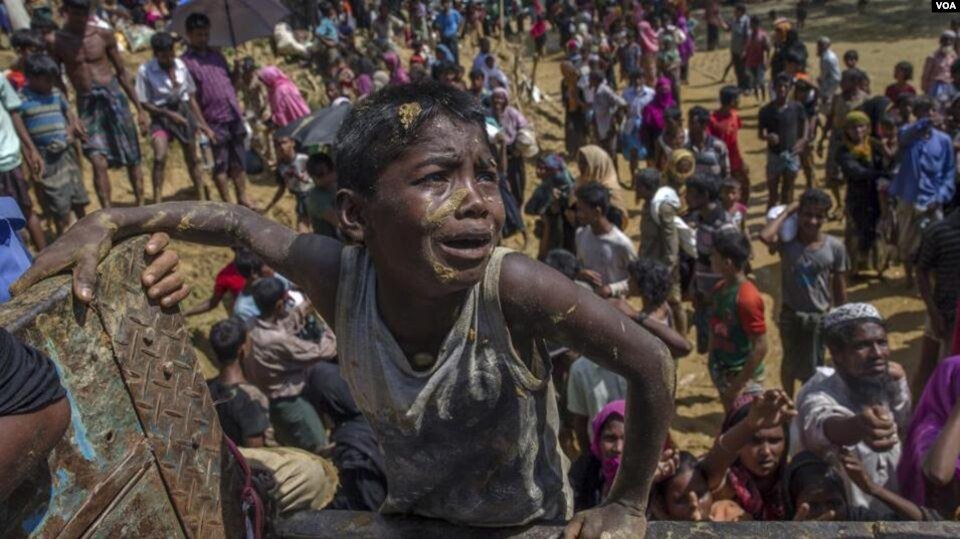
The judgment rested on graphic evidence and testimony from survivors, as well as reports from international investigators. The court heard how Rohingya villages and bridges had been set alight and bulldozed, with men and boys executed and girls and women raped during the military’s clearance operations in northern Rakhine in 2017.
The court heard testimony from three witnesses from the villages of Min Gyi, Chut Pyin and Maung Nu, describing killings, rape and other sexual violence. One witness called by Myanmar gave an account of an attack in which Rohingya insurgents from the Arakan Rohingya Salvation Army allegedly killed around 100 civilians.
Nearly 400 villages — about 40 per cent of the almost 1,000 villages in the three townships of northern Rakhine State — were partially or totally destroyed during and after the 2017 clearance operations. “Bulldozing and large-scale terrain clearance often followed the destruction… in turn, rapid construction took place on the cleared sites, including security installations, new villages and houses, and other civilian infrastructure,” Judge Iwasawa explained.
The court also found that the murder of infants during the operations “supports the inference that Myanmar’s security forces acted with the intent to prevent births among the group.”
The evidence, the court said, showed genocide not as a single event but as a slow progression leading to the destruction of a group.
Seven Years in the Making
The case was brought to the court in November 2019 by The Gambia, a small West African nation thousands of miles from Myanmar, with the support of the Organisation of Islamic Cooperation. It was the first case of its kind: a state with no direct connection to the atrocities asking the world’s highest court to hold another state to account under the Genocide Convention.
As The Best News Network reported yesterday, the judgment had been awaited for months by governments, lawyers, rights groups and Rohingya communities around the world, because of what it would mean for how states are judged under the 1948 treaty.
Because there was no written genocidal plan or order for destruction to point to, The Gambia’s case relied on circumstantial evidence — the pattern, scale and character of the violence itself. The court’s ruling settles long-running questions about the specific intent that defines genocide and how that intent can be proved.
Seven years of weighing evidence and hearing witness testimony ended with a single word that survivors had waited a lifetime to hear from a court: genocide.
What Myanmar Must Now Do
The court ordered Myanmar to take a series of steps to repair the harm it caused. It must:
- Cease any ongoing violations by enacting legislation giving full effect to its obligations under the Genocide Convention
- Investigate all persons reasonably suspected of acts contrary to the Convention and, where warranted, prosecute and punish them
- Provide assurances and guarantees of non-repetition and prevent similar violations from occurring in the future
- Adopt measures of restitution, including allowing the safe, voluntary and dignified return of displaced Rohingya to their homes and the reunification of families, whether they were displaced inside Myanmar or abroad
- Compensate the Rohingya group and its members for the damage caused, including returning property that was lost or damaged and allowing families to identify and bury their dead
The court decided that the amount and the terms of compensation will be settled in a later phase of the proceedings. Myanmar must send the court a report within two years setting out the restitution measures it has taken and the compensation it proposes to pay. The court itself will ultimately decide the amount of reparations, which will be both collective and individual.
The judgment is binding — but the court has no police force of its own, and enforcement will depend on the willingness of states and the United Nations to act.
Reactions Around the World
United Nations Secretary-General António Guterres welcomed the judgment as “a powerful recognition of the Rohingya victims of genocide” and “a demonstration of international justice and a reaffirmation that impunity for such horrific acts must not stand.” He said the ruling “will be studied carefully within the United Nations” and stressed that Myanmar must comply with the court’s decision.
The UN human rights chief, Volker Türk, said the judgment “clearly concludes the State of Myanmar stands responsible for one of the most egregious crimes known to humankind,” adding: “The suffering, misery and humiliation inflicted on the Rohingya by the Myanmar State is a stain on the conscience of humanity.”
The Gambia welcomed the ruling with “profound satisfaction”, calling it “a historic day for international justice” and urging Myanmar to comply “fully and without delay”. The Gambia’s justice minister, Dawda Jallow, said: “The victory belongs to the Rohingya. They survived, they testified, and today they were believed.”
Rohingya activist Yasmin Ullah, a survivor who stood in the court as part of The Gambia’s delegation, said: “Today is a day of justice. I am a survivor of genocide, and I stood in the Court as part of The Gambia’s delegation. Today the world’s highest court has looked at what was done to the Rohingya and named it for what it was. Genocide.”
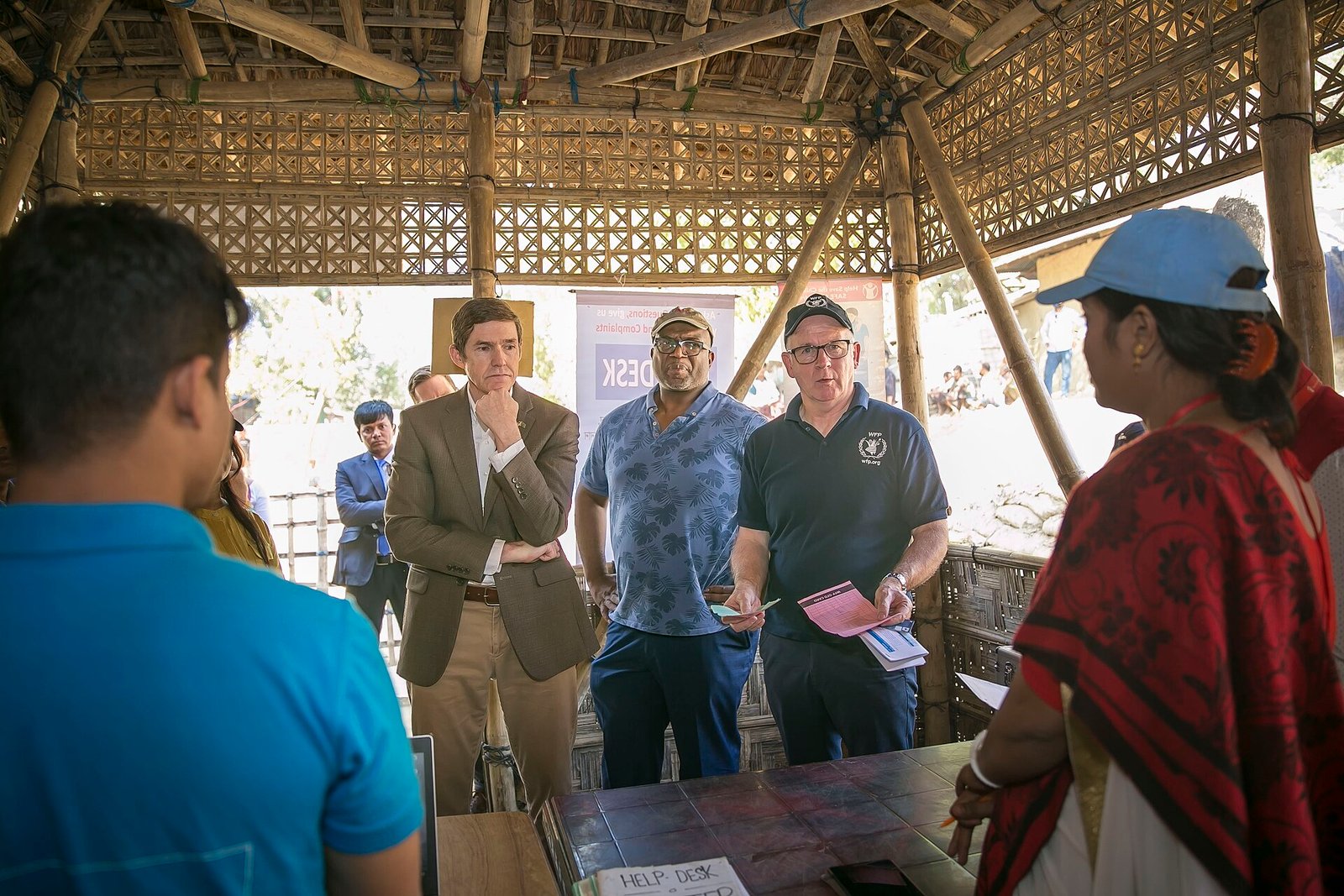
Bangladesh, which hosts around a million Rohingya refugees, welcomed the ruling and urged Myanmar to implement it without delay, saying it could pave the way for the safe, voluntary and dignified return of the refugees. Former prime minister Sheikh Hasina, who led Bangladesh at the time of the exodus, said the country’s role in gathering evidence from witnesses in the camps had “now come to a successful conclusion”.
Britain’s Foreign Secretary Ed Miliband announced immediate action, saying the UK was expelling Myanmar’s defence attaché, urgently calling for a United Nations Security Council session to discuss the judgment, and summoning Myanmar’s chargé d’affaires.
Myanmar’s shadow National Unity Government said it respects the authority of the court and its judgment and pledged to consider its findings. Myanmar’s military government had not responded to the ruling as of Thursday evening, according to reports from The Hague. A United States official said Washington was studying the decision to assess its implications.
For the Rohingya, the judgment is a turning point — but its true test will be whether a ruling without an army behind it can bring anyone home.
Why This Ruling Reaches Beyond Myanmar
The judgment is expected to shape genocide cases far beyond Myanmar. The court’s findings on how genocidal intent can be proved from the pattern of atrocities — even without a written plan — are likely to be cited in other proceedings before the court, including the case brought by South Africa concerning Gaza.
For the Rohingya themselves, most of whom remain in crowded camps in Cox’s Bazar nearly a decade after they fled, the ruling changes their legal standing in the most fundamental way: what happened to them now carries the name the world’s highest court has given it. Whether it also changes their daily lives — whether it brings return, restitution or compensation — will depend on what happens next, in Naypyidaw, in New York and in the capitals that now hold a binding judgment in their hands.
A court has spoken. The world now has to decide what its words are worth.
By Tariq Jamal
Freelance Journalist | The BNN Media – The Best News Network
News Beyond the Borders
Sources: UN News — “World’s top court finds Myanmar guilty of genocide against Rohingya” (https://news.un.org/en/story/2026/11/1168836); CNN — “In historic first, UN top court rules a country committed genocide” (https://www.cnn.com/2026/11/19/asia/icj-myanmar-genocide-ruling-intl-hnk); Le Monde — “Rohingya: Historic International Court of Justice ruling finds Myanmar guilty of genocide” (https://www.lemonde.fr/en/international/article/2026/11/20/rohingya-historic-international-court-of-justice-ruling-finds-myanmar-guilty-of-genocide_6784846_4.html); Reuters via SRN News — reactions round-up (https://srnnews.com/reactions-as-top-un-court-finds-myanmar-guilty-of-genocide-against-rohingya/).