By
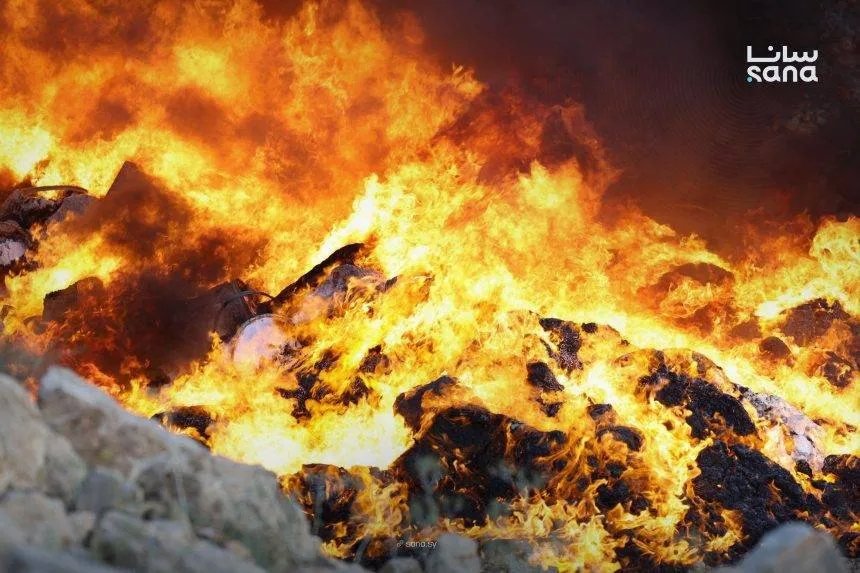
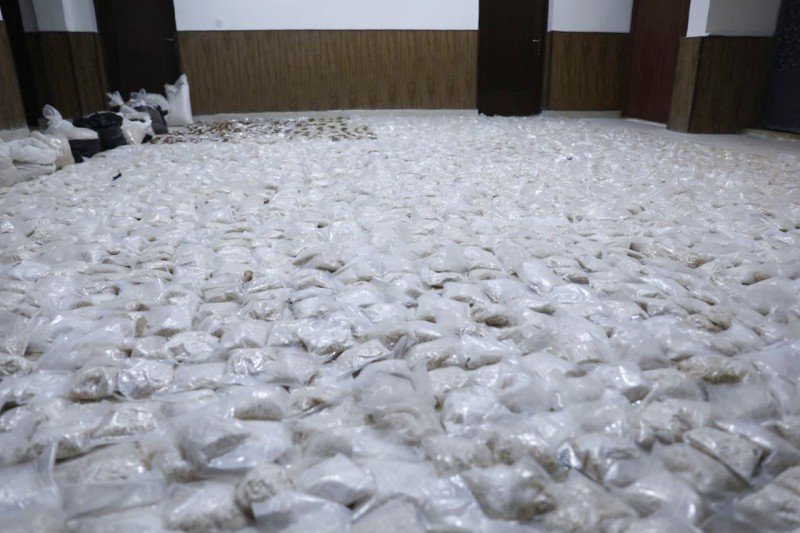
Syria has destroyed 400 million Captagon pills seized in security raids, in the largest single destruction of the drug since the fall of Bashar al-Assad — along with tonnes of hashish, cannabis and heroin, and the equipment used to make and move them.
By Tariq Jamal
Freelance Journalist | The BNN Media – The Best News Network
News Beyond the Borders
Damascus, Syria — Syria’s Anti-Narcotics Department announced on Sunday 22 November that it had destroyed 400 million Captagon pills seized in security operations across the country, in what officials presented as the biggest blow yet against a trade that once funded the ousted regime of Bashar al-Assad.
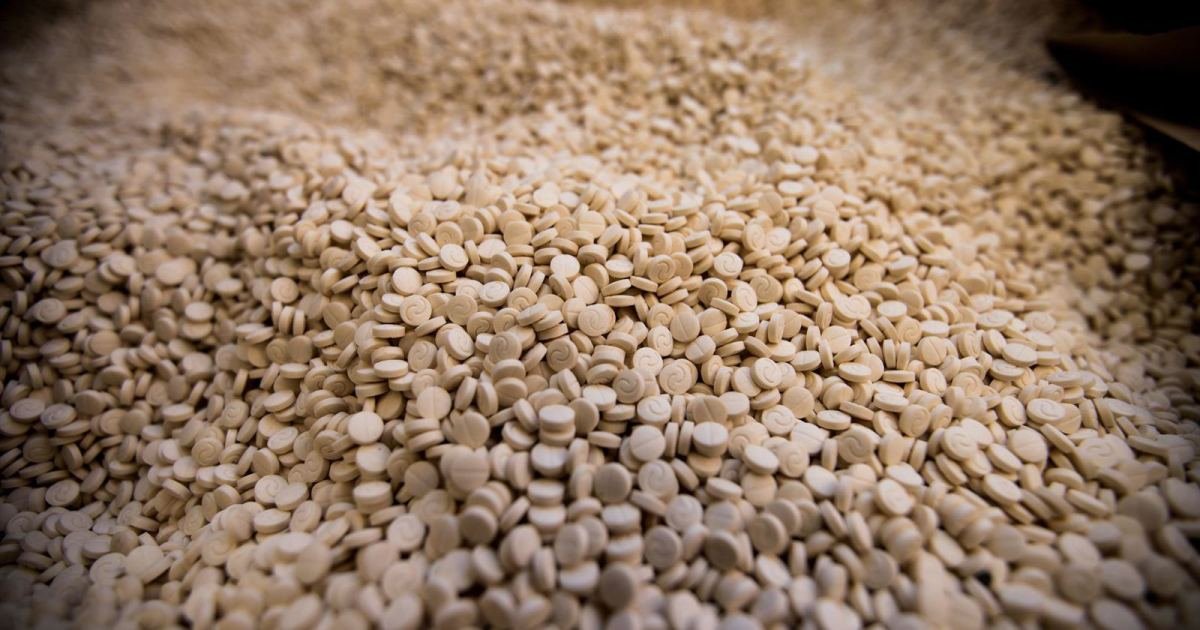
The announcement, carried by the state news agency SANA and reported by AFP, said the haul was destroyed by incineration under the supervision of a committee from the ministries of interior, justice and health, in line with Syrian law. It was not only Captagon that went up in flames.
What Was Destroyed
The quantities listed by the Anti-Narcotics Department show the scale of the stockpiles that security forces have been pulling out of warehouses, vehicles and smuggling routes:
- 400 million Captagon pills
- 12.2 tonnes of hashish
- 2.3 tonnes of cannabis plants
- 6 kilograms of heroin
- 5.4 million other narcotic pills
- Tools, materials and chemical products used to manufacture, conceal and transport the drugs
The department said the drugs had been seized in multiple security operations, rather than in a single raid — the product of months of raids on networks that survived the fall of the old government.
Four hundred million pills is not a street seizure. It is the inventory of an industry.
How the Destruction Was Carried Out
According to SANA, the destruction was carried out by incineration, supervised by a joint committee drawn from the interior, justice and health ministries. The committee’s role is to certify that seized drugs are destroyed rather than stolen, resold or returned to circulation — a safeguard that matters in a country where, until two years ago, the drug trade was run from inside the state itself.
The authorities have not said where the burning took place or how long it lasted. What they have said is that operations to seize drugs and pursue the people behind them will continue.
The announcement came on the same weekend that Lebanese and Syrian forces reported fresh seizures along their shared border, including explosives and weapons shipments intercepted by border units.
A Trade That Funded a Regime
Captagon is the brand name of fenethylline, a synthetic amphetamine-type stimulant. It began as a pharmaceutical drug, but in the Middle East it became a street drug — cheap, highly addictive, and produced on an industrial scale.
During Syria’s civil war, which began in 2011, Captagon became the country’s largest export. A 2024 report by the United Nations Office on Drugs and Crime (UNODC) found that 82 percent of the Captagon seized across the Middle East over the previous five years had originated in Syria. The trade was a key source of illicit funding for the government of Bashar al-Assad, which was ousted in December 2024.
The new authorities in Damascus say they are fighting the trade, not running it — and they have made the crackdown one of the most visible parts of their first two years in power.
The Crackdown Since December 2024
The numbers the authorities have published tell the story of a campaign that has run almost without pause since Assad’s fall:
- June 2026: the head of the Anti-Narcotics Department, Khaled Eid, said authorities had carried out 1,550 operations since Assad’s fall, dismantling 90 international smuggling networks and closing 17 Captagon plants. In the 18 months to 26 June 2026, they had seized 697 million Captagon pills, along with 15 tonnes of hashish, 10 million narcotic pills, 180 kilograms of cocaine and 221 tonnes of chemical precursors.
- September: 55 security operations dismantled four international smuggling networks and seized about 4 million Captagon pills, 3.8 tonnes of hashish and 39 kilograms of crystal meth.
- October: 157 security operations dismantled 30 domestic smuggling networks and seized about 4.3 million Captagon pills, 582 kilograms of hashish, 7 kilograms of crystal meth and 28,000 narcotic pharmaceutical pills.
Interior Minister Anas Khattab has said the transitional government has now dismantled all Captagon production facilities in the country and confiscated their equipment, and is working to locate hidden drug caches. In the weeks after the regime’s collapse, security forces destroyed roughly 100 million Captagon pills, large quantities of raw manufacturing materials and about 15 tonnes of hashish.
SANA reported that in December 2025, a year after Assad’s government fell, UNODC confirmed that large-scale Captagon manufacturing in Syria had been disrupted — and that the disruption had pushed up pill prices in some areas, though the UN agency also warned some users could turn to other synthetic drugs such as methamphetamine.
The factories are gone, the authorities say. The stockpiles are what remain — and Sunday’s fire was aimed at those.
The Latakia Warehouse and the Border
The destruction was announced on the same weekend that security forces reported a major find at the port of Latakia, in western Syria. Anadolu Agency reported that a drug warehouse previously used by the ousted regime for Captagon trafficking was uncovered during searches at the port, and that Captagon pills hidden inside baby carriers, water pumps and electrical cables were found on the second day of inspections.
According to the report, the warehouse had been under the control of the Syrian Army’s elite Fourth Division, which was led by Maher al-Assad, the brother of the deposed president. It was the second large warehouse found at the same port in two days.
The find underlines why the authorities say the work is far from finished: even with the factories closed, stocks hidden before December 2024 are still being found in ports, warehouses and border crossings.
Smuggling has not stopped either. On Saturday 21 November, security forces in the Badiya desert region foiled two attempts to smuggle drugs through southern Syria after balloons carrying the shipments were detected and brought down, seizing more than 142,000 Captagon pills.
What Happens Next
For Syria’s new government, the destruction of 400 million pills is both a practical act and a message. Practically, it removes a vast quantity of drugs from circulation. Politically, it is evidence — for Syrians, and for the neighbouring countries that bore the brunt of the trade — that the state which once profited from Captagon is now burning it.
But the scale of Sunday’s haul is also a reminder of how large the trade was. Four hundred million pills were seized, not made, after the factories were closed. That means the stockpiles built up under the old regime were enormous, and that more may still be hidden.
The Anti-Narcotics Department says the raids will go on. The test now is whether the seizures slow down as the hidden stocks run out — or whether the networks, denied their factories, find new ways to keep the pills moving.
Reporting based on AFP via Arab News, 22 November 2026; SANA via Lebanese Lobby, 22 November 2026; Enab Baladi; Levant24; OCCRP; UNODC.
By Tariq Jamal
Freelance Journalist | The BNN Media – The Best News Network
News Beyond the Borders