 By
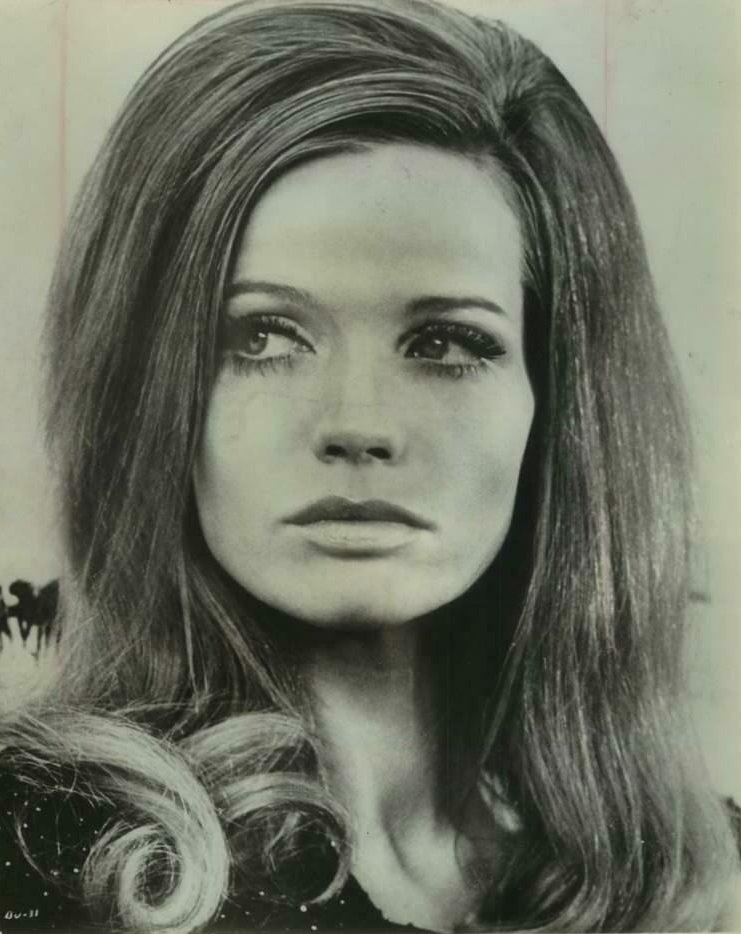
Veruschka, the towering German model who became one of the first supermodels — and then walked away from the catwalk to remake herself as an artist — has died in Berlin at the age of 87, leaving behind a career that changed what a fashion photograph could be.
By The BNN Media
The Best News Network
News Beyond the Borders
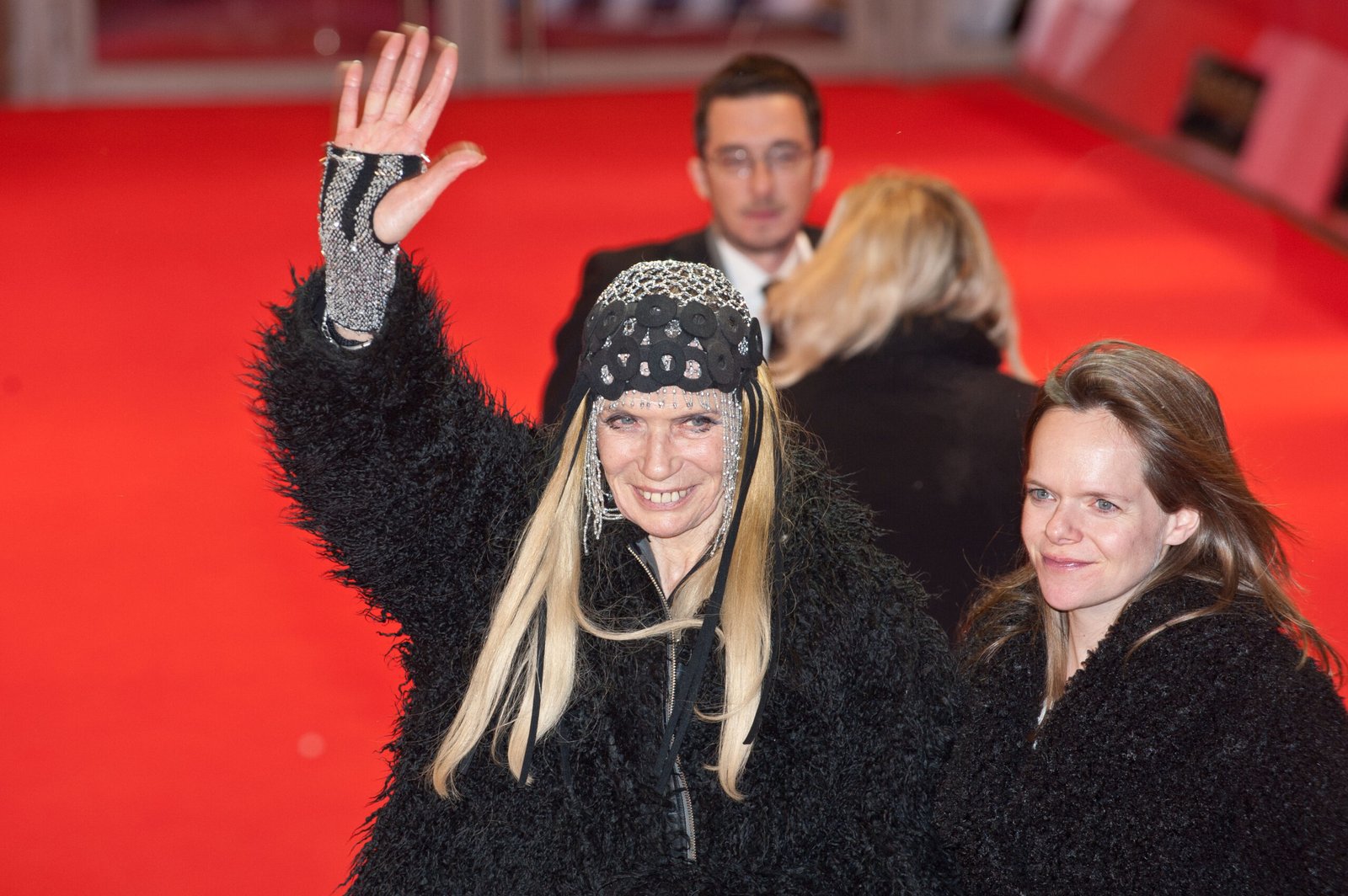
Berlin, Germany — Vera von Lehndorff, better known to the world as Veruschka, died on Tuesday, 24 November, at her home in Berlin, surrounded by friends and family. She was 87.
Her death was announced on Wednesday on the website of her sister Catharina Kappelhoff-Wulff’s luxury belt brand. “In the 1960s and 70s she shaped the world of fashion, art and photography like no one else,” the statement said, calling the German model an “extraordinary woman” and a “global icon”. No cause of death was disclosed.
A Childhood Marked by War
Veruschka was born Vera Gottliebe Anna Gräfin von Lehndorff-Steinort on 14 May 1939 in Königsberg, then part of East Prussia and now Kaliningrad, Russia. She spent the first five years of her life on her family’s estate, Steinort, in what is now Poland.
Her childhood was upended by the Second World War. Her father, Heinrich Graf von Lehndorff, was a member of the German resistance who was executed for his involvement in the failed 20 July 1944 plot to assassinate Adolf Hitler — when Veruschka was just five years old.
After the war, her family settled in Hamburg, where she studied art. It was the training of an artist, not a model — and that distinction would shape everything she did next.
She arrived in fashion from art school, not from a casting queue — and she never really left art behind.
Discovered in Florence
Veruschka’s path to modelling began in Florence, Italy, where she had gone to continue her art studies. There, aged 20, she was discovered in 1959 by the Italian photographer Ugo Mulas.
She soon adopted the name Veruschka — a Russian-sounding pet form of her first name, Vera — and within a few years she was one of the most recognisable faces in fashion. At more than six feet tall, she stood apart from the models of her era, using her striking features and her physicality to create photographs that were dramatic and avant-garde.
By the mid-1960s she had become one of the most recognisable and highly paid models in the world. She caught the eye of Diana Vreeland, the editor-in-chief of Vogue, who would put Veruschka on the magazine’s cover a dozen times.
She was not discovered on a street corner. She was discovered by a photographer, in an art city, at twenty — and fashion has been chasing that look ever since.
The Face That Changed Fashion
What made Veruschka different was not just her height or her face. She broke away from the conventional idea of modelling at the time, using her body far more expressively and dramatically than her contemporaries — and often becoming an active collaborator during photoshoots, rather than a passive subject for the photographer.
She became a muse to the most influential fashion houses and designers of the era, including Valentino Garavani, Yves Saint Laurent and Karl Lagerfeld. The photographer Richard Avedon called her “the most beautiful woman in the world”, and she worked with him and with Irving Penn, two of the greatest fashion photographers of the century.
Her most famous collaboration with Avedon was the “Great Fur Caravan” — a 26-page spread in Vogue, shot over five weeks in Japan, on which the magazine spent $1 million, a sum worth about seven times as much today. It remains one of the most expensive photoshoots in fashion history.
- 1939: Born Vera von Lehndorff in Königsberg, East Prussia
- 1959: Discovered in Florence by photographer Ugo Mulas, aged 20
- Mid-1960s: Becomes one of the world’s most famous models; appears on the cover of Vogue a dozen times
- 1966: Plays herself in Michelangelo Antonioni’s Blow-Up
- 1970s: Steps away from mainstream modelling to pursue art
- 2006: Berlin’s Museum für Fotografie exhibits her “Veruschka Self-Portraits”; appears in Casino Royale
- 24 November 2026: Dies at home in Berlin, aged 87
She did not just wear the clothes. She performed them — and the camera learned to keep up with her.
From the Catwalk to the Cinema
Veruschka’s fame carried her beyond the pages of Vogue and onto the screen. Her best-known film role came in 1966, when she appeared as a version of herself in Michelangelo Antonioni’s Blow-Up, in a famous scene opposite the British actor David Hemmings. The film, about a fashion photographer who believes he has witnessed a murder, became a defining work of 1960s cinema — and Veruschka’s appearance in it fixed her in the public imagination as the very image of the era.
Four decades later she returned to the screen in a very different kind of film, playing a poker player in the 2006 James Bond film Casino Royale.
One scene in Blow-Up made her a film icon as well as a fashion one — and she never needed a second one.
The Artist Behind the Model
In the 1970s, at the height of her fame, Veruschka stepped away from mainstream modelling and ventured into a career as an artist. It was a decision that puzzled the fashion world — but it was, in her own account, the point all along.
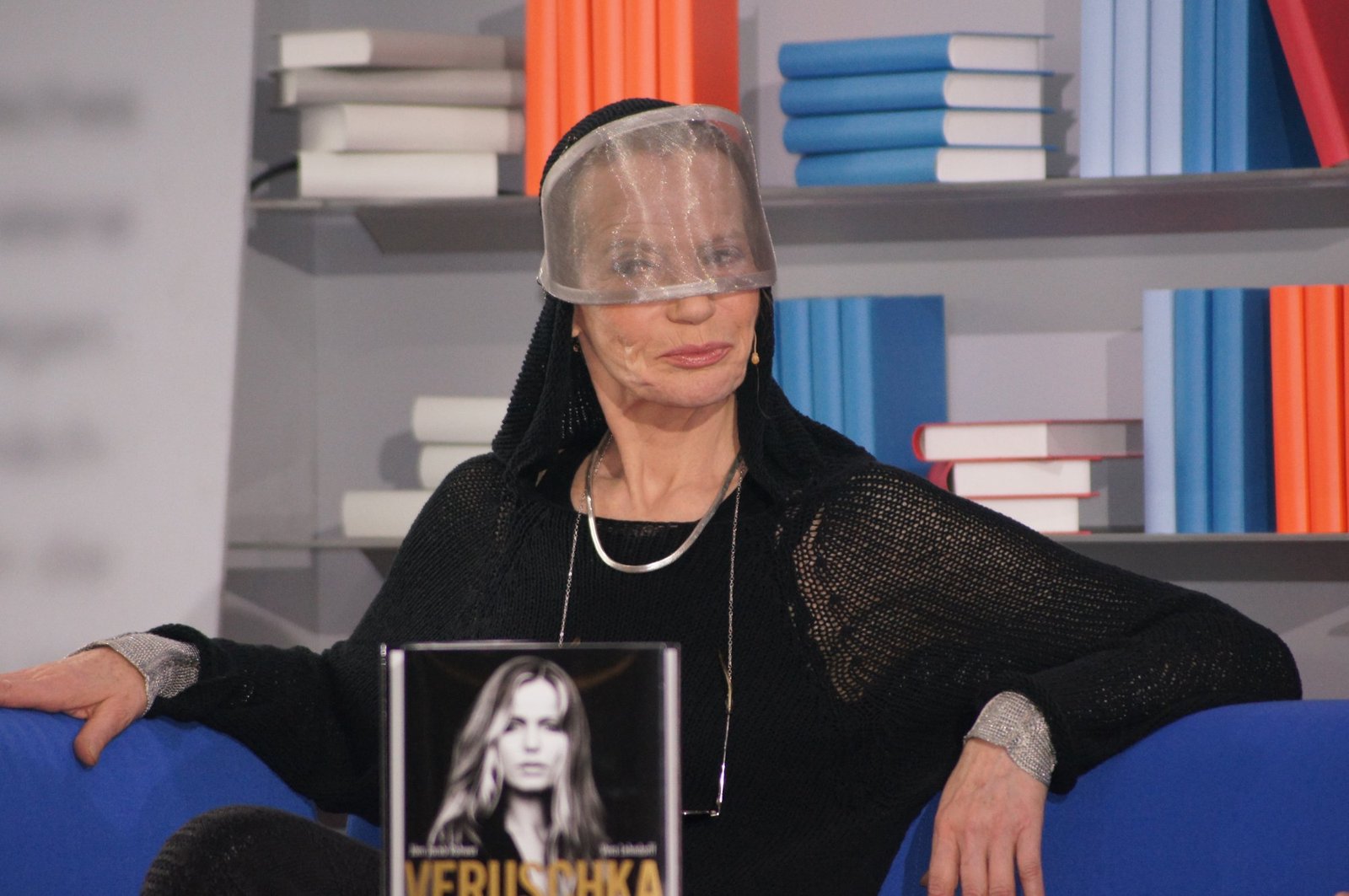
Art remained central to her work for the rest of her life. She explored camouflage through body painting, covering her own body in paint until it disappeared into walls, floors and landscapes. She developed staged portraits using costumes and invented personas, turning herself into a different character for each photograph. In 2006, Berlin’s Museum für Fotografie exhibited her “Veruschka Self-Portraits”.
She was frank, late in life, about how she had always seen modelling. She told the German newspaper Bild in 2008: “I never wanted to be a model, a meaningless object. My dream has always been to be able to disappear when I don’t feel comfortable, to be absolutely free.”
It is a revealing remark. The woman famous for being looked at spent much of her later career trying to disappear — into paint, into costume, into character. The body painting was not a gimmick. It was the work of someone who had spent a lifetime being photographed and wanted, finally, to control the image herself.
She spent her twenties being the most photographed woman in the world, and her later years learning how to vanish from the photograph altogether.
Tributes Pour In
Tributes have been pouring in from across fashion and photography since the news was announced, remembering a model who changed the craft itself.
Her former partner and longtime creative collaborator, the Italian photographer Franco Rubartelli, mourned her in an Instagram tribute. The two had recently reconnected after more than fifty years without contact. “Life gave me a bitter gift: after more than fifty years of knowing nothing of each other, it allowed me to hear from Veruschka once again,” he wrote. “And now, just as that door had opened a mere few centimeters after half a century, the wind has blown it shut.”
Rubartelli, who photographed her in some of her most famous images, added that she was not just a great model but “an elegant woman, sensitive, brave, with a beauty that did not stay in the camera, it would get into the soul of whoever watched her.”
America’s Next Top Model judge and photographer Nigel Barker said Veruschka “helped revolutionize fashion photography”. “I had the privilege of photographing her in 2001,” he wrote on Instagram. “It was a real milestone in my own career. She was the epitome of style and grace and super humble on set with my team. We all learned a lot of what it meant to work with a true icon.”
Parts of Veruschka’s estate were donated to the East Prussian State Museum in Lüneburg, according to reports — a final link back to the homeland she had lost as a child.
A Legacy Beyond the Lens
Veruschka belonged to a generation that invented the modern idea of the supermodel — a model whose name mattered as much as the clothes she wore, and whose image could sell a magazine on its own. She was among the first to do it, and among the first to walk away from it on her own terms.
Her influence is visible far beyond the 1960s. The expressive, theatrical posing she pioneered became the language of fashion photography itself. The body painting and self-portraits she made in her later years are now shown in museums. And the simple fact that a model could be an artist — a collaborator and creator, not a clothes hanger — owes much to her example.
Veruschka did not just model fashion. She showed the world that a fashion photograph could be a work of art — and then she spent the rest of her life proving it.
By The BNN Media
The Best News Network
News Beyond the Borders
Sources for this article: CNN (26 Nov 2026); USA Today (25 Nov 2026); PEOPLE (27 Nov 2026); The Times obituary (27 Nov 2026); Hello! Magazine (26 Nov 2026).