By
A projectile struck Riyadh’s tallest tower on Tuesday morning, injuring 11 people and hitting the same skyscraper for the second time in less than a week — a direct blow at the heart of Saudi Arabia’s financial centre and the symbol of its Vision 2030 transformation.
By Umar Farooq
Journalist (UAE) | The BNN Media – The Best News Network
News Beyond the Borders
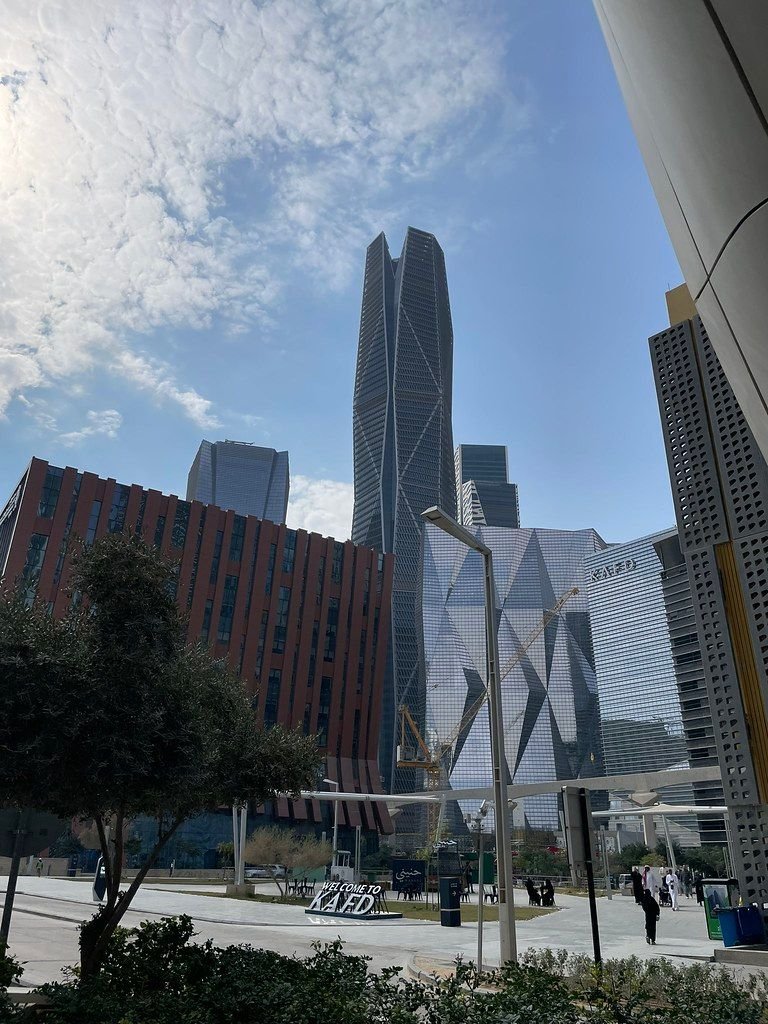
Riyadh, Saudi Arabia — A projectile struck the Public Investment Fund Tower in Riyadh’s King Abdullah Financial District on Tuesday, 24 November, injuring 11 people in what Saudi officials blamed on Yemen’s Houthi rebels — the second strike on the same 80-storey, 385-metre tower in five days.
The Second Strike in Five Days
Saudi Arabia’s Civil Defense said 11 people were injured when the projectile hit the tower on Tuesday morning, and posted a photograph showing damage to the building’s facade about halfway up. No deaths were reported.
The injured were two Saudi citizens, two Indian nationals, three Nepalese and four Egyptians — most of them foreign workers who form the backbone of Riyadh’s workforce. At least two of the wounded were in critical condition after suffering severe burns, according to a source briefed on the attack. Several of the injured were inside the tower repairing damage from last week’s strike when it was hit again.
The Indian embassy in Riyadh said two Indian nationals had been injured and that it was ascertaining further details. “All possible assistance will be extended to the injured persons and their families,” the embassy said.
A tower hit twice in five days, with repair crews among the wounded the second time, tells Riyadh that its air defences are not keeping every projectile out.
What Happened on Tuesday Morning
Witnesses said a vehicle fitted with a loudspeaker warned pedestrians in the area to take cover, but no mobile phone alert was sent about a threat to the capital — unlike during some recent strikes. Police cars later blocked some entrances to the financial district, and people were evacuated from nearby businesses. A restaurant worker in the area said streets were closed and people were prevented from entering after the strike.
Saudi-led coalition spokesman Major General Turki al-Malki called the strike a “cowardly terrorist attack” on one of the financial centre’s towers and said the authorities were conducting an on-site investigation. “The deliberate targeting of civilians and civilian objects by the [Houthis] will be met with a firm response,” he posted on X.
The exact weapon used in the latest attack has not been confirmed, and the authorities have not given a detailed public account of how the projectile got through the kingdom’s air defences. The coalition’s statement did not name the group responsible, but Saudi officials blamed the Houthis — and the Houthis had not claimed the attack when the first reports were filed on Tuesday.
The First Strike, Five Days Earlier
Tuesday’s attack was the second strike on the PIF Tower in five days. On Thursday, 19 November, a Houthi projectile hit the same tower, blowing out windows across seven to eight floors and bending parts of its metal facade, according to Reuters, citing three sources familiar with the matter. No one was injured in that first strike, and Saudi officials initially played it down, saying air defences had mostly worked.
The Houthis claimed that attack hours later, saying they had targeted Riyadh’s financial district twice that day, first at dawn and again in the evening.
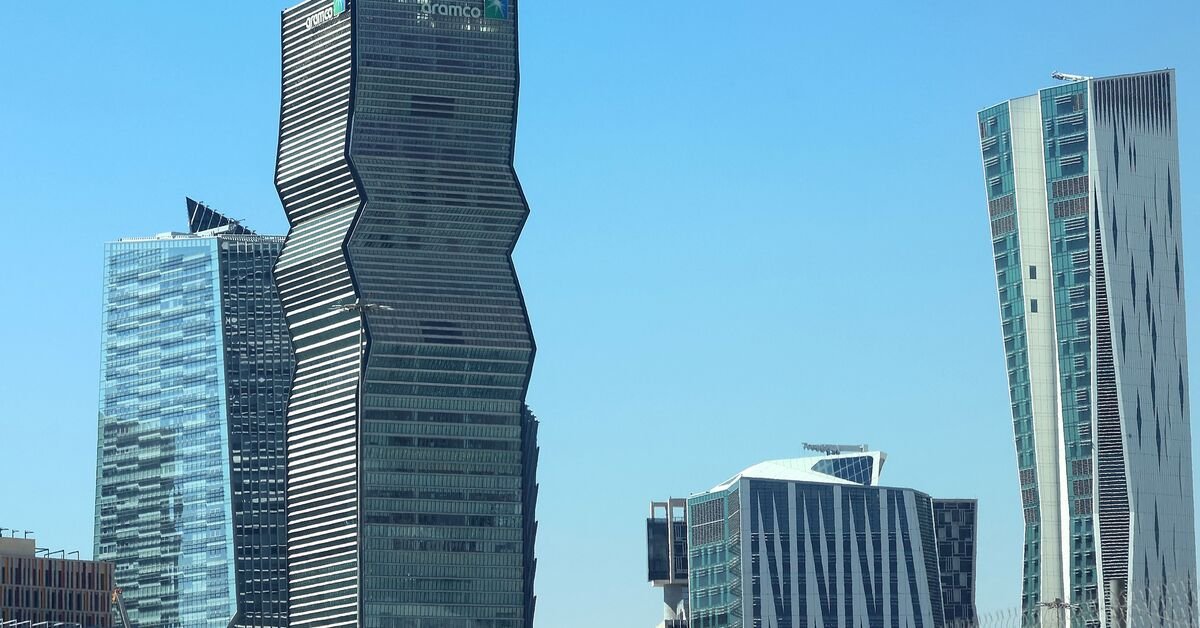
The 19 November strike was itself the second attack on Riyadh’s financial district in less than two weeks. On 8 November, a Houthi attack damaged a building in the same district housing offices belonging to Saudi Aramco, the state oil giant.
Less than a day after the 19 November tower strike, the attacks continued. The Saudi-led coalition said on Friday morning, 20 November, that the kingdom had intercepted five drones and one ballistic missile fired by the rebels, and that Riyadh was among the targets. The coalition also said it had struck Houthi operations used to smuggle and transport weapons and ballistic missiles in Hodeidah, Yemen’s main Red Sea port.
Why the PIF Tower Matters
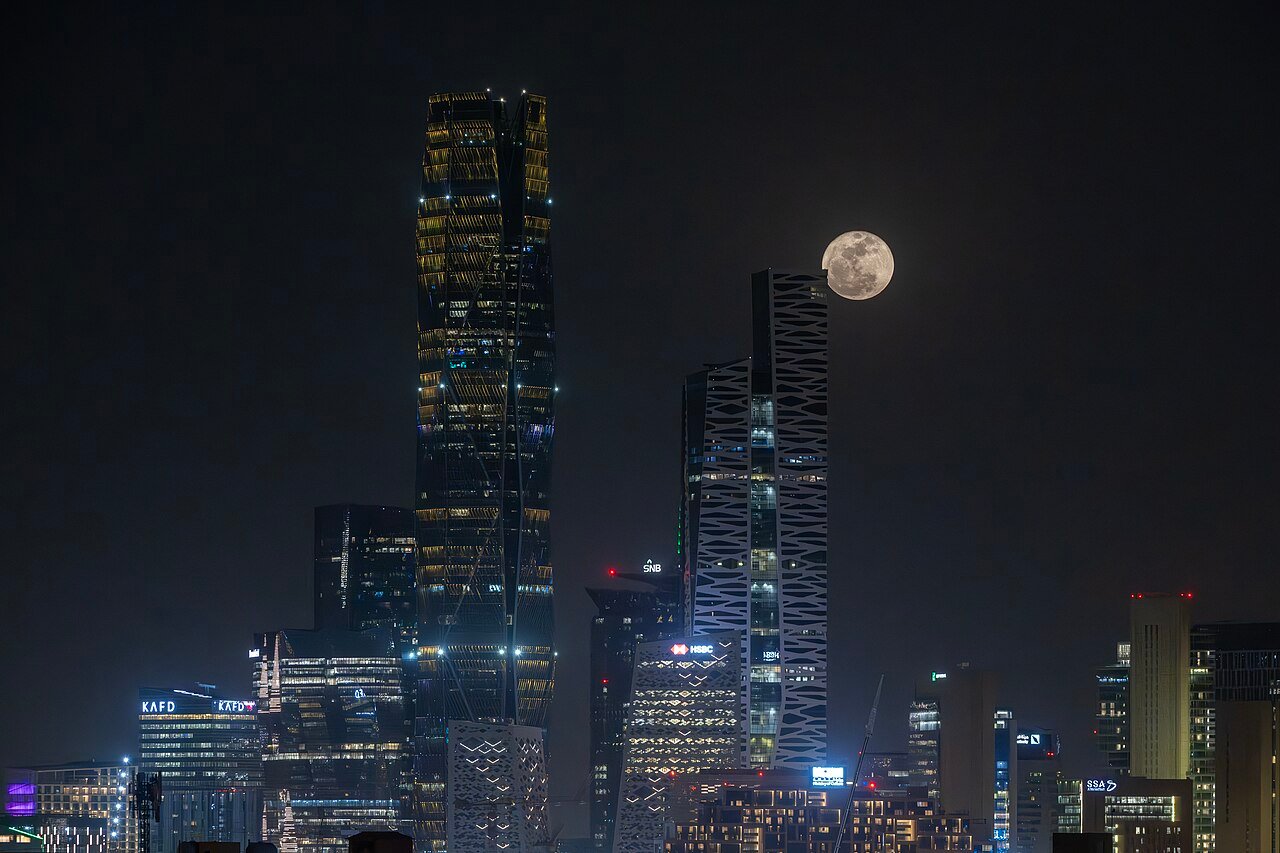
The Public Investment Fund Tower is an 80-storey skyscraper standing 385 metres (1,263 feet) tall at the heart of the King Abdullah Financial District. It is the tallest building in Riyadh and the headquarters of the Public Investment Fund, Saudi Arabia’s sovereign wealth fund — one of the largest in the world, managing an estimated $900 billion in assets and chaired by Crown Prince Mohammed bin Salman.
The fund is the primary vehicle for Vision 2030, the crown prince’s plan to diversify the Saudi economy away from oil, directing more than 60 per cent of its activity at home towards mega-projects such as Neom, Qiddiya City and the Red Sea Project. The King Abdullah Financial District is the showcase for that modernisation drive.
Hitting the tower twice in five days is therefore a direct message — and one that is impossible to hide, since the 385-metre tower can be seen from across the capital.
The tower is not just a building. It is the physical embodiment of Saudi Arabia’s post-oil future — and that is exactly why it was targeted.
Britain Sanctions the Houthis on the Same Day
On the same day as the Riyadh strike, Britain announced new sanctions against the Houthis. The UK designated the group as an entity under its Yemen sanctions regime, imposing an asset freeze and director disqualification, and sanctioned four senior figures linked to the movement, accusing them of involvement in torture, rape and other serious abuses against detainees.
Those sanctioned include the Houthi interior minister Abdulkarim al-Houthi, intelligence chief Abdul Hakim al-Khaiwani and senior prosecutor Sarim al-Din Muffadal. Britain said it acted after the Houthis resumed conflict in the region, including targeting Saudi Arabia’s civilian infrastructure and commercial shipping in the Bab el-Mandeb strait.
Qatar, the UAE, Kuwait, Lebanon, the United States and Pakistan all condemned Tuesday’s attack. Qatar called it a “shameful act of aggression” and a violation of Saudi Arabia’s sovereignty.
A Widening Campaign
The strikes on Riyadh are part of a much wider campaign. The Houthis, who control much of western Yemen including the capital Sanaa, have been targeting Saudi airports, oil infrastructure and office buildings since Yemen’s civil war reignited in July, as fighting spilled over from the wider US–Iran war that began in February.
Riyadh’s international airport was repeatedly targeted in October, including attacks that killed more than a dozen people, according to reports. The Houthis have also kept up their campaign against shipping, with Houthi attacks on shipping in the Strait of Hormuz and the Bab el-Mandeb strait continuing through November.
Houthi military spokesman Yahya Saree has warned employees and workers to evacuate Red Sea ports immediately and told airlines to avoid Saudi airspace, “because it will be the scene of our operations in the coming hours”, while making an exception for the airspace near Mecca and Medina.
Inside Yemen, the conflict has triggered a major humanitarian crisis, displacing hundreds of thousands of people since July. The Houthis have seized swathes of territory this month, forcing forces aligned with the Saudi-backed, internationally recognised government into a major retreat. Yemen’s army said Houthi fighters are now about 60 kilometres from Aden, the government’s stronghold since the Houthis seized Sanaa in 2014.
What Happens Next
Saudi Arabia has not said how it will respond to Tuesday’s strike, and the investigation into how the projectile reached the tower is continuing. The immediate question is whether Saudi air defences can stop the next attack — or whether the Houthis will keep finding ways through.
The pattern of the past three weeks — the Aramco building on 8 November, the PIF Tower on 19 November, and the same tower again on 24 November — shows that at least some projectiles are getting past the kingdom’s defences, even as the coalition reports intercepting others. For now, the King Abdullah Financial District is counting the cost of a second strike on its tallest tower in five days, with repair crews already among the injured. Riyadh is bracing for more.
Eleven wounded, a tower hit twice, and a warning of more to come: the war in Yemen has arrived in the heart of the Saudi capital — and it is not going away.
By Umar Farooq
Journalist (UAE) | The BNN Media – The Best News Network
News Beyond the Borders
Sources: Reuters (via TBS News and Devdiscourse); Saudi Civil Defense; Saudi-led coalition spokesman Maj Gen Turki al-Malki; AFP via Al-Monitor; The Hindu BusinessLine; WION; Inspire Viral Times; Archynewsy.