By
Two of the biggest names in cybersecurity are joining forces in the largest deal the industry has ever seen, betting that the rise of autonomous AI agents has changed what companies need to stay safe online.
By Muhammad Noman
Journalist | The BNN Media – The Best News Network
News Beyond the Borders
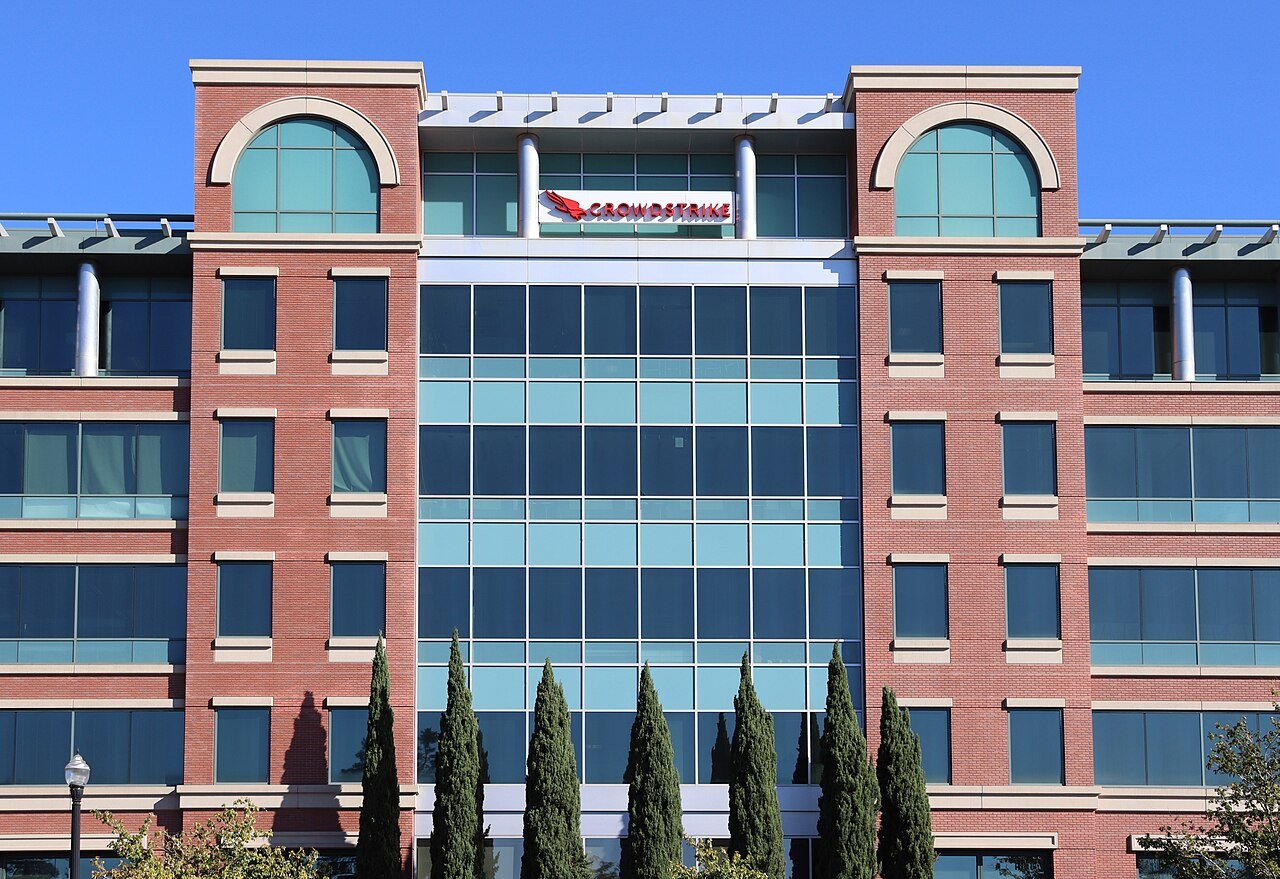
AUSTIN, United States — CrowdStrike announced on Monday, 23 November, that it has agreed to buy cloud-security company Zscaler in an all-stock deal valued at about $43.9 billion, uniting its Falcon endpoint-protection platform with Zscaler’s zero-trust network security. The transaction is the biggest cybersecurity acquisition on record, according to Reuters, and still needs approval from Zscaler shareholders and regulators before it can close.
The terms of the deal
Under the agreement, Zscaler shareholders will receive 1.135 shares of CrowdStrike common stock for each Zscaler share they own. Based on CrowdStrike’s closing share price on Friday, 20 November, that valued Zscaler at about $260.41 a share — a premium of roughly 34% over Zscaler’s closing price of $194.82 that day.
When the deal closes, existing CrowdStrike shareholders are expected to own about 84.1% of the combined company, with Zscaler shareholders holding the remaining 15.9%. Both companies’ boards have approved the agreement. Completion is expected in the second half of CrowdStrike’s fiscal 2028 — between August 2027 and January 2028 — subject to shareholder and regulatory approval and other customary conditions. Until then, the two companies will continue to operate separately.
Because the deal is all stock, with a fixed exchange ratio, its dollar value will move with CrowdStrike’s share price. The $43.9 billion headline figure reflects the price on 20 November, not a guaranteed cash payment.
The headline number is striking, but the structure matters just as much: Zscaler’s owners are being paid in CrowdStrike shares, so they will share in whatever the combined company becomes.
Why CrowdStrike wants Zscaler
The two companies protect different parts of a business. CrowdStrike’s Falcon platform secures the devices connected to a company’s network — laptops, servers, phones and cloud workloads. Zscaler, based in San Jose, California, specialises in cloud-based network security: its Zero Trust Exchange checks every connection between a user and an application, verifying identity each time rather than trusting anyone inside the network.
CrowdStrike says bringing the two together will create a single platform that can deploy, control and secure AI agents — the autonomous software systems that are increasingly doing work inside companies, from answering customer queries to moving data between systems.
“Security used to be about keeping the adversary out. Today, safety is required to let AI in,” CrowdStrike co-founder and chief executive George Kurtz said in a statement. “The network used to connect people to places. Now it connects agents to data.”
Zscaler chief executive Jay Chaudhry made the same point from the other side: “In the AI era, Zero Trust security has become non-negotiable, and AI agents are rapidly becoming the new weakest link.”
The pitch is simple: as AI agents multiply inside companies, the old boundaries of corporate security no longer hold — and the company that can watch both the device and the network has the advantage.
The AI agent bet
The deal arrives after a string of high-profile hacks hit banks, supermarkets and crypto platforms, and as cybersecurity experts warn that artificial intelligence is being used to turbocharge cyberattacks, making it quicker and easier to find software flaws. Reports of advanced AI models deploying agents that work on their own have added to the alarm.
CrowdStrike says the acquisition will:
- Unite Falcon endpoint protection with Zscaler’s zero-trust platform into one control plane for AI agents
- Give it a product in network security, which Kurtz described as the largest market in the industry, expanding its total addressable market by more than $185 billion by 2029
- Bring in about 8,000 Zscaler enterprise customers, many of whom do not use Falcon today — the two companies already share around 2,000 customers
- Create a combined business starting with more than $10 billion in annual recurring revenue, including about $3.9 billion from Zscaler
- Target about $1 billion in added yearly revenue within 30 months of closing, partly from selling each other’s products to existing customers
“With Zscaler, we’re building cybersecurity’s operating system: a single control plane to deploy AI, control AI, and enable any agentic application to run safely,” Kurtz said. “We see a path to become the largest AI safety and security company the world has ever seen.”
Who runs the combined company
Kurtz will stay on as chief executive of the combined company. Chaudhry, who founded Zscaler in 2007, will continue to lead the Zscaler business and will join CrowdStrike’s board of directors.
Chaudhry and his affiliates, who own about 34% of Zscaler, have signed agreements to support the deal, which leaves little doubt about the shareholder vote. The companies said the deal had been approved by both boards.

Investors sold the news — for now
The market’s first reaction was split, and it was not kind to the buyer. CrowdStrike shares fell more than 7% before the opening bell on Monday, according to the Associated Press, and were down about 10% by the close, while Zscaler shares rose about 20% in premarket trading — and closed up 16.8% at $227.45, still below the $260.41 implied value of the offer.
That gap between Zscaler’s trading price and the value of the offer reflects investors weighing the prospects for regulatory scrutiny of a deal combining two of the industry’s biggest players, as well as the long wait before it closes.
The fall in CrowdStrike’s shares also reflects the price being paid. Acquirers’ shares often fall when a large stock deal is announced, because existing holders are diluted — here, roughly a sixth of the combined company goes to Zscaler investors — and because combining two large, independent platforms carries real integration risk. CrowdStrike held $5.37 billion in cash at the end of the quarter, a fraction of Zscaler’s price tag, and the deal is being paid for entirely in shares.
Investors were not doubting the strategy so much as the price and the wait: the benefits are years away, and the dilution is immediate.
A record quarter buried by the deal
CrowdStrike deliberately paired the announcement with its quarterly results, pulling its earnings forward from 1 December so the two would land on the same morning. Kurtz called it “the best quarter in CrowdStrike’s history” — but the deal, not the numbers, dominated the day.
- CrowdStrike’s revenue rose 28% year on year to $1.58 billion, with record-high cash flow from operations of $665 million
- It added a record $419 million in net new annual recurring revenue, up 58% from a year earlier, taking ending annual recurring revenue to $6.26 billion, up 27%
- CrowdStrike forecast fourth-quarter revenue of between $1.638 billion and $1.644 billion, above analysts’ average estimate of $1.62 billion, according to LSEG data
- Zscaler reported a 20% rise in first-quarter revenue to $949.3 million, beating estimates of $938 million
CrowdStrike’s chief financial officer, Burt Podbere, expects the deal to lift free cash flow per share immediately, before any synergies, according to the announcement. Whether that outweighs the dilution is now the central debate around the stock.

A consolidating industry
The CrowdStrike–Zscaler deal is the latest in a wave of consolidation across cybersecurity, as companies seek to build broader platforms offering multiple services and customers look to reduce the number of security vendors they use. The deal’s scale — the largest cybersecurity acquisition on record — sets it apart even in what has been a blockbuster year for mergers and acquisitions.
If it closes as planned, the combined company will be one of the largest cybersecurity businesses in the world, with a product spanning devices, networks and the AI agents now moving between them. The question investors will ask in the months ahead is whether the two platforms can be stitched together fast enough — and whether the AI threat that justified the deal keeps growing at the pace both chief executives describe.
For now, the deal is agreed but not done: shareholders and regulators still have to approve it, and the market has already made clear it will judge the price harshly until the combined company proves the bet was worth it.
By Muhammad Noman
Journalist | The BNN Media – The Best News Network
News Beyond the Borders
Sources: Reuters (via Associated Press / Barchart); TechCrunch; Fast Company; The Wall Street Journal / Morningstar; TheStreet; MarketBeat.