
 By
A federal jury in New York has convicted China’s Huawei, one of the world’s biggest makers of telecoms equipment, of deceiving banks about its business in Iran and stealing trade secrets from American companies — the end of a criminal case that has shadowed the company for eight years.
By Faseeh Ur Rehman
Senior Journalist | The BNN Media – The Best News Network
News Beyond the Borders
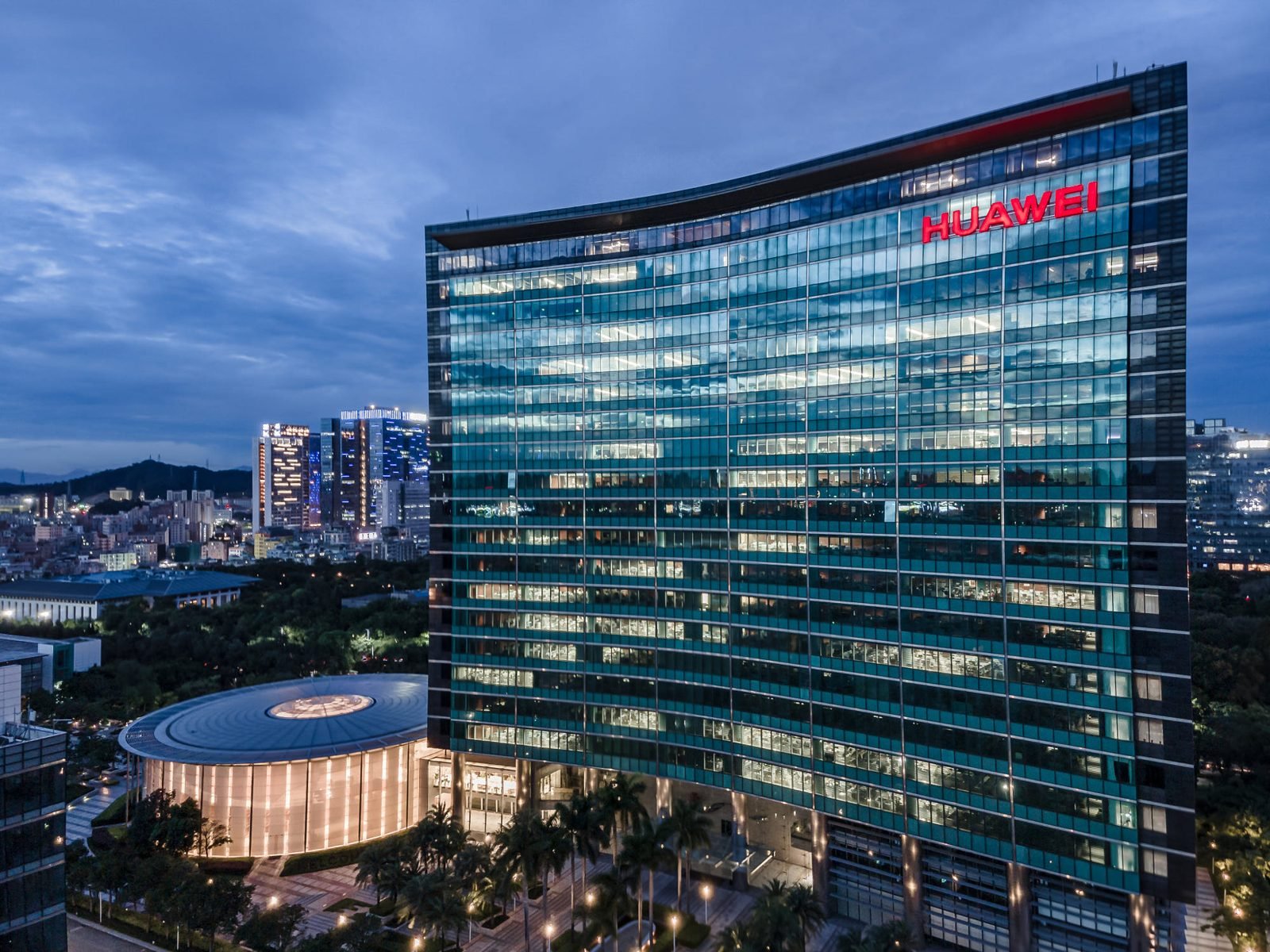
BROOKLYN, United States — A jury in the Eastern District of New York on Tuesday, 24 November 2026 found Huawei Technologies Co., Ltd. and three of its subsidiaries guilty on 10 of the 12 criminal counts they faced, after a trial lasting more than two months — twelve weeks, according to the US Department of Justice. Sentencing has been set for 14 September 2027.
The Verdict in Brooklyn
The jury convicted Huawei and its subsidiaries of bank fraud, wire fraud, sanctions violations and conspiring to steal trade secrets. The convicted subsidiaries are Chinese firm Huawei Device Co. Ltd. and US subsidiaries Futurewei Technologies Inc. and Huawei Device USA Inc.
But the verdict was not a clean sweep for the prosecution. The jury acquitted Huawei of the two most sweeping charges: racketeering conspiracy — which alleged the company had acted as a criminal enterprise — and conspiracy to obstruct justice.
The offences on which one or more of the entities were convicted, as listed by the Justice Department, are: conspiracy to steal trade secrets; wire fraud conspiracy; wire fraud; bank fraud conspiracy; bank fraud; conspiracy to defraud the United States; conspiracy to violate the International Emergency Economic Powers Act (IEEPA); IEEPA violations; and money laundering conspiracy.
US Attorney General Todd Blanche said after the verdict: “For decades, Huawei and three of its subsidiaries conducted their business in the United States on the basis of lies and theft.” Joseph Nocella Jr., the US Attorney for the Eastern District of New York, called the verdict “a step towards accountability for Huawei’s criminal activities, which includes yearslong collaboration with sanctioned entities in Iran, repeated lies to banks, and blatant thefts from US technology companies.”
Ten guilty verdicts, two acquittals — and a sentencing almost a year away.
The Charges: A Case Eight Years in the Making
The criminal case began in 2018, and the following year the US government placed Huawei on a trade blacklist that restricted its access to American technology, amid Washington’s concerns that the company posed national security risks.
The 2018 indictment alleged that Huawei misled HSBC, Standard Chartered and BNP Paribas about its business dealings in Iran, so that it could move dollars in and out of the country in violation of American sanctions. Prosecutors added new charges in 2020, including allegations that Huawei conspired to steal trade secrets from US technology companies over two decades.
Prosecutors called more than 60 witnesses; the defence called 15. Reuters stories published in 2012 and 2013 that helped expose Huawei’s activities in Iran were discussed during the trial. “After the media started questioning Huawei’s operations in Iran, so did Huawei’s banks,” prosecutor Meredith Arfa told jurors during her closing argument.
A case that began with a 2018 indictment ended with a verdict in a Brooklyn courtroom eight years later.
The Trade Secrets Allegations
At the heart of the trial was the prosecution’s claim that Huawei built its business, in part, by taking what belonged to others. Prosecutors sought to prove that Huawei stole source code from Cisco Systems for its routers, stole antenna technology from wireless company Quintel, and hired a professor to gain access to a circuit board developed by semiconductor company CNEX.
The evidence, as presented to jurors, included:
- A video that, according to prosecutors, showed a Huawei employee slipping a piece of a T-Mobile testing robot — a device that mimics a human touch to test phone screens — into his backpack
- An account of a Huawei engineer sneaking into a Fujitsu booth at a trade show to photograph a device
- Huawei photographing proprietary Fujitsu equipment using a badge identifying the employee as working for “Weihua” rather than Huawei
- The theft of trade secret information and copyrighted works, including source code and user manuals for internet routers, antenna technology and robot testing technology
The Justice Department said Huawei and its subsidiaries “engaged in a long-running conspiracy to steal intellectual property of US companies, including Huawei’s competitors and some purported business partners.”
The prosecution’s case was built incident by incident — a robot part here, a photograph there — adding up, it argued, to twenty years of theft.
The Iran Business at the Heart of the Case
The other half of the case concerned Iran. Prosecutors said Huawei conducted its business in Iran under the name Skycom, which it falsely described as a business partner rather than a wholly-owned subsidiary, and repeatedly lied to banks, journalists and the US government — claiming it did not assist Iran’s government, military or intelligence community, that it began restricting its business in Iran in 2011, and that it complied with all applicable sanctions.
According to the Justice Department, Huawei and its subsidiaries assisted the government of Iran by providing turnkey services for an internet backbone and broader access for mobile networks in the country. The company also helped the Iranian regime and Zaeim, a component of the country’s intelligence apparatus, to monitor and censor users’ access to the internet.
The case first burst into public view in December 2018, when Meng Wanzhou, Huawei’s chief financial officer and daughter of the company’s founder, was detained in Canada on a US warrant — prompting a diplomatic crisis involving the United States, China and Canada. Meng had been secretly indicted for allegedly misleading an HSBC banker about Huawei’s business in Iran. She fought extradition for nearly three years before entering a deferred prosecution agreement and flying home to China to a hero’s welcome; the charges against her were later dropped.
Prosecutors gave jurors a statement attached to Meng’s deferred prosecution agreement, in which she acknowledged that the company illegally conducted business in Iran. She did not testify at trial, though an HSBC banker she met with in 2013 did.
The Iran allegations were the oldest part of the case — and the part that first made Huawei a household name in Washington.
Huawei’s Defence — and Its Appeal
Huawei’s defence was that the banks knew about its business in Iran all along and were competing for its business. Its lawyer, Brian Heberlig, accused prosecutors during his closing argument of having “cherry-picked” a handful of disparate incidents to support their claim of a 20-year conspiracy. He said Huawei succeeded through “hard work, innovation, and investment in research and development.”
After the verdict, Heberlig said the company was disappointed by the convictions but that the acquittal on the racketeering conspiracy charge vindicated its “good-faith compliance culture.” “We fully expect to appeal,” he told reporters. He said it was premature to comment on how much the company may have to pay in penalties, but that the acquittal on the racketeering charge could make a significant difference.
In a statement issued in Shenzhen on 25 November, Huawei welcomed its acquittal on the racketeering charge and disputed the remaining convictions, saying the allegations lacked a factual basis. China’s embassy in Washington did not immediately respond to a request for comment, according to CNN.
Huawei lost on ten counts — but it is already pointing to the two it won, and to the appeal court.
What Happens Next
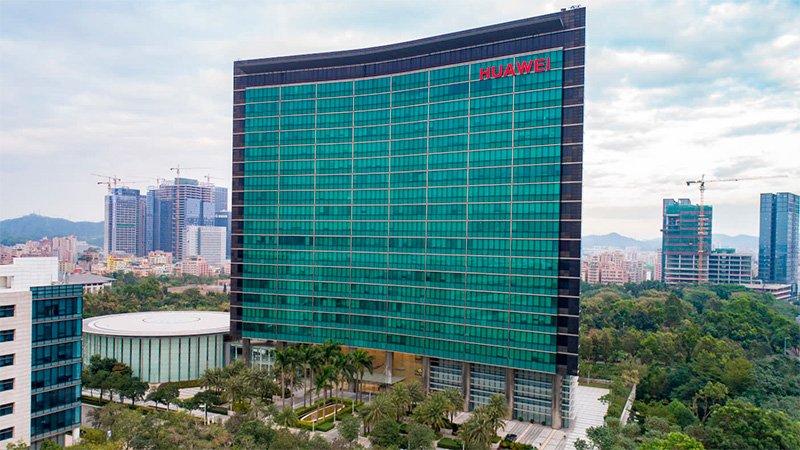
The verdict is not yet a sentence. US District Judge Ann M. Donnelly, who presided over the trial, will sentence the company on 14 September 2027. It was not immediately clear what penalties Huawei will face, but the Justice Department said the defendants face financial penalties, including criminal fines, forfeiture and restitution, to be determined under the US Sentencing Guidelines and other statutory factors.
The FBI’s New York field office was blunt about the outcome. “Today’s verdict makes clear that fraud, sanctions evasion, and the theft of intellectual property are not business strategies, they are serious crimes,” said Assistant Director in Charge James C. Barnacle Jr. “Huawei’s success was built on deception and theft, and the FBI will never hesitate to pursue those who profit by breaking the law.”
Sentencing is ten months away — but the appeal, Huawei says, starts now.
A Company That Kept Growing
The striking fact about the verdict is how little the case appears to have slowed Huawei down. The company has more than 200,000 employees and operates in approximately 170 countries. Experts have said the case has not undermined its business, as the company diversified and emerged as a key player in China’s push for artificial intelligence — even while cut off from much American technology since the 2019 blacklisting.
The Justice Department framed the case differently. “Huawei’s crimes threatened the US financial system, victimized US companies that compete honestly in the global telecommunications market, and undermined US national security,” Nocella said. “Today’s verdict holds Huawei accountable for using crime — not fair business practices — to become one of the largest telecommunications companies in the world by lying, cheating, and stealing.”
Eight years of investigation, twelve weeks of trial, ten guilty verdicts — and a company that intends to fight on in the appeal court.
By Faseeh Ur Rehman
Senior Journalist | The BNN Media – The Best News Network
News Beyond the Borders
Sources: Reuters; CNN; US Department of Justice (Eastern District of New York / Office of Public Affairs); People’s Daily Digital.




One thought on “US Jury Convicts Huawei of Trade Secrets Theft and Iran Fraud in Landmark Trial”