By
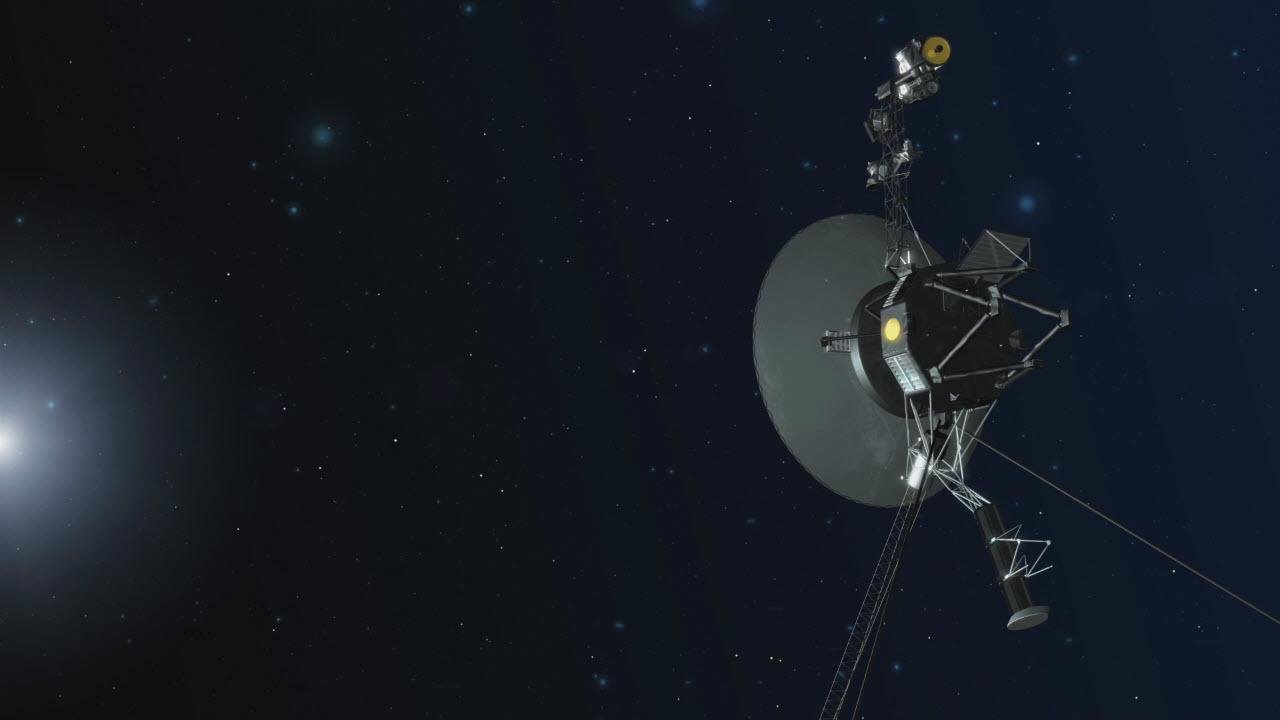
NASA’s Voyager 1 has become the first human-made object to travel one light-day from Earth — so far away that even a radio signal moving at the speed of light now takes a full day to reach it.
By Salman Qureshi
Cameraman / Photographer | The BNN Media – The Best News Network
News Beyond the Borders
Pasadena, California — Voyager 1 crossed the one-light-day mark at 5:16 a.m. EST on Wednesday, 18 November, NASA has announced, reaching a distance of 16.1 billion miles (25.9 billion kilometres) from Earth after more than 49 years of constant travel.
A light-day is the distance light travels in 24 hours. The spacecraft’s radio signal, moving at the speed of light, took a whole day to cross that gap — engineers at NASA’s Jet Propulsion Laboratory in Southern California heard from the probe early on Thursday, exactly 24 hours after it reached the milestone. No spacecraft built by human hands has ever been so far from home.
A Day’s Worth of Light
The numbers are hard to grasp, so NASA puts them in terms of light itself. Light moves through a vacuum at about 186,000 miles (299,000 kilometres) per second. A ray of sunlight passing Earth takes only about 1.3 seconds to reach the Moon. Reaching Neptune takes roughly four hours. From Neptune to Voyager 1 takes another 20 hours.
For comparison, a light-year — the distance light travels in one year — is 5.88 trillion miles (9.46 trillion kilometres). Voyager 1 is now one light-day out: 24 light-hours, a tiny fraction of a light-year, and yet further than any object humanity has ever sent into space.
“Traveling a light-day is a singular feat for a spacecraft, but Voyager is so much more than a distant traveler,” said Joe Westlake, director of the Heliophysics Division at NASA Headquarters in Washington. The mission, he said, would be remarkable just for what it contributed to planetary science — but it went on to become central to NASA’s study of the Sun and the space beyond it.
The Probe Has Gone Quiet — But Not Silent
The milestone comes with a worry. NASA has not received scientific or engineering data from Voyager 1 since 14 November — a communication problem engineers are now investigating. The spacecraft is still transmitting what is called a carrier signal, the radio signal that normally carries data back to Earth, and mission engineers used that signal, together with calculations of the probe’s trajectory, to confirm it had crossed the one-light-day mark.
Engineers continue to analyse the issue stopping the expected data from coming through. The probe is not being written off: NASA says it listens to Voyager 1 every day and sends it commands weekly.
The milestone is real, but so is the problem — NASA confirmed the distance from a bare carrier signal, not from the probe’s science data, and the cause of the silence is still unknown.
A Mission That Was Meant to Last Five Years
Voyager 1 was launched on 5 September 1977, with its twin, Voyager 2, following on 20 August 1977. The two spacecraft were built to last just five years — long enough to take advantage of a rare alignment of the outer planets and visit Jupiter and Saturn.
They did far more than that. The Voyagers were only the third and fourth spacecraft to visit Jupiter and Saturn, and the first to return high-resolution images of them, transforming our understanding of those worlds and their moons. Voyager 2 went on to study the ice giants Uranus and Neptune up close — the only spacecraft ever to do so.
Then they kept going. In 2012, Voyager 1 became the first spacecraft to leave the heliosphere — the bubble of particles and magnetic fields created by the Sun — and enter interstellar space. Voyager 2 crossed the same boundary in 2018. Today both probes are still measuring changes in the Sun’s magnetic field from a region no spacecraft had ever reached before.
“Voyager 1 crossing the light-day threshold is yet another historic feat on an extraordinary voyage of discovery,” said Dave Gallagher, director of the Jet Propulsion Laboratory. “Above all, this milestone stands as a testament to the exceptional teams who built, programmed, and fly these spacecraft today, and who have overcome countless challenges to keep them connected to Earth across the vastness of space.”
Travelling at about 38,000 mph (61,155 kph), Voyager 1 has survived clogged thrusters and a malfunctioning computer, kept alive by creative engineering. Earlier this year, engineers took a calculated risk: they switched off three devices aboard Voyager 1 and replaced them with three lower-power alternatives, to stretch the power from its radioisotope thermal generator — essentially a nuclear battery that converts heat from decaying plutonium into electricity.
Both probes lose about four watts of power each year as their plutonium decays. The latest energy-saving measures are expected to keep their current science instruments running until at least their 50th launch anniversaries next summer.
The Golden Record
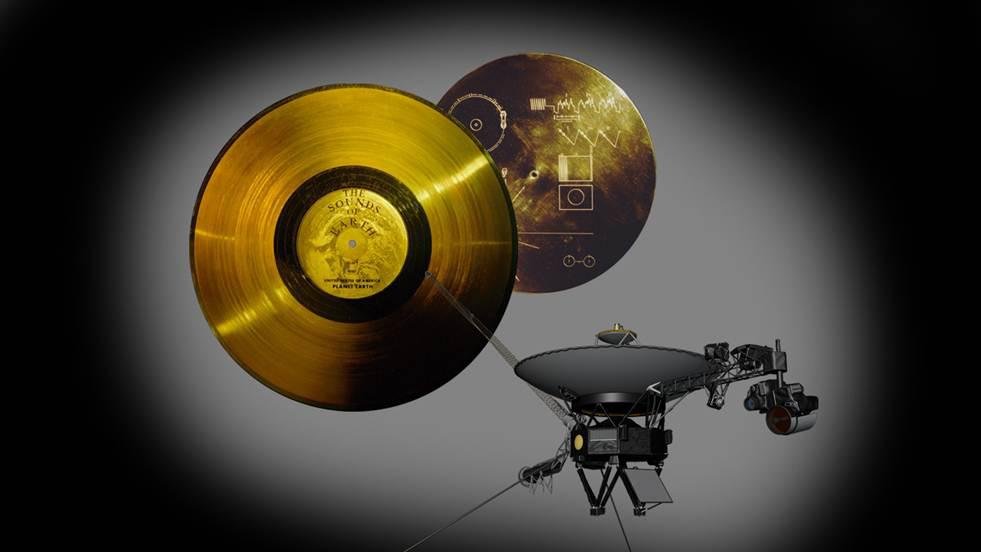
The Voyagers carry more than scientific instruments. Each one holds a Golden Record — a gold-plated copper phonograph record carrying images and sounds from Earth, a message for any advanced civilisation that might one day find it.
The record was chosen to represent the sounds and pictures of life on our planet: greetings in many languages, music, the sounds of nature and of human life. It gives the mission a purpose that reaches far beyond science. Long after the spacecraft can no longer communicate with Earth, they will still be travelling through space carrying that small collection of sights and sounds from the world that launched them.
Listening Across a Light-Day
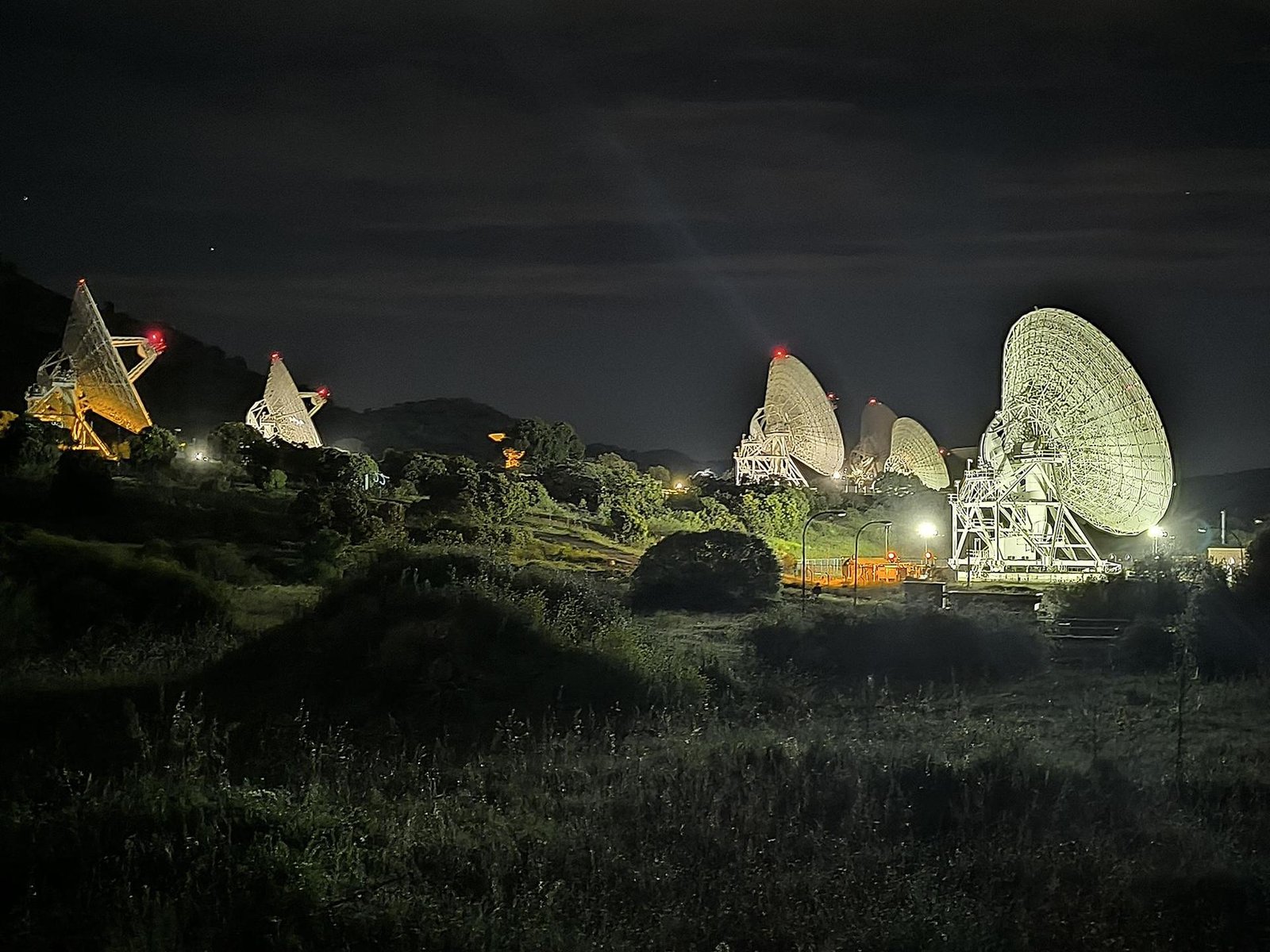
Staying in touch with Voyager 1 is itself an extraordinary feat. All communication runs through NASA’s Deep Space Network, a system of large antennas at three facilities around the world. A command sent to the spacecraft now takes 24 hours to arrive; a reply takes another 24 hours. A complete exchange spans two full days, even though the signals travel at the fastest speed possible in the universe.
“We listen to Voyager 1 every day and send commands to the spacecraft weekly. It just takes a little longer to communicate than it used to,” said Suzanne Dodd, Voyager project manager at JPL. “Even traveling at the speed of light, signals now take 24 hours to reach the spacecraft and 24 hours to reach us. One day in the future, when it can no longer communicate with Earth, Voyager 1 will become humanity’s silent ambassador to the stars.”
Where Voyager Goes Next
Voyager 1 is heading toward Gliese 445, a star more than 17 light-years away from Earth. It will take about 40,000 years for the probe to make its closest approach, passing within about 1.7 light-years of the distant star — closer to that star than to our own Sun. Long before then, its instruments will have fallen silent and its power will have faded, but the spacecraft itself will keep drifting on.
Its twin is following behind. Voyager 2, on a different trajectory, is expected to reach one light-day from Earth in 2035.
- Voyager 1 reached one light-day from Earth — 16.1 billion miles (25.9 billion km) — at 5:16 a.m. EST on Wednesday, 18 November 2026.
- It is the first human-made object to travel that far.
- No science or engineering data has been received since 14 November; engineers are investigating, and the milestone was confirmed from the probe’s carrier signal.
- Launched 5 September 1977 for a five-year mission, it left the heliosphere in 2012 and now travels at about 38,000 mph.
- Voyager 2 is expected to reach one light-day in 2035, and Voyager 1 will pass near the star Gliese 445 in about 40,000 years.
Nearly half a century after leaving Earth, the farthest thing humanity has ever built has crossed a distance measured not in miles but in days of light — and it is still going.
Reporting based on NASA, 18 November 2026; ScienceDaily, 20 November 2026.
By Salman Qureshi
Cameraman / Photographer | The BNN Media – The Best News Network
News Beyond the Borders